Get This Free Cheat Sheet Guaranteed To Help Your Next Mix

Thursday, March 20, 2014

Led Zeppelin "Whole Lotta Love" Isolated Percussion Track

The percussion track is an often overlooked element in a hit song, but don't underestimate its importance, since it's often responsible for a sense of movement and motion. There are numerous hits that would sound completely different if their percussion tracks were muted.

Here's the percussion track on a song that you probably thought didn't have one - Led Zeppelin's seminal hit "Whole Lotta Love." Here are some things to listen for (it doesn't start until 1:20 into the song):

1. John Bonham is certainly one of the most influential rock drummers ever, but that doesn't mean he was a great percussionist. His conga playing leaves a little to be desired as he searches for a groove throughout the song.

2. At 3:31 coming out of the guitar break in the bridge, Bonham switches to tambourine, which feels much more in the groove.

3. On the outro at 4:40, he returns to the congas and this time they groove a bit better as he plays to the end.

4. Listen at 5:43 as Bonzo sings along with the track for a couple of seconds.

This song is a prefect illustration that being a drummer does not automatically mean you're a percussionist as well. They are two different skills. Although some drummers can do both well (my good buddy Ronnie Ciago comes to mind), sometimes it's better for the song to get a specialist for each (although the percussion track didn't hurt this song much in the end).


----------------------------------

You should follow me on Twitter for daily news and updates on production and the music business.

Don't forget to check out my Music 3.0 blog for tips and tricks on navigating social media and the new music business.

Wednesday, March 19, 2014

The Story Of The Focusrite Studio Console

Back when big studio consoles were a necessity, Rupert Neve was tasked by Sir George Martin to build the ultimate console. What came next was a series of 10 Focusrite consoles, which many claim are the epitome of the genre. Here's a great documentary about the building the Focusrite, and what happened to the 10 since.

It's a little sad in a way, since so many of the facilities where the consoles formerly resided have gone away, but it's a great story all the same.


----------------------------------

You should follow me on Twitter and Facebook for daily news and updates on production and the music business.

Don't forget to check out my Music 3.0 blog for tips and tricks on navigating social media and the new music business.

Tuesday, March 18, 2014

The Secret To Suppressing Feedback

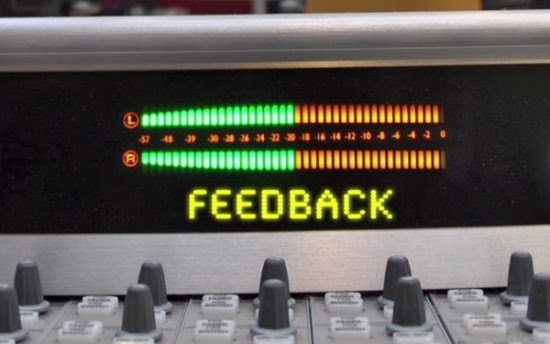
Feedback Meter image
If you're a gigging band and not playing venues where the sound is taken care of by a sound company, most likely you're running into feedback problems on a nightly basis. Here's an excerpt from the Presonus StudioLive Official Handbook that outlines the procedure for suppressing feeding the old fashioned way - with your ears.

"When it comes to suppressing feedback (you can never completely eliminate it), there are two methods; the classic method that’s been used for many years called “ringing out the system,” and a much faster an easier way using Smaart. Let’s look at the classic method first.

Ringing Out The System
Ringing out the system works on both the main house system and the monitor system. Here’s how it works:
1. Make sure that all the mics are on, are set at the levels they’ll most likely be at during the show, and in their normal stage positions. You should also have a mix set up with the approximate balances that you’ll eventually be using. 
2. Make sure that all the hi-pass filters on the individual channels are engaged as needed. This will eliminate any low frequencies that the ear can’t hear but will be amplified nonetheless (you don’t want to amplify the rumble of trucks on the street, for example).   
3. Slowly increase the overall gain of the sound system until you can just barely hear feedback. As it feeds back, lower the slider of the aux’s graphic EQ at the frequency that the feedback is occurring until the feedback stops.
TIP: Instead of using only one frequency band, you might want to set the GEQ to Draw Mode (see later in the chapter) in order to use two or three centered around the feedback frequency at a shallower level. This will eliminate the feedback without as much change to the tonality of the system.
4. Slowly increase the gain of the sound system again until feedback occurs once more. This time it will probably be at a different frequency. As it feeds back, lower the slider (or sliders) of the graphic EQ at the frequency that the feedback is occurring until it stops.
5. Repeat the process (you might have to repeat four or five times) until you finally hear multiple frequencies feeding back at the same time. At this point, you’ve now reached the maximum headroom in the system before feedback. Back the gain down a bit until the feedback stops and begin your soundcheck, rehearsal or show.  
One of the problems with this method is that you actually have to find the frequency on the graphic EQ that controls the feedback you’re hearing. This usually takes a little ear training to develop a feel for how the frequencies you’re hearing correspond to the frequency EQ sliders.


Another problem is that after you used Smaart to tune the system to the room, you might be destroying that tuning by pushing the system louder and then trying to eliminate the feedback. Modern sound systems are capable of being pretty loud and usually don’t have to be tweaked to within an inch of their lives to get more gain before feedback."

One of the cool features of the Presonus StudioLive console is that if you connect a computer to it, you can access the Smaart measurement tools (Smaart stands for Sound Measurement Acoustical Analysis Real Time) that provide a streamlined way of tuning your sound system to the room, find feedback, troubleshoot outputs, and automatically compensate for delay speakers. It's a very powerful and easy to use package that makes what used to be a time-consuming chore a breeze.

----------------------------------

You should follow me on Twitter and Facebook for daily news and updates on production and the music business.

Don't forget to check out my Music 3.0 blog for tips and tricks on navigating social media and the new music business.
Monday, March 17, 2014

The "I Dream Of Wires" Movie Trailer

Reader Juan Febres turned me on to the trailer for a great movie called "I Dream Of Wires (Hardcore Edition), which is all about the history, demise and resurgence of the analog modular synthesizer.

For those of us who have grown up with this stuff, you'll appreciate the look back. For those of you who haven't had the pleasure of interfacing with a modular synth in person, hopefully you'll see what you've been missing and understand just how different the software versions really are.

The theatrical version of "I Dream Of Wires" is scheduled to be released in June, but you can buy the 4 hour uncut version on DVD or Blu-ray now at idreamofwires.org. In the meantime, enjoy the trailer.


----------------------------------

You should follow me on Twitter and Facebook for daily news and updates on production and the music business.

Don't forget to check out my Music 3.0 blog for tips and tricks on navigating social media and the new music business.

Sunday, March 16, 2014

New Music Gear Monday: Free SoundToys Little PrimalTap

Lexicon Prime Time image
Original Lexicon Prime Time
I used to love to use the Lexicon Prime Time delay. It was one of the first digital delay units and had a few sonic qualities that we would think of as drawbacks today, but actually were part of it's sound (like its 12kHz bandwidth). It had a multiplier switch that would double the delay time, but would half the bandwidth, which made it very "warm" sounding by decreasing the frequency response. It also had a great VCO for some pretty cool modulation effects. All in all, a very versatile unit that was much used and loved at the time.

Now Soundtoys is offering a free mini version of the Prime Time called Little PrimalTap when you enter their contest, which is a social campaign to see how many of your friends you can get to enter. You need a redemption code and a Soundtoys account to download and authorize the plugin.

Ask your friends for the redemption code or link so they can get credit in the contest. The one with the most referrals gets "Plugged In For Life," while runners-up get Soundtoys bundles, so it's worth the entry.

By the way, one of the really cool Soundtoys products that I'm really looking forward to using is the Microshift, which provides the detuned sound of the original Eventide Harmonizer (a much used effect in the 80s and 90s). Check that one out too.

Here's a little video about the Little PrimalTap.


----------------------------------

You should follow me on Twitter and Facebook for daily news and updates on production and the music business.

Don't forget to check out my Music 3.0 blog for tips and tricks on navigating social media and the new music business.

Thursday, March 13, 2014

The Doors "LA Women" Isolated Vocal

Here's the isolated vocal from a classic rock standard that's still played on AOR radio stations to this day. It's The Doors "LA Women" from their 1971 album of the same name. The song was recorded live at the band's rehearsal studio with singer Jim Morrison singing in the bathroom because of the nice ambience it provided. The band was also augmented with bassist Jerry Sheff (Elvis' bass player at the time and father of Chicago bassist Jason Sheff) and rhythm guitarist Marc Benno. Here's what to listen for (the almost 8 minute track is edited to just the vocal sections).

1. There's a nice dark (meaning no high end) slightly delayed plate reverb on the vocal that melts together with the vocal. Even though Morrison sang in the bathroom because of the ambience, most bathrooms are too small to have long decays like you hear on the song. It does provide a nice fullness to the vocal though.

2. There's a fair amount of distortion on the vocal when it gets loud, which was obviously left in because the performance is so good. Engineer/producer Bruce Botnick is one of the finest engineers of our time, but he knew when to fix something and when not to, and this wasn't the time for a fix. The performance should always come first as it did here. Chances are none of us has ever heard the distortion with the rest of the track playing on the radio anyway.

3. It's very cool to hear the leakage in the background. There's nothing like a band that cooks live!


----------------------------------

You should follow me on Twitter and Facebook for daily news and updates on production and the music business.

Don't forget to check out my Music 3.0 blog for tips and tricks on navigating social media and the new music business.
Wednesday, March 12, 2014

Are There People Who Take No Pleasure From Music?

emusia image
Most of us love music and the way it makes us feel. Regardless of what's going on in your life, a song can take your mind off it and take you to another place, at least for a minute. That's for most of us, not all of us.

Psychologists at the University of Barcelona discovered a group of people who lack the ability to receive any pleasure from music, even though they receive pleasure from other joys of life like food and sex. While studying responses to music to gauge emotion, they found that about 5% of all people just couldn't feel anything at all when listening to music.

When asked to bring in music that they liked, the 5% were at a total loss. They didn't have any music; no CDs, no Pandora, no downloads, no Spotify. It just wasn't a part of their lives. When asked to listen to a wide variety of music that elicited strong emotional responses from the rest of the test group, this non-emotive group who suffered from musical anhedonia had zero response that could be measured via heart-rate monitors or skin conductance. They just didn't care either way.

Don't confuse this with people who have a disorder called amusia, where people can't identify musical tones. The researchers found that these people could have their emotions peaked via music.

Lest you think these musical anhedonics might have an underlying psychological problem that was being masked, they all appeared to be healthy and happy in every other way. They just couldn't hear and react to music.

So if you're wondering why your not selling more music or getting more people to your shows, remember that there's at least 5% of the population that will never get it, and it's not your fault. Feel better now?

If you'd like to see if you're one of those that has no response to music (and if you're reading this blog I bet you a vintage U47 that you're not), take the test here.
----------------------------------

You should follow me on Twitter and Facebook for daily news and updates on production and the music business.

Don't forget to check out my Music 3.0 blog for tips and tricks on navigating social media and the new music business.

Tuesday, March 11, 2014

Troubleshooting Your Sound System When Things Go Bad

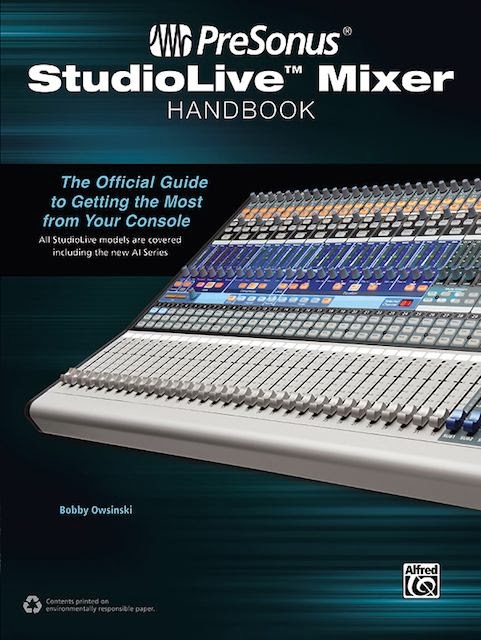
PreSonus StudioLive Mixer Handbook cover image
Whether you're in a live situation or in the studio, things can suddenly sound distorted, or there could be no sound output at all. You can spend a lot of time chasing your tail trying to find out what's wrong unless you have an orderly procedure to follow that allows you to troubleshoot the system quickly so you can get back making music in short order.

Here's an excerpt from my new PreSonus StudioLive Mixer Handbook that was recently released. StudioLive is one remarkable console in that it packs a tremendous bang for the buck - so much so that many owners never use it to its full advantage. That's why I wrote the book, to hip everyone to the wonderful features that are under the hood and come to life when you connect a computer or iOS device. What do I mean? How about:

  • Remote control of the console through an iPad
  • Being able to change individual monitor or cue mixes from an iPhone
  • Room tuning and feedback suppression via the built-in Smaart analysis tools

And that's not even talking about all the excellent attributes of a fine digital console that's one of the easiest to use in the business. That being said, here's the excerpt about troubleshooting your system from the book.

"If something doesn’t appear to be working or if the sound is noisy or distorted, here are a couple of checklists to help you get to the bottom of the problem.

If There’s No Audio:
  • Is the mic plugged into the correct channel? Select the Input meter button to see if the mic is registering on another channel meter. Repatch it to the correct channel if it is.
  • Is the Mute switch on the channel engaged?
  • Is the Firewire or Digital [recorder] input button selected?
  • Is the Mic/Line control raised high enough? Raise its level more.
  • Is the master fader at zero?
  • Is there an outboard device connected to the insert of the channel? Disconnect it to see if the sound returns. If it does, the fault lies with the outboard device or its cables.
  • Is there sound getting to the output? If you have meter deflection but no sound, the problem could be the amps or speakers. If you’re computer is connected to StudioLive and you’re running VSL, open up Smaart and use to the Output Check as described in Chapter 12.
  • Try another mic cable.
  • Try another microphone.
If The Audio Is Distorted:

  • Are other mics distorted too? If so, check to see if the amplifiers for the sound system are overloading. Also, check to seen if a speaker is blown.
  • Is the Mic/Line control set too high?
  • Is distortion occurring somewhere else in the console? 
  • Are any overload lights on anywhere in the system?
  • Try another mic cable.
  • Try another microphone."
Follow the above proceedures and you should find your problem with a minimum of time spent.

To read additional excerpts from the PreSonus StudioLive Handbook: The Official Guide and my other books, go to the excerpts section of bobbyowsinski.com.

----------------------------------

You should follow me on Twitter and Facebook for daily news and updates on production and the music business.

Don't forget to check out my Music 3.0 blog for tips and tricks on navigating social media and the new music business.

Monday, March 10, 2014

The Common Characteristics Of Hit Songs

Hit Song image
Hit songs aren't easy to create, as we all know. If it were that easy, everyone would be doing it. That said, there are a number of common elements that you'll find with hits that may help you in constructing one. Here's an excerpt from an article I wrote for the last issue of Music Connection magazine entitled "Analyzing the Hits." The information from the article came from my work on the Deconstructed Hits series.

"After looking at hundreds of hit songs, there is definitely a list of similar characteristics:

  • Most hits are short. Songs today average 3:47 in length, which is a lot longer than it used to be, but still an easily digestible bite.
  • Most hits have a short intro. The average intro of today’s hit is about 7 1/2 seconds, but it’s always been about getting to the point and that never seems to change.
  • Most hits limit the number of arrangement elements that occur at the same time. Most have only three or four, and rarely even five arrangement elements that play simultaneously, but no more.
  • The arrangement of most hits develops over the course of the song. Usually it reaches a peak at either the bridge or the last chorus.
  • Most hits use the arrangement to keep your interest. There’s always a new element entering or exiting to hold your attention.
  • Most hits have either a bridge or arrange a repeating song section to act like a bridge. The latter is an arrangement trick to keep the interest high and the song flowing.
  • Virtually all hits are dynamic, with a lot of tension and release, which means a hit changes in intensity. This is usually accomplished through the addition or subtraction of instrument or vocal tracks, but can also occur because of good old-fashioned dynamic playing if real musicians are used.
  • There are exceptions to all of these rules. It is rare to find a song that follows these traits exactly. Often what makes a song a hit in the first place is the ability to twist one of these traits into something new.
As you listen to songs in the future, begin to listen to the similarities in song form, arrangement and production, which can be a great help if you’re a songwriter, arranger or producer. The more you know about how hits are made, the more likely you’ll actually create one.

Keep in mind that even though you may not like a song or an artist, it is still worth a listen. Hits are hits for a reason, and they are definitely hard to come by. Each has some sort of magic––as well as some common elements––so something can be learned from every single one."

You can read excerpts from the Deconstructed Hits books on the excerpts section of bobbyowsinski.com.
----------------------------------

You should follow me on Twitter and Facebook for daily news and updates on production and the music business.

Don't forget to check out my Music 3.0 blog for tips and tricks on navigating social media and the new music business.

Sunday, March 9, 2014

New Music Gear Monday: Make Way For The Gestrument

There has been a lot of software instruments over the last few years that use touch or gestures for control over various parameters, but most have either been expensive or difficult to learn and impliment. Here's one of the cooler and least expensive ones that I've seen. It's called the Gestrument.

This can be a fun toy, but it was designed as a real professional tool by classical composer Jesper Nordin and software developer Jonatan Liljedahl-Kymatica, the developer behind AudioShare, Sector, AUFX, NordBeat, Bitwiz and other iOS music apps. The best thing is that it's only $0.99 for the lite version and $7.99 for the full version. Check out the video, and find out more at gestrument.com.


----------------------------------

You should follow me on Twitter and Facebook for daily news and updates on production and the music business.

Don't forget to check out my Music 3.0 blog for tips and tricks on navigating social media and the new music business.

Thursday, March 6, 2014

The Who "Who Are You" Isolated Vocals

It's Friday, so that means it's time for another isolated track. This time we'll listen to the isolated vocals from The Who's big 1978 hit "Who Are You" from their album of the same name. This was the last album with drummer Keith Moon, who died a few weeks after it was released. Have a listen to:

1. The distorted vocal. The vocal is very interestingly distorted. This sounds to me like its a condenser microphone with capsule damage. Didn't stop it from being a hit though.

2. The sound of the plate reverb. It sounds like it's been very heavily filtered with no top or bottom end. As a result, you can tell it's there, but it doesn't stand out.

3. The smooth background harmonies. The 3 part harmony blends very well and is very tight. Listen to the releases, which is what make the tightness happen. Also take notice that each background vocal phrase is slightly different. No cut and paste here! Also, hear how it turns into 2 part harmony on the last chorus.


----------------------------------

You should follow me on Twitter and Facebook for daily news and updates on production and the music business.

Don't forget to check out my Music 3.0 blog for tips and tricks on navigating social media and the new music business.

Wednesday, March 5, 2014

When Audio Cables Cost More Than Cars

During a recent interview with mastering legend Bob Ludwig of Gateway Mastering for the 3rd edition of The Mastering Engineer's Handbook, he mentioned that he rewired his entire studio with Transparent Cable and both he and his clients were astonished at the improvement in sound. I wasn't familiar with the brand so I decided to check it out.

Talk about high end, here's an example of the company's most expensive power cable (from their online catalog).

Their power cables are priced from $195 to $2100 (I usually pay about a buck).


Okay, if a $2100 hundred dollar power cable isn't enough for you, how about an RCA cable for $11,580?

In fairness, they also sell RCA cables as low as $95 (I'm used to buying them for around 50 cents).


Perhaps you're looking for speaker cable. Here's one that goes for $34,735.

Of course, they also have them for as low as $210.


And of course, we all need lots of XLR mic cables around. How about buying a few of these babies for $20k each?

They also have them for as low as $485.

Normally I would scoff at the perceived worth of cable at this price, but I have to trust Bob Ludwig on this. All I know is that it's out of my price range until I have about 5 hit records.

Does anyone reading have experience with these cables? Comments?
----------------------------------

You should follow me on Twitter and Facebook for daily news and updates on production and the music business.

Don't forget to check out my Music 3.0 blog for tips and tricks on navigating social media and the new music business.

LinkWithin

Related Posts Plugin for WordPress, Blogger...