Get This Free Cheat Sheet Guaranteed To Help Your Next Mix

Friday, July 11, 2014

Hear Why Expensive Cables Can Improve Your Audio on the Latest Inner Circle Podcast

Bobby Owsinski's Inner Circle Podcast image
The wires that connect our audio devices are something that we all take for granted, but Wireworld national sales manager Larry Smith describes why some of those expensive cables we read about can be way better for your signal chain on the latest version of my Inner Circle podcast. 

Believe me, what you'll hear is a an education in a part of the audio world that we seldom look at. Find out more about Wireworld Pro Audio cables on their website.

You'll also hear about Yahoo's new video service, and the possible demise of the 1/8th inch audio plug on the analysis portion of the show.

Remember that you can find the podcast either on iTunes or at BobbyOInnerCircle.com, and now also on Stitcher. 

Hope You Enjoy.
----------------------------------

Thursday, July 10, 2014

David Bowie's "Space Oddity" Isolated Bass and Drums

Bowie "Space Oddity" Record Cover image
Here's a fascinating piece of music history. It's the isolated bass and drums from David Bowie's first hit, the classic "Space Oddity."

The song features a completely different lineup from future Bowie albums, and included session drummer Terry Cox, legendary bass player Herbie Flowers (also responsible for the famous bass lines on Lou Reed's "Walk On The Wild Side"), Mick Wayne on lead guitar, and Rick Wakeman on Mellotron (who did play on subsequent Bowie records), was produced by Gus Dudgeon, and engineered by Trident Studios staff engineer Robin Cable.

This was quite a controversial song in its day since the BBC claimed that it poked fun at the British space program and kept it off its playlists until after the return of Apollo 11. Here are some things to listen for:

1. The rhythm section seems to get lost when listening to the full track, as we focus more on the vocal and lyrics, but the playing is very interesting all the same. The bass plays no distinguishable part, and the drums play very free for the verses of the song, almost like something you'd hear in be bop.

2. That said, the drum part plays very straight in the choruses and bridges, with the snare played quite forcefully. Check out the long plate reverb (sounds great) which only appears on the snare.

3. The kick isn't heard much although it's actually played a lot. It's not featured in the mix and is actually mixed down in the track. It's not the kind of song that relies on the power of the kick though.

4. The bass sound is great. but so is the drum sound (except for the kick). The drums are also in mono.

5. Listen through to the end if the video for the ending you don't hear on the record.

You can hear the leakage in the distance as the video begins, but the bass doesn't enter until about 0:23.


----------------------------------

Wednesday, July 9, 2014

The Carol Kaye Documentary

Bassist Carol Kaye is a studio legend unfortunately that has never gotten enough notoriety. As the only female member of the infamous Wrecking Crew group of LA studio musicians, Carol played on so many of the hits that have since gone on to become classics (think "Good Vibrations," "California Girls," Scarborough Fair," "Feelin' Alright," "River Deep Mountain High," just to name a few) as well as many television shows and movies from the period. It's no surprise that she became the go-to bassist for Brian Wilson, Phil Spector, and even Frank Zappa.

Now a documentary about Carol's life is being shot, and below you can see the trailer for it, as well as a long interview with her. If you love music history and great playing, make sure you check both of these out.


----------------------------------

Tuesday, July 8, 2014

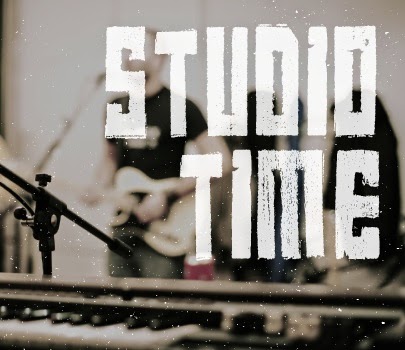
3 Tips For Managing Your Studio Time

Studio Time image
Many producers (particularly if you're on your first project) are great at the creative part of the job but can't get their arms around the concept of time management. A music production project, regardless of whether it's being done in a home studio or a commercial one, requires a great deal of time management, especially if you have a deadline. Here are 3 tips from The Music Producer's Handbook for managing the time on a typical album project, both in the studio and out.

"Managing both project and people time is one of the more difficult jobs of a producer since it involves a lot of educated guessing. You never really know exactly how much time any one segment will take, but you do have a general idea if you’ve done your production homework. So how do you figure out how much time you’ll need? Just like any project in any company, you make a timeline that has specific milestones while leaving a little leeway just in case the unforeseen happens.

1. Take stock of the situation. Let’s say that the record label wants to have the project in their hot little hands on October 1st and you’re coming in on the project on May 15th. There’s no way that you can determine just how long each project segment will take until you evaluate the songs, listen to the demos, listen to any previous recordings, hear the artist or band live or in rehearsal, and generally get a good feel for what’s possible and how much must be fixed or tweaked. This evaluation period might take a week or two but could be compressed into as little as a day if necessary, depending upon your experience in these situations and the quality of the songs and players. 

2. Approximate how long each project segment will take. After you evaluate the artist’s or band’s songs and get a feel for the arrangements and how well they play them, you can determine how much pre-production time it will take to get everything into shape. You might determine that you’ll need a month of preproduction because the arrangements are weak, or maybe just a few days for some song tweaks. If you don’t have that kind of time or the artist is resistant to more rehearsal, then you’ll have to allot more time for basic tracking, maybe an extra day for each song, instead of the 2 or 3 songs per day that you might expect if everything is finely tuned.

During preproduction, you’ll also get a feel for what kind of overdubs you’ll be doing and what kind of time for experimentation you’ll need. Unless most of what you’re recording during tracking is a keeper, you usually figure at the very fastest that it’ll take a day for all the overdubs from each instrument. This means that you’ll record all bass fixes for all the songs one day (if there any are required), one day for guitars, one for lead vocals, etc. If you have more time and budget, you would stretch that out to a day to record the lead vocal for each song (10 songs = 10 days), a day of guitar fixes from the basic tracks, a day for guitar overdubs and a day for guitar solos, a day for background vocals for each song, a day for percussion for all songs, etc. Ultimately, overdub time will be determined by the number of overdubs that you have in mind, their difficulty, and the skill sets of the players and singers. Better players = faster overdubs.

3. Develop your milestones. First, work backwards from your delivery or completion date. You now put in the time allotted for mastering, mixing, overdubs, tracking and preproduction. From there you can put in your milestones for completion. For instance: 


Preproduction start - May 21
Preproduction complete - June 7
Tracking start - June 10
Tracking complete - June 17
Bass fixes - June 20
Guitar fixes - June 21
Guitar overdubs - June 22 - 29
Guitar solos - June 30
Keyboard overdubs start - Aug 1
Keyboard overdubs complete - Aug 7
Lead vocals start - Aug 8
Lead vocals complete - Aug 18
Background vocals start - Aug 20
Background vocals complete - Sept 1
Percussion overdubs - Sept 3
Extra - Sept 5 - 10
Mixing start - Sept 11
Mixing complete - Sept 26
Listening session - Sept 28
Mastering - Sept 30
Delivery - Oct 1

Notice the extra days in between preproduction and tracking, tracking and fixes, lead vocals and background vocals, background vocals and percussion, plus the extra days built into the schedule. This is to make sure that there’s plenty of leeway should something take longer than anticipated or unforeseen circumstances arise."

To read additional excerpts from The Music Producer's Handbook and my other books, go to the excerpts section of bobbyowsinski.com.
----------------------------------

Monday, July 7, 2014

How The Soviets Saved Rock n Roll With Bone Music

Russia is fairly open and Westernized today, especially when compared to the old Soviet days. Back then, anything Western was forbidden, especially music. In those pre-Internet days (we're talking the 50s and 60s), unless you had a radio and lived near the border, you had a tough time hearing the music that the rest of the world was digging.

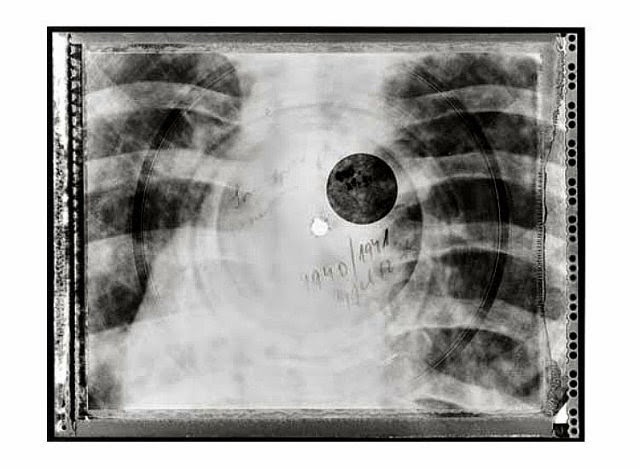
Bone Music Record image
A "bone music" record
The Russians are a resourceful people though (as evidenced by their programming skills today), and the hipsters of the day found a way to copy American music using an ingenious DIY method they called "bone music."

Vinyl bootlegs of popular artists did occasionally make it into the Soviet Bloc in those days, but vinyl was a scarce commodity so that there was no way to make vinyl copy of it. That's until someone got the bright idea of using another piece of plastic that was plentiful at the time - exposed X-rays.

They would look through hospital waste bins for discarded X-rays, cut a copy of the album with a standard disc cutter, then use a cigarette to burn a hole in the middle so it could be played on a standard turntable. These "records" only played on one side and the fidelity was low, but they were cheap and easy to get, and gave a big boost to Western music in a land where it had no traditional exposure.

Soon a whole network of bone music distributors sprang up, but not long after the police caught on and formed a group of anti-Western music patrols to break up the distribution rings and confiscate any X-rays found.

Ironically, it wasn't that long after that the West created its own version of the X-ray disc with its own "Flexi-disc," a very thin piece of plastic which sounded equally as bad, but was cheap and easy to distribute in books and magazines.

This is just a great example of people that are deprived of something they desperately want being resourceful enough to overcome any barriers in the way. You can read more about this topic in an excellent article by John Brownlee on fastcodesign.com.
----------------------------------

Sunday, July 6, 2014

New Music Gear Monday: Digital Audio Labs Livemix Personal Monitor

Digital Audio Labs Livemix personal monitor system
With personal monitor systems now the norm in studios everywhere as well as on stage, there should never any excuses for cue mix complaints anymore.

That said, some studios or live acts are limited in the number of boxes they have, so many times players end up sharing a mix, which usually results in at least one party being unhappy.

The new Livemix personal monitoring system from Digital Audio Labs takes care of that in that each box provides two separate mixes, plus the mix can go up to 24 channels wide.

Livemix provides an economical way for two players to share the same mix box, plus provides onboard compression, EQ, and reverb processing on each channel. The unit utilizes a combination of knobs and touchscreen control to make it easy to use, and also provide an input control for a local click or music player on each box. It even has an optional foot controller for hands-free changing the volume during a performance

Each Livemix controller (called the Livemix CS-Duo) feed via a Cat5 cable to a Livemix Mix-16 central unit that supplies up to 16 mixes through up to 8 CS-Duo boxes. If A/D conversion is required, a Livemix AD-24 unit is available to take 24 inputs of line level analog and covert them to digital. The digital inputs are accessed via Dante.

One of the problems I've found with giving musicians too much control of their monitor mix is that they can get into more trouble than it solves sometimes. Add processing and you're opening up a whole other can of works. That said, if the mix is set up ahead of time by the engineer and the player has the ability to tweak it, that's usually the best of both worlds, so the extra features of Livemix can really come in handy.

Livmix was announced at last years NAMM show but only began shipping last month. Street price for a package of 4 CS-Duo controllers, an Mix-16 and AD-24 is expected to be around $3,999. Find out more on the Digital Audio Labs site.
----------------------------------

Saturday, July 5, 2014

Disney Audio Manager Nick Pick On This Week's Inner Circle Podcast

Bobby Owsinski's Inner Circle Podcast logo
This week's Inner Circle Podcast features an interview with Nick Peck, who's the Senior Manager of Audio Services at Disney Publishing Worldwide. Nick will discuss the differences between audio for games and apps, and music releases, as well as give us a look into the world of vintage keyboards and kicking bass on a B3.

The show also looks at the ideal length of Internet posts as well as what makes songs different from on another.

To access the Inner Circle Podcast, go to bobbyoinnercircle.com, iTunes or Stitcher.
----------------------------------

Thursday, July 3, 2014

Rolling Stones "Gimme Shelter" Isolated Parts

Here's a brilliant breakdown of the individual tracks from The Rolling Stones seminal "Gimme Shelter." I've posted isolated tracks from this song before, but they usually end up getting taken down by the record label, so check this one out while you can.

The difference in this video is that most of the individual elements are broken out and are soloed in combinations during the song. The video labels some of the parts incorrectly, but that really doesn't matter as it's fun to hear any of the parts by themselves. Here are some things to listen for:

1. The vocals really have a lot of reverb on them, although it all disappears in the final mix (which you never hear on this video).

2. Keith Richard's lead guitar plays through most of the song. You don't hear it in the final mix because it's either lowered or muted. He's also playing out of the pocket in the intro, not that it ever bothered anyone.

3. As the elements are soloed, listen for both the harp (harmonica) and the piano, which are somewhat buried in the final mix.


----------------------------------

Wednesday, July 2, 2014

All Hail The Pensado Awards

Dave and Herb at the Pensado Awards
(Photo by Charley Gallay/Getty Images for The Pensado Awards)
I don't think you can claim to be in the music business right now and not be aware of mixer guru Dave Pensado's Pensado's Place online video show. Over the last 3+ years and 169 episodes, Dave's show has provided a much-needed forum for the under-appreciated music makers of world, a void that the show so ably fills.

It's also provided a new outlet for a facet of music education that's also been under-utilized in that Dave actually shows you the tricks he uses every day on some of the biggest records that he mixes, and his guests often provide many of their tricks and tips as well. Dave's folksy style on the show is exactly as it is in real life in his Southern hospitality and his way of making you feel like you're the most important person in the room.

I interviewed Dave way back in the first edition of The Mixing Engineer's Handbook (you can read an excerpt of that interview here). He became one of my favorite people then, and he remains so today. I wish I could record all the talks we have, because I always walk away with several pearls of wisdom.

Pensado's Place took an important step forward last Saturday night with the inception of the first Pensado Awards, held at the swanky Fairmont Hotel in Santa Monica, and attended by some 600 industry movers and shakers. The awards show honored the behind-the-scenes music makers - those engineers and producers that normally fall under the radar in other awards shows like the Tech Awards and Grammys.

You can read more about the details of the Pensado Awards elsewhere on the Web so I won't go into too many of the details here. Since I'm an analyst and not a journalist (as I keep telling all the publicists out there who keep pitching me), let me give you the big picture of the event.

Show Co-hosts 
(Photo by Charley Gallay/Getty Images for The Pensado Awards)
Perhaps the best thing that Dave and Herb Trawick (the executive producer of Pensado's Place and Dave's co-host) did was to use 4 co-costs to anchor the awards show. Mixer Chris Lord Alge, artist Lisa Loeb, mixer Marcella Araica and mixer Young Guru, as well as various industry presenters for individual awards, did all the heavy lifting. Dave and Herb appeared only at the end to present the last two awards. 4 hosts might have been a bit of an overkill, but just the fact that Dave and Herb decided to give up the spotlight was pretty cool and an unexpected change of pace.

There were 16 awards categories, and although they could have easily centered on the older "classic" nominees, they proved to be surprisingly diverse and cross-demographic. Some of the awards that skewed towards the younger part of the industry included Break Through Songwriter, Break Through Mixer, Spin Doctor DJ Award, and my personal favorite, the AIR Award (award for best assistant, intern or runner). It's easy to concentrate on the greats of our industry who've been doing it for years, but Dave refuses to stay within those boundaries and provides something for everyone in the business regardless of your place in it.

One of the highlights of the evening was the Pensado Giant Award, which was presented to the great Al Schmitt. Al is the engineering godfather to us all and a wise and noble man to boot, so it was great to see him so deservedly honored again. Neil Young even made a special appearance to present the award, and Paul McCartney sent a congratulatory video as well.

The Pensado Awards showed a few inevitable growing pains, but less than you'd expect for a first time event. Hopefully this will become an annual affair, and with the attention to detail that Dave and Herb give to everything, you just know that it will get better and better. I'm really happy that I was lucky enough to attend.
----------------------------------

Tuesday, July 1, 2014

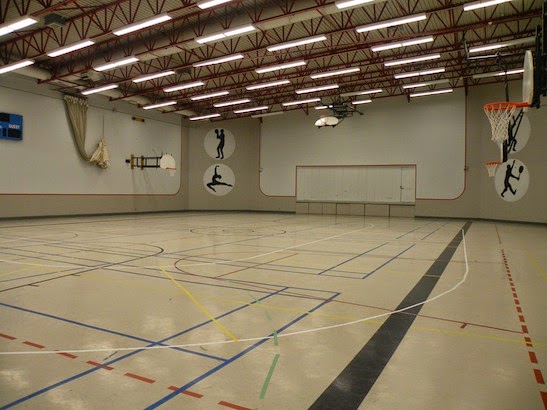
2 Tricks For Taming A Reflective Room

2 tricks for taming a reflective room like a gym
Live sound engineers all say that the venue they hate to work in the most is one with a lot of reflections. It's their worst nightmare, and you can hear both Dave Weckl engineer Dennis Moody and Blue Oyster Cult FOH man Steve La Cerra talk about it on my Inner Circle Podcast (Steve's coming up in a few weeks). It doesn't matter how big or small the venue is, if there's a lot of reflections, you going to have some problems.

Here are a couple of tricks from my PreSonus StudioLive Mixer Official Handbook that engineers have been using successfully to combat serious reflective problems and bring the vocals out from behind the natural room reverberation.

1. Increase 2.9k or 3.5kHz by a couple of dB on either the High-Mid or High frequency equalizer of the vocal channel. Generally speaking, raising 1kHz on a vocal gives it more energy in any mix, but in a live situation in a reverberant environment, moving the frequency up can help it cut through the mud. You could even try this on the FOH EQ to see if it helps the entire mix.

2. Cut some of the low frequencies of the kick, bass and floor tom by a couple of dB at anywhere from 60Hz to around 130Hz, depending upon the venue. Cutting lower than that will make it seem like all of the low end has disappeared. In most reflective venues, the majority of the problem lies in too much low end bouncing around the room. Lowering the level of the subs, or lowering these frequencies on the FOH EQ can also make a difference, but you want to be careful that the power doesn't leave the mix, so be judicious.

Remember that a little EQ can sometimes go a long way, so boost or cut in small increments.

To read excerpts from the PreSonus StudioLive Mixer Official Handbook and my other books, go to the excerpts page of bobbyowsinski.com.
----------------------------------

Monday, June 30, 2014

This Program Turns Text Into Music

Film composer image
Film composers get paid a lot of money (well, they used to) to translate what's on the screen to emotive music, but did you ever wonder what your favorite novel would sound like?

A new project called from a programmer/musician and an officer of the National Research Council of Canada have come up with TransProse, a program that examines works of literature and transposes them into music.

The project determines the mood of the music from a lexicon of 14,000 words based on 8 emotions (anger, fear, anticipation, trust, surprise, sadness, joy and disgust) and two sentiments (positive and negative).

TransProse reads the text and breaks it down into 4 chronological sections (beginning, early middle, late middle, end), and then determines the overall mood. The tone and density of the emotional words are used to determine the key and the melody. Positive sections are in a major key and negative ones in a minor. Happy sections are in a higher octave and sad in a lower one. The more emotional words are encountered, the more notes.

This is just the beginning of the project and the authors of the program (and the subsequent paper) don't claim to have it polished yet, but it seems off to a great start. You can find out more on the TransProse website.

Here are two examples of the program at work. The first uses Joseph Conrad's Heart of Darkness, and the second is from Antoine de Saint-Exupery's The Little Prince. Visit the website to hear many more examples.

Film composers might have to worry if the TransProse ever learns how to read a script and orchestrate. Low budget films will never be the same.


----------------------------------

Sunday, June 29, 2014

New Music Gear Monday: Telefunken M82 Microphone

We're all looking for the perfect kick drum mic. For some it's the Shure Beta 52, while for others its an AKG D112 (or vintage D12 if you can get one). Many like a good old RE20, while others get their best results from a combination of mics. Telefunken wants to be one of the choices as well with their M82.

The Telefunken M82 is a large diaphragm cardioid microphone designed to be robust enough for kick drum work, and versatile enough for voice overs. It features two EQ switches to accomplish those tasks, labeled High Boost and Kick EQ. The High Boost tilts the frequency spectrum in a slow rising 6dB boost starting at 2kHz and ending at 10kHz, making it appropriate for announcers and radio. The Kick EQ provides a familiar dip at around 350Hz like many of us use. Put them both together and you have a either the classic kick drum sound or something more modern.

This looks like a mic destined for mic lockers everywhere as the word gets out (it's already been out for a while but I haven't seen it in many places yet). The M82 retails for $499 but the street price is lower, putting it more in the range of an RE20 but more expensive that either a B52 or D112. Still, it's hard to find a large diaphragm dynamic mic that's more versatile. Check out the Telefunken website for more info.
----------------------------------

LinkWithin

Related Posts Plugin for WordPress, Blogger...