

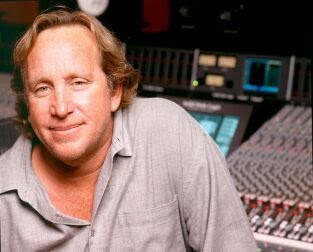
 One of the most versatile and talented engineers of our time, Ed Cherney has recorded and mixed projects for The Rolling Stones, Iggy Pop, Bob Dylan, Was, Michael Jackson, Elton John, Bob Seger, Roy Orbison, and John Mayer as well as many others. Ed has also recorded and mixed the multiple Grammy-winning Nick of Time and Luck of the Draw CD's for Bonnie Raitt as well as engineered the Grammy-winning "Tears in Heaven" track for the Eric Clapton scored film, Rush.
Here's an excerpt from the interview that appears in my Recording Engineer's Handbook where Ed talks about his time recording The Stones.
"When you’re tracking, do you go just for a good drum track or do you try to get as much as you can?
I try to get as much as I can. I think it’s musically a lot better that way. Also, I don’t isolate a lot of instruments that much any more. I did the Rolling Stones and the amps were in the room with just a little bit of baffling, but basically open so that they could hear them. Everything was leaking into everything, but that just gave it that glue, especially when it was played well.
So leakage doesn’t bother you?
It depends on the band and what you’re trying to do. If you know that everything is going to be swinging with the drums, then you’re going to try to get it. Otherwise, you’re just laying down a template so you have to isolate things as good as you can if you know you’re going to be layering guitars and that kind of stuff.
What are you using on guitar amps?
Like pretty much everybody else, I’ve used 57’s forever, but lately I’ve been using Royer R-121’s. I’ve been liking those and the musicians I’ve been working with have been liking them too. It’s pretty much just put the fader up and they capture what’s going on with the amp. They’ve got a very sweet character.
Do you only use one mic on the cabinet?
Usually, unless it’s in stereo. Sometimes I’ll use a 414 or a large diaphragm condenser back off the cabinet if we want the room sound, but typically I’ve been putting up a 121 in front of the cabinet.
Do you take bass direct or do you use an amp as well?
Again it depends, but I try to do both. If you don’t have a lot of space and you don’t have any isolation, I’ll go with a direct, depending on the player, but usually I’ll go with both with a FET 47, or something like that on the cabinet, and a DI I like using the Groove Tube DI, but then again it depends. If it’s an active bass, then you might want to use a DI with transformer in front of it.
Do you EQ when you record?
Heck yeah, but dipping more than anything. If something is a little dark, then it might be because 200 or 300 is building up, so you dip a little of that out and maybe add a little top. If you’re going to tape, then you might want to add a little top anyway. If you’re going to Pro Tools, then you might want to dip a little 2, 3, 4K to take the edge off it.
Was it any different recording the Stones from anyone else?
It’s a rock gig, but there’s five guys there that have been around and know what they want to hear. You’re really not allowed to screw up. Some younger guys might let you get away with something, but you’ve got to be on top of your game more so than with anyone else.
How did you approach Charlie’s drums?
It’s just a straight-ahead rock kit. The less you do the better off you are. You put some mics up and try to capture the drum kit like it’s one instrument rather than separate drums. You just get out in the room, have a listen and try to recreate that but there’s not a lot of work involved. The work is in the perception and not in the knob twisting.
How did you determine where to place everyone in the room?
I think I sat there for a day and half before I did it. I’d go out and sing a song, clap my hands and stomp around and try to create a space where everyone can see each other. I tried to get some things off-axis yet keep the room kind of open and live so people weren’t just relying on their headphones and could hear their amps and have that interplay. I tried to make sure that the line of sight was intimate, yet keep some separation. Also, I’ll ask the assistant where they usually set everything up (laughs).
Do you have a philosophy of recording?
I want to get the sounds to tape as quickly as possible, then play it back so you can talk about it. It’s real at that point. “That’s too bright. That’s too dull. That should be louder. That should be a different part. That should be a different snare drum.” It’s easy to modify once you can hear it. I’ve been in places where you dick around a lot before you play any music and the session doesn’t move forward. You just can’t make music that way."
To read additional excerpts from The Recording Engineer's Handbook and my other books, go to the excerpts section of bobbyowsinski.com.


