Get This Free Cheat Sheet Guaranteed To Help Your Next Mix

Showing posts with label NAMM. Show all posts

Sunday, March 8, 2015

The Legendary Al Schmitt On My Latest Inner Circle Podcast

Al Schmitt image
Al Schmitt is one of the greatest engineers to ever step inside a recording studios and his 21 Grammys prove it. That's why I'm so delighted to have him on my Inner Circle podcast this week.

Al has worked with a wide variety of superstar artists through the years, from Frank Sinatra to Ray Charles to Toto to Barbra Streisand to Diana Krall. 

What's so cool is that after all his success, he's more in demand than ever, with his last three clients being Neil Young, Bob Dylan and Paul McCartney.

On the podcast, which was done at the recent NAMM show for Lynda.com, I talked to Al about working as a producer with two of his biggest clients, Sam Cooke and Jefferson Airplane, as well as his microphones of choice and recording techniques.

On the intro I take a look at how to get your songs on iTunes, as well as the 5 most common mixing mistakes that I see.

Remember that you can find the podcast at BobbyOInnerCircle.com, or either on iTunes or Stitcher

Don't forget to check out my Music 3.0 blog for tips and tricks on navigating social media and the new music business.

Wednesday, January 14, 2015

What Avid's Relisting Means For Pro Tools Users

Pro Tools logo image
Last month everyone's favorite DAW maker Avid was relisted on the NASDAQ stock exchange, a move that came as a surprise to many.

When the company was delisted back in February of 2014, many analysts (including yours truly) felt that this was the first sign of the eventual slow demise of the company, and that it was highly unlikely to ever find its way back onto the exchange. Avid defied expectations by working with auditors to supply the exchange with the information required to resume trading there. The company was officially delisted for not filing the required quarterly reports for over year, which Avid claimed was due to accounting rules changes

Since being relisted, the company's stock has risen from $13.50 to just a shade under $15. It continues to trade under its AVID symbol.

Regardless of the happy event, this is a challenging time for Avid. While having a virtually stranglehold on the professional audio workstation world, that market is somewhat saturated, and with more powerful computers now available, the native versions of the software now works for many cases where an expensive hardware accelerator card was once required, which means less revenue for the company.

Add to that the general frustration of the Pro Tools community that feels somewhat abandoned by the company's recent employee turnover, and many users are now open for an alternative should it arise.

Still, Avid's relisting also means that the company is much stronger than before. Sources of capital are more readily available if needed, the stock is much healthier than it was 12 months ago, and the company's public perception has risen. All that doesn't matter much if it doesn't find a way to assuage its customers who feel burnt by the company, of which there are many. We all like to upgrade to get new features, but the feeling of being forced to do so has rubbed many the wrong way through the years.

The upcoming NAMM show next week can be a pivotal one for the Avid, depending on the new products they show, or even worse, might not have. Could this be the year of serious DAW competition?

Wednesday, January 22, 2014

5 Things I'd Like To See At NAMM, But Probably Won't

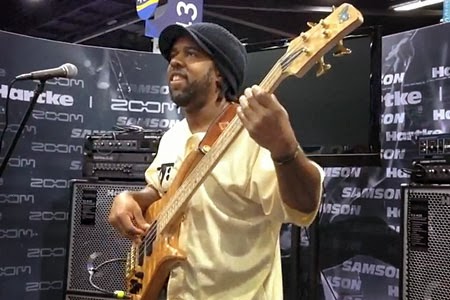
Victor Wooten performing at NAMM 2013 image
Victor Wooten performing at NAMM 2013
I'm at NAMM today and I'll get you my full report next week (although you might find some info in a few tweets). That said, here are a few things that I'd like to see at NAMM that probably won't.

1) Just one new whiz-bang product that knocks me off my feet. For a long time now, most of the gear seen at NAMM and other gear exhibitions have been evolutionary instead of revolutionary. Please, no more microphones, mic preamps and compressors unless they use a new technology based on lasers, quantum mechanics, alternate universes or something so different that it totally blows all else away.

2) Fewer booth babes and more people who know the product. We all like eye candy, but most booth babes just clog up the booths and aisles making it harder to find out product info. I mean, I live near Hollywood and Beverly Hills. I can just walk down the street and see more and better looking women almost any day of the week, so give me someone who can answer some questions instead.

3) Easier parking. It's hard enough to have to drive to Anaheim in morning traffic, but the fight for parking can be ferocious. And you end up walking a long ways anyway.

4) Better convention food and drink. You expect it to be overpriced (and it is), but is it asking too much to have some healthy options as well?

5) Identify the performers. NAMM is great because you have many world-class performers doing their thing in booths and on stages throughout the show. It sure would be nice to know who these performers are, since we know many be name and reputation, but don't know what they look like.

I'm sure I can come up with more (and no doubt will by Monday), but I can hope for at least one of the above to take place this year.

What would you like to see at NAMM?
----------------------------------

You should follow me on Twitter and Facebook for daily news and updates on production and the music business.

Don't forget to check out my Music 3.0 blog for tips and tricks on navigating social media and the new music business.

Tuesday, January 21, 2014

Walk The Floor With Me At NAMM


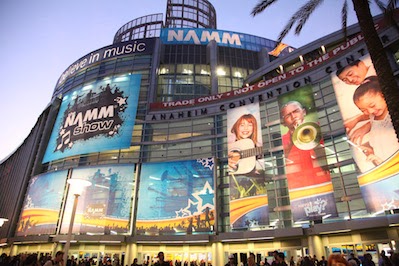
NAMM Show Anaheim image from Bobby Owsinski's Big Picture blog
Going to NAMM? Come with me on Friday for a 3 hour walk of the audio hall. Meet high-level company execs and see behind the scenes into the latest products at:
Manley
API
Royer
Mojave Audio
Universal Audio
PSP
ATC,
Bock Microphones
Daking
TubeTech
PreSonus and more. 

Space is limited. You must already have a badge. Send me a private message at office @ bobbyowsinski.com (sorry, doing this to deter the spammers - delete the spaces and paste in your email client) and tell me what like best about my blogs to reserve your spot.

Monday, August 27, 2012

Judge Dismisses Suit Against GC and NAMM

Guitar Center sign from Bobby Owsinski's Big Picture production blog
Just to show how slow the wheels of justice actually move, a class action suit against NAMM, Guitar Center, Fender, Korg, Martin, Peavey and a dozen more MI vendors started in 2009 has finally been dismissed for lack of evidence.

The suit involved 38 separate plaintiffs from 15 states, and alleged that NAMM, GC and the various manufacturers conspired to raise the minimum advertised price (MAP) policies, thereby bilking musicians out of hundreds of millions of dollars in the process. What the suit basically said is that GC and the various manufacturers unlawfully restrained trade and artificially reduced competition, thereby violating the Sherman Antitrust Act.

After numerous court exchanges, the judge couldn't find any evidence to support the allegation, and threw the case out. The MI industry finally breathed a sigh of relief since the damages could have been north of $200 million, which would have really hurt in this economy.

Okay, so here's the reality as I see it. Guitar Center is definitely guilty of wanting to monopolize the MI retail business, and they've successfully done that, but not by conspiracy. They've achieved their monopoly by bullying the manufacturers. If anyone thinks that the manufacturers want to go along with GC's pricing policies, they're sorely mistaken. GC forces a manufacture to sell to them almost at a price they determine, not the manufacturer, so the only one making out in the deal is GC, not the rest of the industry.

And NAMM? The last thing they want to see is less competition, since the more market share GC gets, the less relevant they become. Bottom line, this was a misguided suit from the beginning.

That said, GC is the big winner, as always. You know you owns them? Bain Capital. Ring a bell, by any chance?
----------------------------------

You should follow me on Twitter for daily news and updates on production and the music business.

Don't forget to check out my Music 3.0 blog for tips and tricks on navigating social media and the new music business.

Tuesday, March 20, 2012

The Peavey Autotune Guitar

Recently I posted an article about the creation of the Auto-Tune process and about how it's become a crutch for a lot of singers and producers, as well as an all-too overused effect. But this might actually be a great use for the process. I don't know how I overlooked this, but Peavey introduced the AT-200 Auto-Tune guitar at the most recent NAMM show.

When I first heard about an auto-tune guitar, I was very skeptical, but after watching the demo, I must admit that I'm intrigued. If it can get you an always in-tune and intonated instrument, I can definitely see uses for it. Plus, there doesn't seem to be any latency that would impede using it, and it even responds to bends and makes alternate tunings a snap.

Check out the video and tell me what you think.


----------------------------------
Help support this blog. Any purchases made through our Amazon links help support this website with no cost to you.


You should follow me on Twitter for daily news and updates on production and the music business.


Don't forget to check out my Music 3.0 blog for tips and tricks on navigating social media and the new music business.

Wednesday, January 18, 2012

Ask Ken Scott A Question

Ken Scott has had a fabulous career, from being one of the 5 main Beatle engineers, engineering a number of Elton John and Duran Duran albums, to producing 4 David Bowie albums (including the illustrious Ziggy Stardust) and records for Jeff Beck, Devo, Missing Persons, The Tubes, Kansas, Mahavishnu Orchestra, Supertramp, and various solo Beatle singles, among many others.

Now is your chance to ask Ken a question on recording, production, or any of the artists he's worked with. He'll give you his answer during our session at NAMM on Thursday at 12:45. We'll post them here and on the Alfred Music Publishing website.

You can ask the question here, or just add a comment at the bottom of this post.

By the way, Ken will give a presentation at the Alfred booth (#4822) at noon, both Ken and I will be on at 12:45 (where I'll ask him your questions), and I'll be on at 1:15PM.

Sunday, January 16, 2011

NAMM 2011 Report Part 1

NAMM 2011 in Anaheim is now over, and unlike a great many previous shows, there were actually a few products that I would daresay are significant. I'm sure I missed a whole lot of cool new items, but these couple really caught my eye as something special.

Anyone who has ever dealt with drum samples knows that the cymbals are usually the weak link in the whole concept. If you're a drummer triggering samples, you know that the cymbals just don't react the way that real cymbals do, and if you're a composer programming drums, you have the same problem. A variety of the best drum libraries get close, but never really capture the essence and feel of the real thing.

So it was quite a surprise when Zildjian introduced their Gen16 line of cymbal models and controller. The fact that a 400 year old company (yes, 400 years) that was never considered electronically hip could disrupt their own business model certainly came out of the left field.

Gen16 looks like a cymbal and acts like a cymbal, but that's where the similarity ends. As you can see by the picture on the left, the unit is perforated and has a blue glow thanks for a ring of blue LEDs under the bell. The controller isn't meant to be tonally active, so it's made for strength rather than tone. Apparently even a heavy hitter like Kenny Aronoff can't break them.

How do they sound? Just glorious and everything you'd expect from the Zildjian. And they act like really cymbals too. You can play on the bell or on the side, or choke them and they act just like you'd expect.

I think the Gen16 cymbals are going to change the way drummers and engineers use cymbals, both live and in the studio. I don't think we even know how significant this is yet. Get more information on Gen16 here.

While the next item isn't as groundbreaking as the Gen16, it is significant in it's own small way, especially for the way we track in the studio. Peterson (the strobe tuner people) just came out with something called the Body Beat Pulsating Metronome which is an absolutely brilliant way of keeping time yet eliminating the click track.

With the Body Beat, you clip the vibration clip onto your belt or shirt (seen on the bottom of the picture on the left), and you can feel the beat instead of listening to it (although you can still listen to it as well if you want to). But what really makes this cool is the fact that you can sync a bunch of them together via BlueTooth, and have one that's a master that receives clock from Pro Tools or your favorite DAW via USB.

This is so cool for many reasons. For any player that hates playing to a click, or performs stiffly to a click, feeling the pulse of the song is a lot more natural. For doing string sessions, you can eliminate the headphone leakage by just letting the players feel the pulse instead. Maybe this will even work for drummers who need unbearable loud click in their phones too. One more thing - the units are on $129 retail.

This is one simple yet useful device that clearly falls under the heading of "Why didn't we think of this before?" Discover more about the Peterson Body Beat here.

Tomorrow, more of my observations from the 2011 NAMM show in Part 2.

----------------------------------
You should follow me on Twitter for daily news and updates on production and the music business.

Don't forget to check out my Music 3.0 blog for tips and tricks on navigating the music business.

Thursday, July 22, 2010

6 Futuristic Musical Instruments

NAMM shows have become big disappointments because you never see anything new anymore, but that doesn't mean that no new instruments are being developed. While you can read this article to see more than just these six futuristic instruments, these are the ones that caught my eye.


The K-Bow tries to enhance string instruments by embedding sensors in their bows. By measuring its movement, the innovative bow can detect how far it is from the bridge, how much it’s being tilted, the amount of hair tension, and the speed and directions of its movement. String players can now trigger and control effects like echo or reverbs just from their bow action.


Reactable is a synthesizer that acts like a game with up to four players interacting. The modular synthesizer is a digital table-top that manipulates sound by having users drag and rotate different physical blocks.


With Beat Bearing, users can compose different rhythms by picking up bearings and placing them into different slots, making for a more engaging and intuitive music-making experience (or so they say).


The Tenori-On is a device that attempts to merge the experience of playing music and drawing pictures. The futuristic musical instrument features a 16×16 matrix LED grid surrounded by an aluminum frame. Users can play sounds and create loops by pressing the LEDs for a certain duration. The Tenori-On can also join in on synchronized sessions with others who have a device, thereby becoming a collaborative song-writing experience.


With the Continuum Keyboard, musicians can slide their fingers up and down to digitally “pluck” the instrument. Depending on the performer’s playing technique, the device is said to accurately resemble the sound of an acoustic instrument. The Continuum Keyboard can also track 16 fingers simultaneously (you just have to either grow six more, or a new six-fingered hand).


The Double-Slided Controller looks like an electronic trombone. It incorporates two hand controllers embedded with sensors and two slides. The user manipulates the sound by arm and hand movements. An on-board computer chip programmed with music software generates complex sounds from the device.

Let's see how many of these actually catch on.

----------------------------------
Follow me on Twitter for daily news and updates on production and the music business.

Don't forget to check out my Music 3.0 blog for tips and tricks on navigating the music business.

Thursday, September 24, 2009

Lawsuit Claims Guitar Center And NAMM Fixed Prices

According to a post on Hypebot, a nationwide class-action lawsuit has been filed against Guitar Center and the National Association of Music Merchants (NAMM) claiming the two conspired to fix retail pricing on guitars, allowing the music retail giant and other major retailers to reap higher profits and squash competition at the expense of consumers.

The suit filed earlier this week by the firm of Hagens Berman Sobol Shapiro claims that retailers met at NAMM in 2001 and voiced concerns that gross margins would erode from the then-current 27 to 32%. According to the suit, the NAMM meetings played an instrumental role in creating agreements between Guitar Center, other leading retailers and product manufacturers to impose 'resale price maintenance' agreements designed to raise and maintain retail prices and according to the complaint, the cabal's actions were successful with 2008 margins holding steady at 30%".

Although Guitar Center is truly the 800 pound gorilla of the musical instrument business and would probably love to fix prices where ever possible, I find it hard to believe that this actually happened. It's true that they fixed prices in their stores and longer have the wild "sell at any cost" policy of old, but there's no love lost between GC and it's competitors and suppliers, so any type of collusion seems remote. Still, all the facts haven't come out yet, so it will be interesting to discover more info as it becomes available.

LinkWithin

Related Posts Plugin for WordPress, Blogger...