There are a lot of artists, bands, musicians and engineers that mix on headphones, some because they're forced to because of the environment they're working in, and others as a check of the work they did on speakers. Most find it an unsatisfactory experience as it doesn't truly represent what the rest of the world will be hearing.
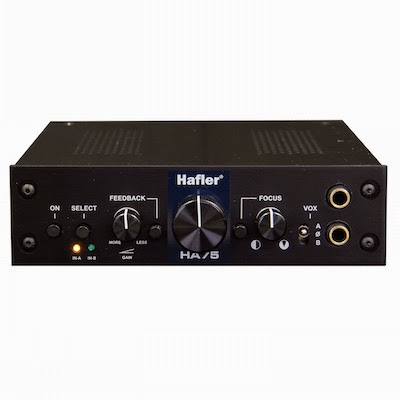
Hafler has tried to change all that with its new HA75 TubeHead headphone amplifier. The unit incorporates a 12AX7 class-A tube circuit that not only supplies enough clean level to overcome the noisiest environment, but a couple of extra features not normally found on headphone amps.
The first is a Variable Focus control that simulates listening in a room by bringing the stereo image more to the center, as well as an adjustable Negative Feedback Control to increase or decrease the feedback to tailor the sound better to your tastes. There's also an old-school Loudness control to tailor the low frequencies for low listening levels according to the established Fletcher-Munson curves that we sometimes forget about.
The HA75 features two fully balanced inputs on XLR connectors as well as unbalanced RCA connectors and unbalanced RCA throughput jacks. Dual headphone outputs can handle anywhere from 8 to 400 ohms.
The esteemed Hafler brand was purchased by Radial Engineering, recently relaunched at AES, and now produces both high-quality solid state and tube headphone amplifiers as well as phone preamps. Hafler was known for its power amplifiers in the past, and although none have been included in the relaunch, don't be surprised if you see a few new ones soon.
I haven't done a song analysis for quite a while as I've been saving them up for some new editions of my Deconstructed Hits series. Here's a preview from Classic Rock Volume 2. It's "Kashmir," one of Led Zeppelin's most iconic songs.
"Of all the songs recorded by Led Zeppelin, “Kashmir” may be the most highly regarded. Considered to be the peak musical achievement by all four members of the band, the song was a radio staple from when it was released (even with 8:28 running time) until this day.
“Kashmir” was originally titled “Driving to Kashmir” and reflects a time when guitarist/producer Jimmy Page and vocalist Robert Plant were driving through the Saharan Desert on their way to play the National Festival of Morocco. The song carries Moroccan musical influences, despite Kashmir actually being a province of India, a country half a world away.
This was one of the few songs by the band that featured outside musicians, as uncredited string and horn players were brought in to provide the power that only an orchestra can provide. The song actually took three years to complete, as it started out on a home recorded work tape of Page. The song is only credited to three of the four band members as bassist/keyboardist John Paul Jones was late getting to the studio when the song was being worked out.
The Song
Few Led Zeppelin songs follow the traditional rules of popular songwriting, and “Kashmir” is no exception. The verses are principally in 6/8 time but the drums play in a 4/4 rhythm against it, yet instrumental choruses and bridges come back to 4/4 so the song seems anchored and closer to what we’re used to hearing. Plus, there’s no traditional vocal chorus, as only the orchestral riff at the end of each verse acts like a chorus.
Even though the song might be considered a dirge by some, the lyrics are fairly positive and uplifting, being set around the idea of life as an adventure. The verses are written as poetry with few forced rhymes (save for the second verse, which feels unfinished), but the bridges are somewhat contrived and seem almost like they were improvised or tacked on at the last minute. The form looks like this:
“Kashmir” has an arrangement as interesting as the song demands. The song is very long because the sections repeat multiple times (except for bridge 1 that only happens once in the song), but we don’t lose interest not only because of the power of the orchestra, but because of the subtle arrangement changes.
The intro and verse are the same instrumentally with the guitar on the left, strings on the right and drums up the middle, except for the vocal entering on the verse. The instrumental chorus has an additional guitar doubling the line on the right, and horns in the center.
The second verse is identical to the first except a string counter line enters, with the basses holding the lowest note on the right side. The second chorus is the same as the first except for the strings doubling the guitar on the left.
The first bridge is entirely different from the rest of the song in that it’s much more open and funky, especially the drums. The elements remain the same as the chorus, with the second string line on the left doubling the guitar original guitar line, and Page’s guitar now playing harmony to it. The next chorus is identical in arrangement to the previous one.
The second bridge sees the Mellotron strings playing a high line on the left and the lower strings from the orchestra playing a different, almost answering line on the right, with the horns punctuating the accents.
The third verse is identical to the second, except that low horns answer the end of the string counter phrase. The next chorus is the same as the previous, as is the last verse and chorus, except for the last time through the pattern when low strings fill out the sound.
The final bridge sees the Mellotron strings begin on the right, punctuated by horns at the end of each line. After 4 bars, a new ascending line enters with the orchestra strings on the left and Mellotron on the right, accompanied by much more active drumming, including fills at the end of each string line.
Arrangement Elements
The Foundation: bass and drums
The Rhythm: none
The Pad: strings and horns, Mellotron (bridge 2)
The Lead: lead vocal
The Fills: strings and horns
The Sound
The mix balance of “Kashmir” is very interesting as it centers around John Bonham’s drums with Jimmy Page’s guitar and John Paul Jones’ bass somewhat buried in the mix. Even the vocal is laid back into the mix, which is typical of many rock songs in order to help emphasis the power of the band.
Bonzo’s drum sound is typical of all Led Zeppelin albums in that it’s somewhat distant and roomy, mostly because the drummer insisted on recording with two or three mics (when recording in stereo) in order to adequately capture the sound of the drums as he heard them. That said, by this time most other producers were resorting to using more mics closer in on the drums in order to capture the full sound of each, which helped to make them sound more dramatic. You can hear the difference in Bonzo’s many drum fills on the last bridge of the song where you can hear a bit of a stereo effect, but not what we’re used to hearing on other records. The drums were also put through an Eventide phaser suppled by engineer Ron Nevison, which can be heard clearly on the cymbal crashes of the first bridge.
Probably the most interesting thing on the record is how much producer Page used the stereo field. Guitar is panned to the left and the strings are panned to the right during the bridge and the strings are in wide stereo during the chorus. As the song progresses, you hear two different strings lines on the left and right in the second bridge, and a low horn pans left to center, then right to center at the end of the string counter phrases during the third and fourth verses.
LISTEN UP
To the guitar on the left and the strings on the right playing the same line during the verses
To the wide stereo reverb on the vocal
To the stereo orchestra panned hard left and right during the choruses
To the two different string lines left and right on the second bridge
To the low horn that pans left to right at the end of the string line during the third and fourth verses
To the phasing effect on the drums during the first bridge
The Production
The production of “Kashmir” is truly a departure for both Led Zeppelin and rock music at the time. Being known as the most influential rock band of the era didn’t stop them from coming out of left field to employ an orchestra on a recording that was the centerpiece of the album, and some say even the band’s career.
The fact that the guitar is somewhat buried in the mix turns out to be a brilliant move. It’s there in the mix and an essential part, but it doesn’t need to be front and center like on other songs.
Another interesting production point is that’s it’s difficult to tell the difference between the simulated strings and the real ones, a tribute to arranger John Paul Jones skills. The Mellotron strings can be more clearly heard as a line on the bridge 2, but they interweave so well with the real strings that it takes a conscious effort to discern the difference.
Yet another interesting production trick is the panning of the instruments in the mix. There are elements constantly entering and exiting from all sides, as well as parts moving from one side to the other. The moves are subtle, and in no way make the recording seem as drastic as a stereo demonstration record, instead adding the interest that an 8+ minute song needs to keep the listener’s attention.
All this leads to one of the most important and influential track of the era, and one that seems destined to be played on radio and streaming to people’s headphones for decades to come.
Many of you already use the New York City Compression Trick on your drum tracks, but it's possible that you're using just simple parallel compression. There's a lot more to the trick than that though if you want to do it right, and this video from my 101 Mixing Tricks program will show you the trick in all its glory.
Believe me, use this trick and your rhythm section will rock harder than ever before.
There's a lot more killer tricks where this came from covering punchy drums and percussion sounds, great lead and background vocals, killer instruments, and cool balance, panning, EQ, compression and automation tricks. Check it out at 101MixTricks.com.
If you're going to be a successful producer or a mixing engineer, it's absolutely vital that you understand the 5 kinds of arrangement elements that make up a song. You can have fewer than 5 (most songs do in several places) but having any more than 5 generally confuses the listener.
"Some songwriters already have the arrangement worked out in their head as to how they want the rest of the band to play, but for most songwriters (even the most accomplished) that’s a skill that has to be developed or have the job passed on to a specialist. In order to understand how the arrangement influences the song, we have to understand the mechanics of a well-written arrangement first.
Most well conceived arrangements are limited in the number of elements that occur at the same time. An element can be a single instrument like a lead guitar or a vocal, or it can be a group of instruments like the bass and drums, a doubled guitar line, a group of backing vocals, etc. Generally, a group of instruments playing exactly the same rhythm is considered an element. Examples: a doubled lead guitar or doubled vocal is a single element, as is a lead vocal with two additional harmonies. Two lead guitars playing two different parts are two elements, however. A lead and a rhythm guitar are two separate elements as well.
Here are the typical arrangement elements that makes up most of modern music:
Foundation - The Rhythm Section. The foundation is usually the bass and drums, but can also include a rhythm guitar and/or keys if they’re playing the same rhythmic figure as the rhythm section. Occasionally, as in the case of power trios, the Foundation element will only consist of drums since the bass will usually have to play a different rhythm figure to fill out the sound, so it becomes it’s own element.
Pad - A Pad is a long sustaining note or chord. In the days before synthesizers, a Hammond Organ provided the best pad and was joined later by the Fender Rhodes electric piano. Synthesizers now provide the majority of pads but a real string section or a guitar power chord can also suffice.
Rhythm - Rhythm is any instrument that plays counter to the Foundation element. This can be a double time shaker or tambourine, a rhythm guitar strumming on the backbeat, or congas playing a Latin feel. The Rhythm element is used to add motion and excitement to the track.
Lead - A lead vocal, lead instrument or solo.
Fills - Fills generally occur in the spaces between Lead lines, or can be a signature line. You can think of a Fill element as an answer to the Lead.
Remember that usually there should not be more than four elements playing at the same time. Sometimes three elements can work very well. Very rarely will five simultaneous elements work together."
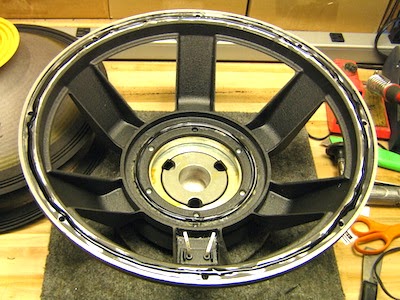
You've blown a speaker and it's expensive to replace, or maybe even not available any more. What to do? An alternative is having the speaker reconed by a professional or even doing it yourself.
Most major speaker manufacturers supply recone kits for their speakers, but there's a technique on how to do it that you have to know before you begin.
Here's a great video that not only shows how a JBL 2226 woofer is reconed, but gives you a great inside look at the different speaker parts as well.
If you want to try recone a speaker yourself, you can get the replacement parts from simplyspeakers.com, who made the video below.
I'm a B3 player from way back and I know the sound of a Leslie speaker intimately, so believe me when I say that the new PSP L'otary is the best Leslie simulator that I've come across. All PSP plugins are killer to begin with, but the company might have surpassed itself with this one.
L'otary is based on the sound and operation of the two most famous Leslies, the 122 and 147, and provides ultimate control over just about any parameter you can think of, making it extremely versatile. That said, the presets sound great and might be all that anyone ever needs.
What I especially liked is the handle that changes the sound from chorale (slow spin) to fast, which also allows the user to select any speed in between. That said, a push button underneath provides the traditional slow to fast switching.
There's also a visual look at both the horn and drum speed provided which helps to lock in the right speed for the song.
One of my favorite aspects of L'otary is the the different simulated mic positions, as well as the motor and wind noise when it's set to fast. Just like the real thing!
The PSP L'otary is a bargain at only $99 and is available in VST, AAX and RTAS formats for both Mac and Windows. Check it out for yourself with the video below.
Mark Schulman has some amazing credits as the drummer for Pink, Cher, Foreigner, Cheryl Crow, and Destiny's Child, among many others.
But that's not all. He's also a noted public speaker and author, focusing on leadership, team building and peak performance.
I'm really pleased to have Mark on my latest Inner Circle Podcast, where he'll discuss how he got started, his big break and big defeat, and what it's like to tour with some of the world's biggest stars.
On the intro I'll give you 7 tips for Facebook videos and discuss the new "stems" audio file format.
Here's a song that was considered one of the last hits of the Disco era. It's the isolated lead vocal from Michael Jackson's "Rock With You" from his 1979 Off The Wall album. The album featured 5 hit singles and went on to sell more than 20 million units worldwide. "Rock With You" went on to be a #1 hit in the US.
Here are some things to listen for. The recording is a bit distorted, but I'm pretty sure that came from the copy and not the original master, knowing how precise engineer Bruce Swedien (the Godfather of modern recording) is.
1. Notice the lead synthesizer when it enters in the intro. Bruce was always big on adding a first reflection by sending the recorded synth sound out into the studio and re-recording it. You can hear a bit of it here, plus a nice tape echo.
2. Michael's vocal isn't too compressed. Yes, you can hear a little in certain places when he sings loudly, but listen to the softer parts where it's brought up with fader movement.
3. All the breaths are left in. This really makes the song as it injects the intimacy that puts it over the top. Many producers would probably eliminate them today in an effort to "clean the track up."
4. The synth solo is dry with the echo added half-way through the solo. Probably something you never noticed on the record.
5. If you listen closely, you can hear Michael's foot stomps in between phrases. Bruce once told me that Michael was always dancing when he sang, so he and producer Quincy Jones decided to play that up and give him a small wooden stage to sing on.
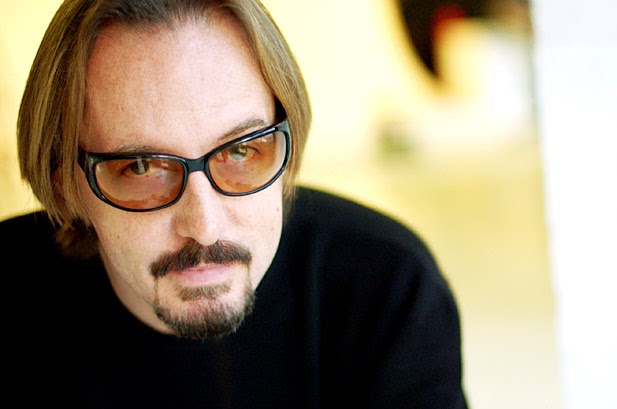
Many of you reading this are located in a small town recording the local talent. You think that it's impossible to break out onto the national and even international scene, but producer/engineer Butch Vig is a great example that it can be done.
Here's a great interview of Vig as he explains how his breaks with Smashing Pumpkins and Nirvana came about.
It's the dream of many musicians to get a gig with the touring band of a major artist, but getting the audition is a lot easier than getting the gig. Here's an excerpt from Chapter 5 ("Becoming A Touring Musician") of my Touring Musician's Handbook that provides some great audition tips from some of the top touring musicians.
"Depending on how you look at it, an audition can be really fun or so stressful that it makes you want to loose your lunch. The more prepared you are, the less likely you are to do the latter, so here are a number of things to help you through the process.
1. Know The Material
You can be a great player with chops that came from Mount Olympus, but the only thing that the artist or MD (musical director) cares about is if you can play the artist’s material well show after show. If you go into an audition thinking that you’re going to wing it, you’re wasting everyone's time, in which case you should be prepared for a very short audition.
First off, I want the person auditioning to play the music exactly like the record. I don’t want to hear them improvise, and I don’t want to hear their take on it. I want to hear them play it exactly with the right feel, just like they were playing Mozart or Beethoven. I want them to respect the music regardless of if it’s Pink’s music, or Cher’s or Janet Jackson’s, I want them to play it exactly as you hear it on the record. Then if I ask them to change it, they’re changing it from a place where I know that they know what it is so they can take their own spin on it after the fact. Paul Mirkovich
Go-to guys like guitarist Peter Thorn (Melissa Etheridge, Chris Cornell, Jewel, Don Henley) will learn as much of the artist’s catalog possible before the audition, going as far as to dial in the tone of the parts as well. It’s a lot of work, but if you’re up against another guy that did that and you didn’t, who do you think will get the gig?
The other thing is that you have to be not only better than everyone else, but you have to be different. It’s basically a sales pitch. In five or ten minutes, you have to prove to them that if they hire you, they’ll get more for their money than hiring anybody else. Ed Wynne
2. Don’t Be Late
This will just about eliminate you right from the start. Being late indicates that you have a reliability problem, which is the last thing anyone wants on the road. There are a lot of great players out there, and most of them are punctual and reliable. Who do you think they’re going to pick?
3. How You Look Counts
Not only does clothing and grooming make a good first impression, but it’s important to see how you visually fit on stage with the rest of the band. It’s possible to fit the bill perfectly as a player but still not get the gig because of the way you look.
As an example, an accomplished touring player that I know recently got a gig with a major artist that lasted one day. He went back to the hotel and received a call saying, “We’re good. Don’t come back to rehearsal tomorrow.” They just didn’t like the way he looked against the other players in the band.
You might get rejected because you have a shaved head and so does the artist or another player player in the band and they don’t want two people on stage with that look. Or you might have blond hair and so does the artist. Or you have facial hair and no one else in the band does. Nothing personal, sometimes you just don’t fit in.
I always felt that if someone is auditioning players that he’s not already aware of, it’s a clue that he’s looking for something else besides the way you play or the gear that you have. It’s a good tip that they may be looking more at how you look or at your age. I’ve seen that a lot. Mike Holmes
4. Your On-stage Demeanor Also Counts
If possible, get a DVD or watch a video of the artist and her band playing live and take notice of the on-stage demeanor of the players. A lot of people get gigs because their physicality is right, which means how they look when they’re playing the music. Maybe the artist wants energy on stage and really likes it when a player is so into it that he’s moving all around. On the other hand, some artists just want you to stand there and play, leaving any showmanship up to them. You’ve got to know your place, so you have to tailor your demeanor to the artist.
5. Bring The Right Gear
You’ve got to tailor the gear to the gig. If you were auditioning for the job as the Strat player for Lynrd Skynrd, it wouldn’t be a great idea to bring a Les Paul or what some perceive as a metal guitar like a Jackson. If you were auditioning for the touring band of 50 Cent, you wouldn’t bring a drum kit with the snare tuned up high for reggae or ska. Can the artist or MD imagine how you’d play with the right gear? Sure they can. But once again, if everything were equal between two players, the one who will get the gig is the one that has the right sound at the audition. That way, no guessing, imagining or wondering come into play. Remember, what the artist wants most is security and one less thing to worry about. Whoever can provide that gets the gig.
6. Be Nice To Everyone
It’s important that you’re nice to everyone, including the crew, while you’re at the audition. If these people are going to spend months on a bus with you, they’d prefer that you didn’t have an attitude of superiority and were very easy to get along with. Remember, if it’s a toss-up between you and someone else, the one who will get the gig will be the one that everyone believes they can live with."
Anyone that's ever gone into a Guitar Center on a Saturday afternoon knows that it's a cacophony of sound. You'll hear just about every famous lick being played by mostly beginners all at the same time. It's difficult not to get a headache after about 10 minutes (I don't know how the employees stand it).
New York experimental artist Noah Wall saw the beauty of it though, and decided to record some of these musical doodlers and compile it into an album. I guess the big question here is "Why?" but you have to admit there's something oddly familiar about the recordings.
Have a listen to a track from Live At The Guitar Center below.
The Slate Pro Audio Raven has made quite a name for itself in a short time thanks to its revolutionary touchscreen technology control of Pro Tools. The latest version, the Z3, takes the concept to the next level.
The Raven Z3 differs from previous versions in that it has 3 multi-touch screens instead of 1. The main control surface is the standard 46" multi-touch panel (the same as found on the Raven MTX), with two additional 27" screens (as found on the MTI) on the wings mounted in a custom console.
Thanks to the new Raven 2.5 software, Raven can now control most popular DAW packages, including Pro Tools, Logic, and soon Cubase, Ableton, Digital Performer, Studio One, and all PC formats.
What this means is that the 3 screen Raven Z3 can look at up to 3 different workstations at once, but have them all digitally connected. This could allow several operations to happen at the same time, a real time-saver for a high-end project where time is of the essence.
For instance, the left screen could be dedicated to Ableton for composition, then digitally connected to the Pro Tools mix window on the main screen and edit window on the right. Another possibility is for 3 man post mixing where each screen runs a separate DAW, yet keeping them all synched.
What's more, each screen can be switch to control any of the machines via a KVM switcher.
The Slate Raven Z3 is priced at just under $28,000, which seems pretty reasonable, except that you have to remember that the actual computers and workstations are not included in that price, as the Raven is only a DAW controller.