It's a scientific fact that a musician's brain is stimulated just by picking up a musical instrument. In fact, everyone knows that one of the reasons why musicians have GAS (Gear Acquisition Syndrome) is that obtaining something new makes you want to play and opens up new creative gateways for inspiration.
It's hard to believe, but scientists have found that people who use smartphones stimulate those same regions of the brain, according to a paper in the Current Biology journal.
The scientists noticed that the constant finger movements were similar to what happens to a musician playing a violin. Because of the way a smartphone is operated with thumb, index and middle fingers, its substantially different from a traditional cellphone with buttons, so none of the same brain regions are activated.
There were two differences between smartphone brain stimulation and instrument playing. The length of time spent owning a smartphone did not affect neural activity, so it doesn't equate to practicing an instrument, and the more recently someone used a touchscreen phone, the more likely you are to master it.
Although there's no direct evidence, this may be why many of us continually look for music iPhone apps or new IO. It inherently feels like an instrument, so we naturally want to treat it that way. Now let's see what kind of new iOS apps NAMM brings.
Help Support This Blog
Showing posts with label neurochemistry of music. Show all posts
Monday, December 29, 2014
Wednesday, October 22, 2014
Why We Love The Music We Love
![]() |
| The neurochemistry of happiness |
Now there's been a definitive study that really gets down to why we love music. It's called The Neurochemistry of Music and takes a look inside the brain of music lovers. Here's some of what they found.
- When we first hear a song, it stimulates our auditory cortex, and we convert the rhythm, melody and harmony into a coherent whole. From there certain parts of the brain react depending upon how much we like the music. Sing along and you'll active the premotor cortex, which coordinates your movements. Dance along and your neurons actually synchronize with the beat of the music. Your prefrontal cortex may also be stimulated, which can prompt personal memories.
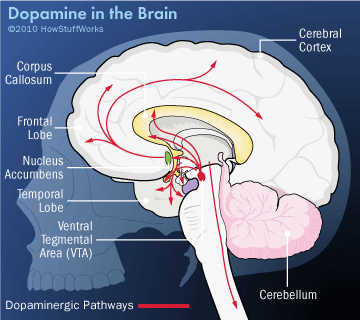
- Brain imaging shows our favorite songs trigger the brain's pleasure points, and a significant amount of those internal drugs that we all love, serotonin, dopamine and oxytocin, are released. The more we like a song, the more these neurochemicals are released. Music becomes a drug!
- This happens with everyone, but it happens more intensely if you're young. People between the ages of 12 and 22 get a giant dose because of the stage in their hormonal development that they're in. This explains why the main audience for music has always been between those ages.
- Those musical memories that we experience at that point are hardwired into our brains and stay with us for the rest of our lives, which explains why we're always partial to the music of our youth.
- Because of the impact that the music of our youth has on us, it becomes a part of our social self-image, although the effect appears to diminish over time.
----------------------------------
Subscribe to:
Posts (Atom)