 |
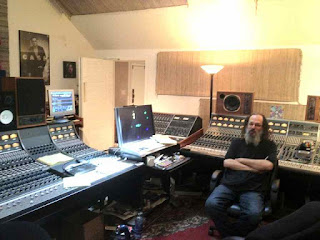
| Andrew Scheps Home Studio (note the dual Neves and sidecar) |
When I was writing the 3rd edition of the
Mixing Engineer's Handbook, I really wanted to include
Andrew Scheps, since I greatly admire his work. Always kind and gracious, Andrew wanted to do the interview at his studio, which is a wonderland of analog as you can see from the pictures on the left. I'm so glad he did, as I had a great time ogling his gear. Here's a portion of the interview explaining how all that analog gear came to his studio.
"Andrew Scheps has worked mega-hit albums for a who’s-who of superstar artists like
The Red Hot Chili Peppers, Metallica, U2, Justin Timberlake, Jay Z, The Rolling Stones, Linkin Park, Jewel, Neil Diamond and
Adele."
You said that you mixed in the box for a long time. How did you get back into using a console?
Andrew Scheps: For Stadium Arcadium [by The Red Hot Chili Peppers], the band wanted the record mixed on a Neve. It was tracked on a Neve and they wanted it mixed on one too. I tried all of the available Neve rooms in town and it just wasn’t working for whatever reason, so I ended up renting a console and realized that this room could easily accommodate it. The other thing is that I just loved having a console, and as an investment, it’s not going down in value, unlike an SSL who’s values are still plummeting.
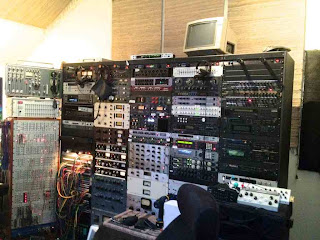 |
| Andrew's Outboard Rack |
The first desk had 32 inputs but when I knew that I was going to be mixing Metallica, I knew that I needed more. 32 inputs plus the other 10 on the BCM 10 [the small Neve broadcast desk that Andrew uses as a sidecar console] wasn’t going to cut it since their drums alone had around 30 channels. They weren’t all going to be coming up on the board, but 32 just wasn’t enough inputs. I was going to rent the console that I used for Stadium Arcadium again but in the process convinced them to sell it to me. As far as the outboard gear, studios keep closing and that’s where most of that comes from, since it tends to come in batches.
Where do you do your automation; in the box or on the desk?
Andrew Scheps: Most of the automation is done on the desk. The only thing done in the box is for extreme fixes. Once the mix is pretty much done and we’re adjusting something like background levels with the band, it’s easier to do that in the box because sometimes it’s just a certain word that they want louder, and then you don’t want to be sloppy with a fader ride on the console. It’s more precise in the box.
Do you ride the rhythm section for fills or is your mix fairly static?
Andrew Scheps: I still do ride things because the compressors are sucking out some of the natural dynamics of how the instruments were played, especially on some of the louder rock stuff. I’m only adding it back in, rather than creating something out of nothing. I don’t turn the whole mix up at every chorus, for instance. Some people can do that with success but I always hear it when I do it. I do definitely push the drums for the downbeat of the chorus and really try to accentuate anything that might be cool in a guitar performance, as well as some of the idiosyncrasies. The rides aren’t drastic, but most things are moving.
To find out more about Andrew and to see pictures of his great studio, go to punkerpad.com."
----------------------------------


