Get This Free Cheat Sheet Guaranteed To Help Your Next Mix

Showing posts with label music production. Show all posts

Tuesday, October 21, 2014

The Most Overlooked Part Of Preproduction

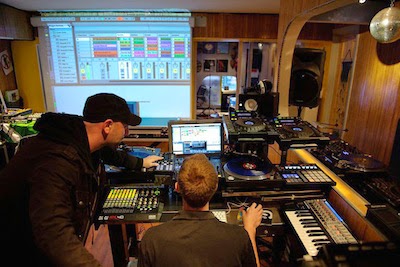
Music Preproduction image
Music production is so much about being familiar with the artist that you're working with, but many producers overlook the "Getting To Know You" phase of the job. The reason is that intimately knowing the likes and dislikes of an artist can really help you keep the production moving forward down the line, or stop it in its tracks if there's something that you don't know about. Here's an excerpt from my Music Producer's Handbook that outlines this phase.

"Preproduction sometimes is so much more than the process of working out songs. For a producer working with a new artist or band, it’s a time of getting to know each other. It’s important for the producer to learn the likes and dislikes of the artist, be it food, music or politics, as well as their working habits and idiosyncrasies. Knowing these things can help the producer determine how far to push a singer, or discover what gets the best performance out of the guitar player, or the signs of when the drummer is getting tired, or the hot button issues of the day to stay away from. If you’re going to be working closely with an artist even for a short time, the more you know about him, the better you can serve the project.

One of the most important aspects of getting to know an artist is learning what music she loves, was influenced by, and is listening to now. One of the most effective ways I’ve heard of doing this back in the days of vinyl record albums was for the producer to go to the artist’s house and have them throw a bunch of albums from their collection on the floor and have them describe what they liked and didn’t like about each of them. You can still do this with CDs or an iPod playlist. Among the questions to ask might be:
  • What do you like or dislike about the artist your listening to?
  • Do you like the sound of the recording?
  • What recordings do you like the sound of?
  • What are some of your favorite records?  Why?
  • What are your biggest influences? Why?
  • If you have a body of work as a producer already, what does the artist like about you? Why?
You can probably add any number of additional questions, but can you see where this is heading? This is the information that you need to help attain the artist’s vision. It gives you a common point of reference so you can say, “Let’s go for a sound like the lead guitar on The Cure’s Boys Don’t Cry,” and have the artist know exactly what you mean because you’ve found out in preproduction that’s one of his favorite songs. Or if the artist says to you, “Can we get the sound like on the Arctic Monkey’s Still Take You Home,” you’ll know exactly what he’s talking about."

----------------------------------

Thursday, September 11, 2014

Boston "Rock And Roll Band" Isolated Drums and Bass

It's fun to go back and listen to the hits from when rock was in its infancy to hear what the recording and production techniques were like back then. Here's a good example of one of the turning points in music production - it's "Rock and Roll Band" from Boston's first album.

This is really the song that started it all for the band as it's the one that first got the attention of both the band's managers and the record label. What you'll hear is Jim Masdea on drums and Boston leader Tom Scholz on bass. Here's what to listen for:

1. Listen to how tight the bass and drums are, and how near perfect both tracks are performed. The bass is sometimes ever so slightly ahead of the drums, but both are about perfect in their execution. That was a big departure in 1975 (when the song was recorded) when most songs still had a much looser feel, and it was a taste of what production would become a decade later.

2. The drums are in mono. They're very well-balanced (especially the ride cymbal, which is usually lost on most recordings) and have a nice medium dark reverb on them that doesn't get in the way.

3. The sound of the bass is interesting. Leave it to Scholz to not record a bass as a bass. There's some sort of very short delay or modulation on it, so the midrange is mostly in the middle but the extreme low end is puffed out to the sides. Of course, you need to listen on headphones to really hear this.

Above all, this track still really holds up because it was made so well, and as always, a great song is always remembered.


----------------------------------

Monday, November 4, 2013

Can Google Glass Change The Music Business?

Google Glass close-up image
Google Glass is coming and the naysayers are out in mass, predicting a big miss for the search company due to over-engineering, government regulation, or just plain creating a product that no one needs. I can’t say for sure how Google Glass will work in the real world, but I can imagine how it could work in the music world, and I think it’s all for the better for music consumers and producers alike.

First of all, Google recently announced that a new version of Glass is now available to beta testers, and this one has the addition of a mono ear bud that plugs into the middle of the device. Just image for a second that there were actually two for stereo. The bone conduction speaker that’s been standard on Glass from the beginning could be used for the low frequencies, while a high-quality set of stereo earbuds could be used for high-frequencies, which could make for a better listening experience than the average music consumer currently gets. Chalk up a potential win for Glass.


Isolation caused by earbuds can pose a danger to wearers, as is so often the case today when earbuds and headphones are worn on the street. That could be eliminated in Glass by putting a small mic on the unused real estate of the frame to combine the ambience of the real world with the audio or music you’re listening to. And the same mic could also work for noise canceling on those long plane flights that we all seem to take these days. Want to mute or unmute the music? Simply touch the frame. Chalk another potential win for Glass. Read more on Forbes.
----------------------------------

You should follow me on Twitter and Facebook for daily news and updates on production and the music business.

Don't forget to check out my Music 3.0 blog for tips and tricks on navigating social media and the new music business.

Wednesday, October 30, 2013

How Apple's New Product Announcements Affect The Music World

Mac Pro On Display image
Another Apple special event spectacular has come and gone, and once again people are buzzing with what was announced and what wasn’t. Apple is clearly a consumer electronics company, but one that’s highly influential in the music world, and this series of products will influence music more than you might think.

The first significant announcement was pretty much glossed over, and that’s the fact that iTunes Radio now has 20 million users and has served up over a billion songs. Considering that it’s only been a little over a month since the service was introduced (and only in the US at that), and you can see why iTunes Radio is shaping up to be the monster that Pandora and Spotify feared the most. The prediction here is that by this time next year iTunes Radio will have surpassed the cumulative listeners of both Pandora and Spotify together, and you can be sure that will jeopardize the existence of at least one of these services.

But this was an event centered mainly around hardware, and while the brand new iPads are nice and more powerful than ever, most music production is still done on desktop machines and to a lessor degree, laptops that have become almost as powerful. The new Mac Pro (which will finally be shipping in December) touted at the event will have a deeper impact than most analysts believe, basically because it’s more of a strategic product than almost anything else in the Apple line.

To understand why that is, you have to first understand that Apple rules professional audio and has for some time. There’s plenty of great audio products for the PC, but virtually all pro shops are based around the Mac hardware platform and operating system. This has been the case for more than a decade, despite the higher initial purchase price of the hardware. Read more on Forbes.
----------------------------------

You should follow me on Twitter and Facebook for daily news and updates on production and the music business.

Don't forget to check out my Music 3.0 blog for tips and tricks on navigating social media and the new music business.

LinkWithin

Related Posts Plugin for WordPress, Blogger...