Get This Free Cheat Sheet Guaranteed To Help Your Next Mix

Showing posts with label apple. Show all posts

Thursday, March 10, 2016

RCA Was Apple Before Apple

RCA Microphone imageRecently I read a great post on the Daily Beast about how the old RCA company was actually Apple way before Apple came into existence. Of course, that means that there were numerous similarities between the company that were pretty impressive. For instance:
  • RCA founder David Sarnoff was the original Steve Jobs. He willed his company to be the most innovative and technology driven company of its time. When Sarnoff retired in 1970, the company lost its way and diversified into food and real estate, eventually being acquired by GE. There's no sign of that happening with Apple, but you can't deny that Jobs influence definitely made a difference in its products.
  • Similar to iTunes, for a time RCA was the worlds largest seller of music with the acquisition of the Victor Talking Machines company in 1929. The RCA record label had the biggest stars of the day with Louis Armstrong, George Gershwin, Enrico Caruso, Sergei Rachmaninoff, Duke Ellington, Benny Goodman, Arturo Toscanini, Jimmie Rodgers, the Carter Family, Elvis, and many others. 
  • It was also the first to commercialize the turntable, so everyone could listen to their favorite artist via vinyl record when they wanted to at home.
  • And speaking of the vinyl record, RCA was the first to come up with the 45 RPM vinyl single, as well as the first to commercialize the stereo vinyl record.
  • And the company was a technology pioneer, being the first to produce a ribbon microphone (still coveted today) as well as the first commercial tube amplifiers.
  • RCA was the first to get into "wireless technology," especially televisions. In fact, the company was the first with a full production commercial television, then the first to commercialize the color television.
  • To go along with the television set it was selling, the company also provided content in the form of one of the three major television networks, and one we still watch today - NBC.
  • The company was also a leader in motion pictures with its sound on film technology and Technicolor process.
  • And like Apple, it had its technological misses, with the 8 track cassette and Quad sound.
The point is, Apple may be the perfect tech company for the beginning of the 21st century, but RCA might have been its equal in many ways in the 20th.


Monday, February 29, 2016

Longtime Clapton Drummer Jaime Oldaker On My Latest Inner Circle Podcast

Jaime Oldaker imageThis week's guest on the podcast tells some of the best music stories that I've heard in a long, long time.

It's Jaime Oldaker, who among many other credits, was the drummer on 11 Eric Clapton albums, longtime drummer for Bob Seger, and played with the likes of the Bee Gees, Leon Russell, Vince Gill, Peter Frampton and many more.

The story about being a human drum machine for Barry Gibb is worth the listen alone, not to mention the story behind Clapton's big hit "I Shot The Sheriff."

In the intro I'll take a look at the latest sale of MySpace, and give an interesting comparison between the Apple of today vs the RCA company of the early/mid-last century.

Remember that you can find the podcast at BobbyOInnerCircle.com, or either on iTunes, Stitcher and now on Mixcloud and Google Play.


Thursday, August 27, 2015

Apple Updates Logic Pro X

Logic Pro X 10.2 update with Alchemy synth image
Apple's Logic Pro X is not only one of the best music creation tools available but at $199, it's one of the least expensive as well. Not only that, the company continues to provide free updates that always seem to add something useful, like yesterday's 10.2 update.

The big deal with 10.2 is that it adds Camel Audio's (which Apple purchased earlier this year) Alchemy synth. This is a synth with a wide range of talents, from creating sounds using samples and different kinds of synthesis, to multiple filters and modulation options.

Other than that, Logic Pro X 10.2 provides an easy way to distribute directly to Apple Music and its Connect feature, which was also introduced in a Garage Band update earlier this year.

This can be a big update if you want to load all 14 Gigs of available sound files, but be aware that they tend to lean more on the dance music/EDM side of things, which is great if that's what you need.

Here's a video that takes a look and listen to Alchemy.


Thursday, March 12, 2015

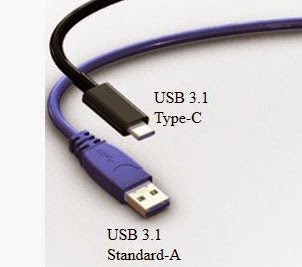
Meet The Next Generation Computer Port - USB-C

USB Type C image
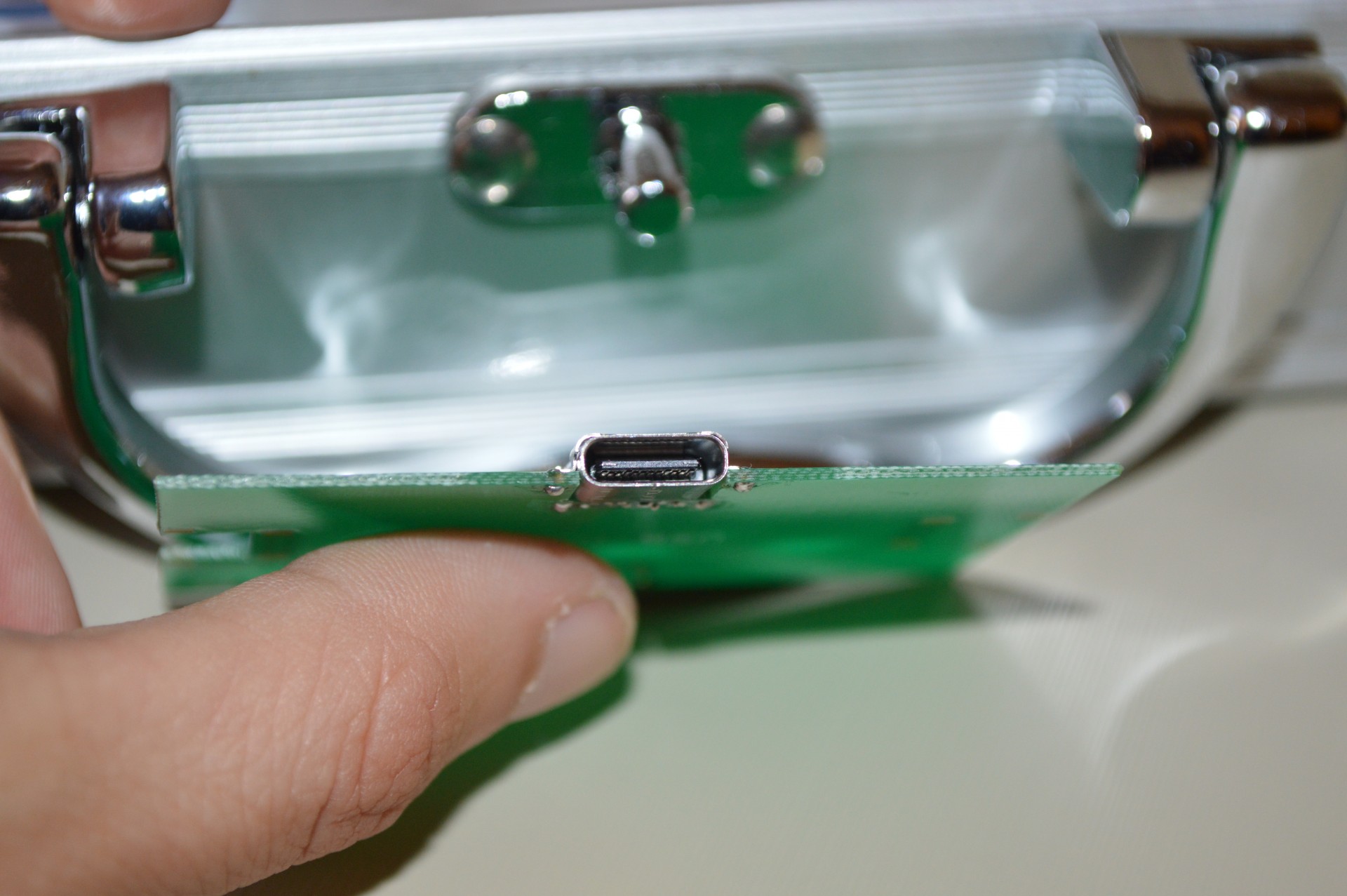
Apple showed off it's cool new MacBook laptop the other day, and while it certainly is a thing of beauty, one of the things seemingly lost in the shuffle is the new connector that's been incorporated. It's called USB Type-C (the official name is USB 3.1) and soon you're going to see it popping up on devices everywhere.

What's so different about USB-C from the previous USB-2 and 3.0? Let's count the ways:
1. It very small and uses a micro-USB connector that's reversible. Because the connector is so compact, you'll see it show up on all sorts of mobile devices as well as laptops and desktop computers.

2. It's like USB on steroids in terms of speed. It features speeds up to 10Gbps, or twice that of USB3. It's still not as fast as Thunderbolt 2's 20Gbps, but it's plenty fast for most audio applications.

3. It can deliver lots of power, with up to 100W available, meaning that it can not only drive a bandwidth hog like a 4k display but power it too.

4. It's backwards compatible with all the USB connections before it. No need to buy new USB gear, if you have an adapter, they'll work just fine with your device with the new format.

That said, the adapters are pretty pricey at the moment, going from $19 to $79 depending upon what you're trying to connect. Expect these prices to come down as more third party suppliers get into the act. Apple's prices for accessories are always at the top of the market.

While USB-C might seem like another Apple propriety connector, this is something that the entire computer industry is adopting. Like in other cases (like adopting SCSI, USB-3, Thunderbolt, dropping disc drives and CD drives), Apple just made the move first move.


Don't forget to check out my Music 3.0 blog for tips and tricks on navigating social media and the new music business.

Friday, November 7, 2014

Royer Labs John Jennings On My Latest Inner Circle Podcast.

Bobby Owsinski's Inner Circle Podcast image
Royer Labs VP of sales and marketing John Jennings is my guest on my  latest Inner Circle Podcast. We talk a lot about ribbon mics (Royer makes some of the best, of course), but also about guitars. We also discover that we have a common background in Bruce Springsteen's back yard in Asbury Park, NJ.

In the intro, I look at the logic behind Apple asking the major labels for a licensing discount for Beats Music (or whatever the new name will be), as well as the 10 iconic products that the music/pro audio industry got right.

Remember that you can find the podcast either on iTunes or at BobbyOInnerCircle.com, and now also on Stitcher.
----------------------------------

Monday, September 22, 2014

Apple's New Audio System For Thin Devices

Apple Speaker Patent image
Every since Apple hired my friend and surround sound mentor Tomlinson Holman a few years ago, I knew that the company would be working towards higher audio quality in a profound way. And generally speaking, the sound of Apple products does continue to improve, even if it's hardly ever noted. I just purchased a new iMac and Macbook Pro, and could immediately tell the difference between my 3 year old versions.

iPhone 6 plus speaker imageThis recent Apple patent application was dug up that's titled "Long Throw Acoustic Transducer," and it relates to a playback element in the thin device iOS environment. The idea behind it is that it has two permanent magnets that are joined by a linkage with a high magnetic permeability to form a a piston that is inserted into a housing. There are two pole coils surround the housing with each coil adjacent to one of the magnets, and they oscillate within the housing when an electrical signal is applied. One of the magnets can have a vent passage, but that's not entirely necessary. The whole idea is to provide a greater volume of air from a compact device than was previously possible.

We don't know for sure because it's not marked, but it doesn't look like the transducer in the new iPhone 6 plus is using this technology yet. Here's a picture of it thanks to the breakdown of the phone on ifixit. Either way, the boffins at Apple haven't forgotten audio, and we Mac/iPhone/iPad fanboys should be thankful.
----------------------------------

Wednesday, July 30, 2014

Beats Headphones Deals With Counterfeiting

Counterfeit Beats Headphones image
In recent years we've seen a lot of counterfeit audio gear, mostly microphones and headphones and most of it coming out of China. Usually when the price is too good to be true, it's either a close-out of a model that will no longer be manufactured, or it's a counterfeit. One of the more egregious examples in recent years is with one of the best headphones on the market, the Audio Technica ATM-50, but there are other companies that are affected as well.

Although not a favorite of audio pros, Beats by Dre headphones are one of the best sellers (much to the chagrin of the older pro headphone manufacturers), but the company has a real problem with counterfeit manufacturing. Last month it filed it's 5th court injunction of the year against either a rip-off manufacturer, an online seller or a retailer. What's worse, its phony headphone sales have run rampant throughout Asia, where it's much more difficult to control.

Each industry has its counterfeit goods rated on an A to C scale, with an A rating meaning that the product looks legitimate and is sold for roughly the same price as the authentic product. A C rating means that the product bears the brand's logo, but doesn't resemble the original other than that. Beats is fighting counterfeit goods that range from A to C, with the C level products selling for as little as $10 to $15.

One of the more interesting pieces of this story is the fact that much of the sales come from fake online sales sites like ilovebeatsbydre.com, which shows product pictures lifted from the real Beats website, but delivering something much different. Beats have been vigorous in routing those out, however, and has had over 3,000 similar domain names transferred to its ownership since 2013.

It will be interesting to see how Apple, the new owner of Beats, deals with this issue. Obviously, its pockets are a lot deeper, and the company has been fairly successful in combating counterfeits in the past, but this is an new game entirely.

So remember, the next time you see a deal on a piece of new gear that seems too good to be true. Just think about the Beats counterfeits before you shell out your money.
----------------------------------

Monday, June 9, 2014

Goodbye 3.5mm Jack

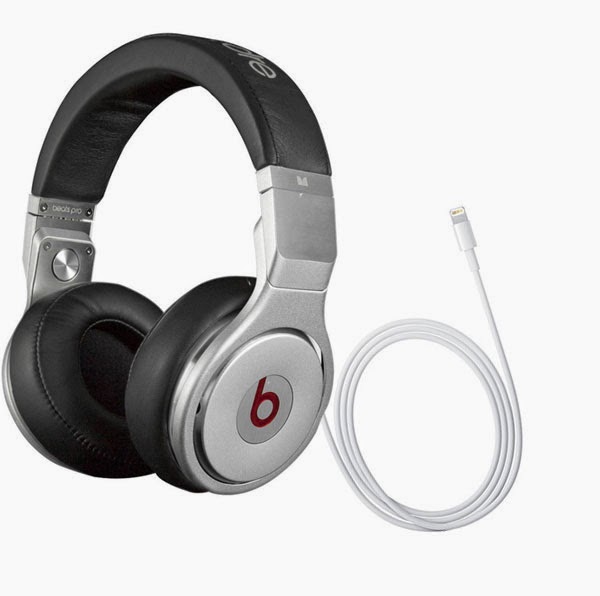
headphones with lightning connector
Don't you just hate those 3.5mm mini-phone jacks and plugs? The jacks are really fragile, and now that most headphones come that way, you always have to have a 1/4" adapter handy when connecting to professional gear.

I'm happy to report that the 3.55mm jack may be headed for obsolescence, as Apple has quietly announced that it will soon be providing headphones with a Lightning connector on its upcoming gear. That means that the A/D and D/A convertors can be moved to the headphones so they will be capable of receiving 48kHz stereo audio and send 48k from the microphone. It will also allow more remote control features from the headphones as well.

Apple will supply two headphone configurations: a simple one where the convertors live on the playback device, and a premium version with the convertors onboard. Since the premium headphones can draw power from the playback device, they can also incorporate noise canceling features as well.

There's some speculation that the first units will come from Beats, now that Apple owns them. That said, I wonder what one does when you need a headphone extension cable? And will it be a hassle when we won't be able to use our current phones with our iDevice?
----------------------------------

Wednesday, October 30, 2013

How Apple's New Product Announcements Affect The Music World

Mac Pro On Display image
Another Apple special event spectacular has come and gone, and once again people are buzzing with what was announced and what wasn’t. Apple is clearly a consumer electronics company, but one that’s highly influential in the music world, and this series of products will influence music more than you might think.

The first significant announcement was pretty much glossed over, and that’s the fact that iTunes Radio now has 20 million users and has served up over a billion songs. Considering that it’s only been a little over a month since the service was introduced (and only in the US at that), and you can see why iTunes Radio is shaping up to be the monster that Pandora and Spotify feared the most. The prediction here is that by this time next year iTunes Radio will have surpassed the cumulative listeners of both Pandora and Spotify together, and you can be sure that will jeopardize the existence of at least one of these services.

But this was an event centered mainly around hardware, and while the brand new iPads are nice and more powerful than ever, most music production is still done on desktop machines and to a lessor degree, laptops that have become almost as powerful. The new Mac Pro (which will finally be shipping in December) touted at the event will have a deeper impact than most analysts believe, basically because it’s more of a strategic product than almost anything else in the Apple line.

To understand why that is, you have to first understand that Apple rules professional audio and has for some time. There’s plenty of great audio products for the PC, but virtually all pro shops are based around the Mac hardware platform and operating system. This has been the case for more than a decade, despite the higher initial purchase price of the hardware. Read more on Forbes.
----------------------------------

You should follow me on Twitter and Facebook for daily news and updates on production and the music business.

Don't forget to check out my Music 3.0 blog for tips and tricks on navigating social media and the new music business.

Monday, October 28, 2013

The Making Of The New Mac Pro

A lot of us will be buying the new Mac Pro in December when it's released to replace some of the older Mac desktops that our studios now run. I thought that you'd like to see how the new machines are being made in plants in California, Kentucky, Texas, Tennessee Georgia and North and South Carolina. It's an interesting combination of super hi-tech robotics and good old fashioned hand assembly.


----------------------------------

You should follow me on Twitter and Facebook for daily news and updates on production and the music business.

Don't forget to check out my Music 3.0 blog for tips and tricks on navigating social media and the new music business.

Sunday, May 5, 2013

New Music Gear Monday: Acer Aspire R7 Laptop/Tablet

Today we're not going to look at a piece of audio gear per se, but a laptop. Since so much of our musical lives revolve around the computer these days, including one in New Music Gear Monday seems more than appropriate.

Before we go any further I want to admit to you that I'm an Apple fanboy. I've had Apple computers as far back as the Lisa model and the very first iMac and I've been extremely happy with them. Sure, I've had some PCs along the way, but I could never get my arms around any version of Windows. The Mac just works and I don't have to think about it, so that's what I gladly use.

That said, I am open to other things, especially when they have some interesting features. The Acer Aspire R7 is as interesting as they get, with a Mac-like look and a nifty pop-up, reversible screen. What's more, it also acts like a tablet in that the screen is touch sensitive and the fact that it can almost lie flat like an iPad.

This might be one of those cases where a device tries to be all things to all people, so it's yet to be seen whether this can actually make it as a DAW platform (especially since the trackpad is moved above the keyboard), but at least Acer is thinking outside the box. Check out the video for a more detailed description.


----------------------------------

You should follow me on Twitter for daily news and updates on production and the music business.

Don't forget to check out my Music 3.0 blog for tips and tricks on navigating social media and the new music business.

Thursday, November 29, 2012

Is Logic Being Discontinued?

Logic Studio image from Bobby Owsinski's Big Picture blogWhile Pro Tools is the king of the professional DAW world, there's still a large and dedicated Logic Pro following, with many users swearing by its versatility and sound. Those users have clamored for a new upgrade, since the last version of Logic was released way back in 2009.

That new version may never come, as word has leaked out of Apple Europe (where Logic development is based) that the company has let go virtually its entire Logic team except for 2 pro application specialists. Word is that there is no plan to hire anyone else, which does not bode well for the product.

A quick look on Apple's job site shows lots of audio related jobs at various spots within the company, but none related to Logic. Apple has hinted that the next big audio app in the future will be for iPad.

I hate to say it, being an Apple fanboy myself, but company does seem to be turning primarily into a consumer audio company, and little by little abandoning the pro users who stood by it during the hard times. I'm personally not a Logic user (I never could get my arms around it), but if it does disappear, I mourn its loss, since that's just another reason for a pro to look at another platform.

Apple CEO Tim Cook has promised that a new Mac Pro is in the offing (probably in January), and that will go a long way to bolster the state of the pro user at Apple. Until then, we can only wonder if all pro apps and hardware will go the way go the same way as Logic appears to be going.

Update: There's some question as to the truth to this report. Check out this post on AppleInsider, this one from Macrumors, and this one from Music Radar for more on the subject.
----------------------------------

You should follow me on Twitter for daily news and updates on production and the music business.

Don't forget to check out my Music 3.0 blog for tips and tricks on navigating social media and the new music business.

Thursday, July 5, 2012

Did Apple Rip Off Braun?

Gizmodo recently ran an interesting post pointing out that the vaunted Apple industrial design can trace its origins to the 50's and 60's Braun product designs. The designer for Braun at the time was Dieter Rams, and it appears he had similar design philosopies as Apple's current head of design, Jonny Ivie. In fact, Rams even laid out 10 principles for good design, all of which you can see in Apple products:
• Good design is innovative.
• Good design makes a product useful.
• Good design is aesthetic.
• Good design helps us to understand a product.
• Good design is unobtrusive.
• Good design is honest.
• Good design is durable.
• Good design is consequent to the last detail.
• Good design is concerned with the environment.
• Good design is as little design as possible.
Take a look at some of the product similarities:
Braun Atelier TV and latest iMac 24.
Braun T1000 radio and PowerMac G5/Mac Pro.
Detail of the radio perforated aluminum surface.
Braun T3 pocket radio and Apple iPod.
Braun L60 sound system and Apple iPod Hi-Fi.
Braun LE1 speaker and Apple iMac.


What else can we expect from Apple? Look to past Braun products for clues.

----------------------------------

You should follow me on Twitter for daily news and updates on production and the music business.

Don't forget to check out my Music 3.0 blog for tips and tricks on navigating social media and the new music business.

Wednesday, February 22, 2012

Inside Apple's New iTunes Mastering Tool

Mastered for iTunes image from Bobby Owsinski's Big Picture production blog
Mixing engineers, producers and mastering engineers have faced a dilema for a number of years now. That is, "Should digital files intended for Internet distribution be mastered separately?" This has been a sore spot with many veteran mastering guys, some who believe a separate master is a must, while others feel that an MP3 or AAC file made from a well-made master is more than sufficient.

It seems that Apple has finally made the decision for us all, as they've just released their Mastering For iTunes guidelines. I learned of this through an email from legendary mastering engineer Bob Ludwig of Gateway Mastering, who I believe was instrumental in Apple getting their mastering thing together (more on this later).

Among the things that the guideline recommends is:
  • Always use the highest resolution file available. That means if your project started out at 96kHz/24 bit, that's what you should send to iTunes for encoding.
  • Compressing the living hell out of the track to make it as loud as possible actually works against you. That's because of a circuit called Sound Check in iTunes (it's called different things on different players and services) that lets the listener hear all his songs at about the same level. A highly compressed master actually pulls the level down, so it sounds quiet and less punchy. This is a mantra that Bob and many other top mastering engineers have been singing for quite some time. 
  • It's best to leave a dB or so of headroom when mastering a data-compressed online file like an AAC or MP3, as I've state in both The Mastering Engineer's Handbook and Mixing And Mastering With T-RackS. Some encoders actually output a little hot, and mastering at -1 or -2dB instead of -.1 dB can make the difference between clipping or not.
  • Bandwidth is becoming less and less of an issue, so data-compressing is becoming less and less necessary.  That means that larger file sizes of greater fidelity will be less of an issue in the future. That's why Apple is pushing its AAC Plus lossless hi-res format. Soon it will become more and more possible to hear your glorious hi-res files as they were intended.
Apple has gone as far as to make a number of tools available to mastering engineers or anyone who plans on distributing via iTunes. This is so you can monitor your file before sending it to iTunes to determine how it will sound. These utilities include:
  • Master for iTunes Droplet. The Master for iTunes Droplet is a simple, standalone drag-and-drop tool that can be used to quickly and easily encode your masters in iTunes Plus (the hi-res version of iTunes) format.
  • afconvert. The afconvert command-line utility can be used to encode your masters in iTunes Plus format.
  • afclip. The afclip command-line utility can be used to check any audio file for clipping.=
  • AURoundTripAAC Audio Unit. The AURoundTripAAC Audio Unit can be used to compare an iTunes Plus file to the original source file.
By the way, you have to be on at least Mac OS 10.6.8 to run these tools. If you have anything to do with distributing via iTunes, be sure that you check out the iTunes mastering guidelines.

----------------------------------
Help support this blog. Any purchases made through our Amazon links help support this website with no cost to you.


You should follow me on Twitter for daily news and updates on production and the music business.


Don't forget to check out my Music 3.0 blog for tips and tricks on navigating social media and the new music business.


Thursday, May 5, 2011

Apple Gets An Audio Boost

It's being reported that audio guru (at least to me) Tomlinson Holman has been hired by Apple to oversee it's audio development. This is fabulous news for musicians, engineers, film makers, and all Apple hardware users since you couldn't get a better, more knowledgeable guy for the job.

For those of you who don't know who Tom is, you certainly know a few of his creations. The famous THX standard that you see in most movie theaters today is his brainchild, and stands for Tom Holman eXperiment. Tom was the corporate technical director for LucasFilm when George Lucas asked him to create a spec to make the sound in theaters not only higher fidelity, but more consistent from theater to theater as well. You can thank him for the great sound we have the movies today as a result.

Tom was also the originator of the "5.1" surround sound concept and even coined the phrase (he later went on to 10.2). He was somewhat of a mentor to me during my years in surround sound. I can remember discussing some of the problems in surround calibration that I was having at a Grammy seminar during the early days when we were all searching for answers and tools, and generally being put down as not knowing what I was talking about. Tom was the only one who understood my problem, which lead to a number of standardized calibration test tapes that were vital in the early days of the medium.

Tom is truly an audio scientist (he's a professor at the film school at USC) and he's forgotten more than most people in the business have ever known. There are a few giants in the pro audio business (Rupert Neve and George Massenburg come to mind), but Tom stands shoulder to shoulder with them. We're all going to be better off with his association with Apple.
----------------------------------
Help support this blog. Any purchases made through our Amazon links help support this website with no cost to you.

You should follow me on Twitter for daily news and updates on production and the music business.

Don't forget to check out my Music 3.0 blog for tips and tricks on navigating social media and the new music business.

Thursday, September 23, 2010

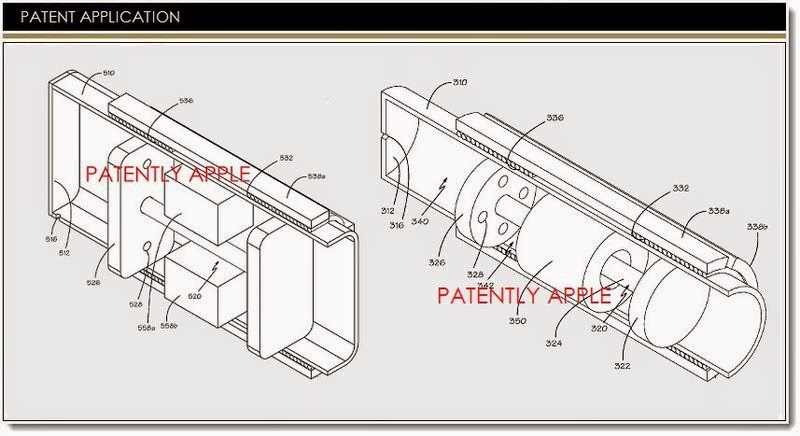
Apple To Introduce New Smaller Audio Jack

Every pro audio person hates small audio jacks. While no one has any problem with 1/4 inch guitar jacks, the 1/8th inch "mini-jacks" are usually a sign of portable consumer hardware and something an audio pro generally doesn't want to touch.

But in an effort to shrink the models in their iPod line ever smaller, Apple has applied for a patent for a new smaller jack using a technology called "pogo-pins." All this was discovered by the ever vigilant Appleinsider website. Here's Neil Hughes post on the subject.

-------------------------

In its continuous pursuit to create smaller, more compact devices, Apple has shown interest in creating headphone jacks for iPods and iPhones that will take up even less space inside a device.

A new patent application from Apple was revealed this week by the U.S. Patent and Trademark Office and discovered by AppleInsider. Entitled "Audio Jack with Pogo Pins for Conductive Contacts," it describes an audio headphone jack that depends on deflectable Pogo pins to conserve space.

The application notes that audio jacks include several conductive pads in order to create contact with a standard 1/8-inch audio cable when plugged in. Through these cables, audio, power and data can be transferred.

Current audio jacks typically depend on "cantilever beams," which extend into the cavity and deflect away when an audio plug is inserted. The cantilever beam, however, can take up a large amount of space.

"In particular, a cantilever beam can require a substantial minimum length for ensuring that the force generated by the beam deflection is sufficient to maintain the beam in contact with an audio plug contact portion," the application reads. "In addition, the cantilever beam requires space in at least two dimensions, which can prevent the size of an electronic device from being reduced."

"This can especially be an issue for electronic devices so small that the audio jack size effectively determines the size of the device."


The application has become public as Apple has introduced its latest and smallest line of iPod players ever. Design considerations for the size of the headphone jack can be seen in the latest iPod nano, which employs a tiny 1.54-inch display.

In its teardown of the new iPod nano, iFixit found that the front glass on the sixth-generation device sticks up about .3mm from the flat face of the outer case. The solutions provider said that decision was likely made because of the size of the headphone jack.

"Apple wanted to keep the device as thin as possible, and the curvature of the edges would have forced the case to be thicker for a completely flush glass panel," they said. "A thicker case was ditched in favor of the glass sticking out slightly."

Apple's solution would rely on Pogo pins embedded the audio jack cavity, which would extend to create contact with an audio plug. Upon insertion of an audio plug, the retractable portion of the pins would become depressed and would meet the contacts on the plug.

The use of Pogo pins would allow the size of an audio jack to be "greatly reduced in two dimensions," the application reads, including along the axis of the cavity and in one direction perpendicular to the axis of the cavity.

"The contact mechanism for the audio jack only needs to extend in one direction (e.g., in one direction perpendicular to the axis of the cavity, or y)," it states. "This may allow an electronic device in which the electronic device housing follows the dimensions of the audio jack for around at least one half of the periphery of the audio jack (e.g., all of the audio jack conductive pads and the movement of the audio jack conductive pads remains in a plane that includes the central axis of the cavity)."


Pogo pins are a registered trademark of Everett Charles Technologies. Its name came due to a comparison with a pogo stick toy. Pogo pins are typically formed as a slender cylinder with two sharp, spring-loaded pins.

Made public this week, the application was first filed for on June 10, 2009. It is credited to Sean Murphy and John Difonzo.

----------------------------------
Follow me on Twitter for daily news and updates on production and the music business.

Don't forget to check out my Music 3.0 blog for tips and tricks on navigating the music business.

LinkWithin

Related Posts Plugin for WordPress, Blogger...