Get This Free Cheat Sheet Guaranteed To Help Your Next Mix

Showing posts with label Wrecking Crew. Show all posts

Tuesday, May 19, 2015

All Hail The Wrecking Crew Movie

The Wrecking Crew logo image
I had the pleasure of seeing the release version of the most excellent Wrecking Crew movie last night at the historic United Studios in Hollywood and it was a blast.

For those of you who don't know, the Wrecking Crew was the group of studio musicians who played on hundreds of hit songs, television shows and movies in the 60s and 70s including hits by The Beach Boys, Phil Spector, Frank Sinatra, Elvis, The Byrds, The Monkees and tons more. They acquired the name "Wrecking Crew" from the rather straight-laced studio musicians that came before them that thought the group of studio musician upstarts were going to "wreck the business."

The documentary was the brainchild of Denny Tedesco, who's father was the ad hoc ringleader of the Crew, guitarist Tommy Tedesco, one of the most recorded session players in history.

I saw an early cut a number of years ago, but this final cut just blew me away. If you're a lover of music and have heard these songs a lot (who hasn't), this is something that you'll want to see, and you'll definitely want the DVD/Blu-ray disc, which has an additional 6 hours of interviews that didn't make the movie.

There were 2 great things about last night besides the movie. One was the fact that the showing was held at United Studios on Sunset Blvd in Hollywood, which was where so many of those hits were actually recorded way back when, and the Q&A session afterwards with Denny, Don Randi (one of the many keyboard players from the Crew) and Dave Pell, who at 90 years old is still sharp as a tack and told some great stories of the days when he played with the greats and ran several record labels. You just don't hear stories like that anymore.

Don Randi, Dave Pell, Denny Tedesco at United Recording
I could go on and on, but suffice it to say that it's just better that you see the movie and enjoy it for yourself. Here's the trailer, but be sure to check out the website as well, especially the union contracts from all the sessions.


Thursday, January 15, 2015

The Beach Boys "California Girls" Isolated Vocals

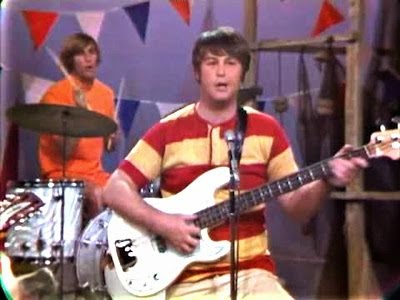
The Beach Boys image
Here's an absolute classic. It's the isolated vocals from The Beach Boy's all-time great hit "California Girls." The band was already big long before this song, but this 1965 song put them in a new stratosphere.

The song was written by Brian Wilson (who also produced) and lead singer Mike Love. The basic track took 44 takes by the studio band known as The Wrecking Crew (which included Leon Russel on piano here), recorded at Hollywood's famed United Western Recorders. The vocals were recorded about a month later in New York City at the equally famous CBS Columbia Square studios.

An interesting side note, this was the first song that Bruce Johnston sang on, having just replaced Brian Wilson in the road band. You can hear him on the falsetto parts on the outro. Here's what to listen for:

1. Mike Love's lead vocals are doubled and panned left and right. You don't hear the double so much on the final mix because they're fairly close (especially given the era this was recorded in).

2. There are two sets of harmonies that are spread slightly left and right. Although some parts are doubled in places, for the most part there are mostly different counterpoint parts that mesh together perfectly.

3. This is one of the best examples of the BBs trademark, which is the low bass vocal part. It's something that you rarely hear during background vocals of any era.

4. The harmonies aren't perfect. When you think of The Beach Boys, you think of impeccable vocals, but in this case, there are little inconsistencies throughout. There's a few wrong notes, a few minor sour ones, and some ragged releases, especially towards the end.

5. Listen through to the end, where you'll hear what took place after the fade of the final mix.


Wednesday, July 9, 2014

The Carol Kaye Documentary

Bassist Carol Kaye is a studio legend unfortunately that has never gotten enough notoriety. As the only female member of the infamous Wrecking Crew group of LA studio musicians, Carol played on so many of the hits that have since gone on to become classics (think "Good Vibrations," "California Girls," Scarborough Fair," "Feelin' Alright," "River Deep Mountain High," just to name a few) as well as many television shows and movies from the period. It's no surprise that she became the go-to bassist for Brian Wilson, Phil Spector, and even Frank Zappa.

Now a documentary about Carol's life is being shot, and below you can see the trailer for it, as well as a long interview with her. If you love music history and great playing, make sure you check both of these out.


----------------------------------

Monday, February 3, 2014

A Visit With Nashville's "A Team"

The A Team image
Those in the know about the studio business of the past frequently talk about studio bands like LA's Wrecking Crew and Detroit's Funk Brothers with great reverence, as well they should. These were some great musicians who were responsible for the soundtracks of our lives, even today to some degree. A studio band frequently overlooked in the conversation is Nashville's "A Team," a group of musicians who made the sound of country music what it was in the 50s through the 70s.

Here's a great video of the 5 remaining members (guitarist Harold Bradley, guitarist Ray Edenton, multi-instrumentalist Charlie McCoy, bassist Bob Moore, and keyboardist Hargus "Pig" Robbins) during a photo shoot at the end of 2013. The shoot was at the famous RCA Studio B and the band discusses recording with Dolly Parton, Willie Nelson, and Bob Dylan, among other things.


----------------------------------

You should follow me on Twitter and Facebook for daily news and updates on production and the music business.

Don't forget to check out my Music 3.0 blog for tips and tricks on navigating social media and the new music business.

Sunday, May 1, 2011

The Wrecking Crew Movie Redux

I've written about the great Wrecking Crew movie before, but here's something different about it. It's an interview with producer Denny Tedesco along with some great clips from the movie. Unfortunately, it hasn't been released yet due to the fact that there are so many hit songs in it that the music licensing is enormous. It has won awards quite a few film festivals though.

Even if you don't know who the Wrecking Crew is, you've heard them before - a lot. They were the studio band for every hit that came out of LA in 60's and some of the 70's. The group played on almost every style of recording, including television theme songs, film scores, advertising jingles and almost every genre of music, with artists that included The Monkees, Bing Crosby, Nancy Sinatra, Bobby Vee, The Partridge Family, The Mamas & the Papas, The Carpenters, John Denver, Simon & Garfunkel and many more.

Enjoy this great clip. Find out more about the movie at Wrecking Crew Film.com.

----------------------------------
Help support this blog. Any purchases made through our Amazon links help support this website with no cost to you.

You should follow me on Twitter for daily news and updates on production and the music business.

Don't forget to check out my Music 3.0 blog for tips and tricks on navigating social media and the new music business.

Tuesday, September 14, 2010

The Wrecking Crew Movie

I've written about the Wrecking Crew movie before, but it really needs to be brought up again because it's such an important historical document as well as a totally fun watch. For those of you who don't know, the Wrecking Crew was a group of Los Angeles studio musicians during the 60's and 70's that played on so many of the hits of the time that's it's hard to believe they all came from just one group of people.

The group played on almost every style of recording, including television theme songs, film scores, advertising jingles and almost every genre of music, with artists that included The Monkees, Bing Crosby, Nancy Sinatra, Bobby Vee, The Partridge Family, The Mamas & the Papas, The Carpenters, John Denver, Simon & Garfunkel and many more.

They helped Phil Spector create his famous "Wall of Sound," and realized Brian Wilson's vision for Beach Boy hits like "Good Vibrations", "California Girls", the acclaimed album Pet Sounds, and the original recordings for Smile.

Unfortunately, despite widespread praise, the excellent film about the band can still only be seen in private showings and film festivals since producer Denny Tedesco (the son of the late Wrecking Crew guitar player Tommy Tedesco) can't find a distributor. Why? Because the Crew played on so many hits that the licensing fees to get them in the movie would be enormous, and that scares them away. Of course, the fees aren't that much for a major studio tentpole movie, but that's not what this documentary is.

The movie is exceptional whether you're in the music business or not. Hopefully you'll get a chance to see it on the big screen or a DVD soon. If not, be on the lookout at your local film festival. You won't be disappointed.

Below is the trailer for the film. You can find out more on the Wrecking Crew movie website, and you can check out some excellent outtakes from the movie as well.


----------------------------------
Follow me on Twitter for daily news and updates on production and the music business.

Don't forget to check out my Music 3.0 blog for tips and tricks on navigating the music business.

Thursday, May 13, 2010

Session Musician 101

It's a good time for another book excerpt, this time from one that I've neglected on this blog - The Studio Musician's Handbook. Here's a little from chapter 9, entitled "Session Musician 101."
----------------

YOUR MUSICALITY - Ears, Chops and Feel
Studio musicians are known for their musicality, which consists of your ears, chops, and feel, as well as your judgment. Session players have enough experience to know what to play and when to play it. They know how to best interact with the artist, other musicians, the engineer, and the producer to make the session the most efficient and fun. They have an innate feel for how to make you and your song sound great. Let’s take a look at some of the musicality attributes that you’ll need.

Your Chops
Studio musicians are expected to be creative, extremely versatile, and have a formidable skill set. They’re usually the best players in town. Overall, the session musician is playing to a recording medium where there is little or no entertaining involved. Playing live is all about entertainment and finesse gives way to the crowd and the heat of the moment. The same musician will come from a different place in the studio and will need to utilize finesse and restraint to create a different “feel” than when playing live. And there is a completely different set of challenges on a session. Live music terminates in the air and is a series of “snapshot” moments. Sessions can be seen as opportunities to create musical “building blocks” that terminate on recorded media and are meant to be frozen in time forever. That’s why session musicians fare just as well in the live idiom as everyone else. Sadly, the same cannot be said for the majority of musicians who cull most of their experience playing live.

Your Technique – Purity, Not Perfection
Successful session musicians all have an innate feel for their instrument(s). Their actual technique may not be textbook perfect, but they all have a way of sounding great when they play. Studio musicians know how to make their instruments sound “right” for the song, cue or jingle. They know just what axe to use and are capable of responding to direction in a way that yields audible results that are more than pleasing to producers’, engineers’ and artists’ ears. Session players are also remarkably consistent in that they can play a part many times over without losing the fire or feel. There’s a zone all session players strive for, where they’re hitting the note and the groove just right and are capable of sustaining that moment and repeating a performance as many times as it takes until that voice from the control says “We got it!! Excellent!”

Your Reading
Your ability to read music will determine the type of sessions you can play on. For record dates, the ability to read and transcribe lead sheets is essential, but many other sessions like jingles and television and movie scores require expert sight reading.

To illustrate the reading abilities of session players, here’s a story about the late Tommy Tedesco, one of the most recorded guitar players ever and charter member of the famed Los Angeles studio band The Wrecking Crew during the 60’s and 70’s. Tommy was playing on a Jan & Dean date when, as a joke, singer Jan Berry turned Tommy’s music upside down on the stand. The take started and Tommy proceeded to play the backwards score note for note. A frustrated Berry yanked the page off the stand and said, “You’re just showing off!”

----------------------------------
Follow me on Twitter for daily news and updates on production and the music business.

Don't forget to check out my Music 3.0 blog for tips and tricks on navigating the music business.

Tuesday, July 21, 2009

Traits Of A Studio Musician


In August, a book that studio bassist Paul ILL and I wrote will be published entitled "The Studio Musician's Handbook." It's an inside look at everything there is to know about being a studio musician, including how much you can make, how you become one, what it takes to become one, and what's expected of you. There's also a DVD included that takes you inside an actual Hollywood session so you can see for yourself what it's like to be a studio musician.

Here's a brief excerpt from chapter 5.

--------------------------

You’ve got your first session, now how do you keep them coming? First of all, here are the traits that you find in all studio musicians.

Traits of a Studio Musician
Great Chops
Great Gear
Easy To Work With
No Ego
Takes Criticism Well
Proper Studio Etiquette

Let’s go over these one by one.

Great Chops
Studio musicians are expected to be creative, extremely versatile, and have a formidable skill set. They are usually the best musicians in town in terms of plain physical dexterity, and are able to play numerous styles convincingly. Your ability to read music will determine the type of sessions you can play on. For record dates, the ability to read and transcribe lead sheets is essential, but many other sessions like jingles and television and movie scores require expert sight reading.

To illustrate the reading abilities of session players, here’s a story about the late Tommy Tedesco, one of the most recorded guitar players ever and charter member of the famed Los Angeles studio band The Wrecking Crew during the 60’s and 70’s. Tommy was playing on a Jan & Dean date when as a joke, singer Jan Berry turned Tommy’s music upside down on the stand. The take started and Tommy proceeded to play the backwards score note for note. A frustrated Berry yanked the page off the stand and said, “You’re just showing off!”
"...the town is full of guys who play great, so that’s not even on the table. You have to find people who are doing what you want to do and connect with them, and when your shot comes, don’t screw up! It’s as simple and as cold as that."
Studio guitar player Gary Solt
"You don’t have to tell them (studio musicians) what you need, they just automatically go there. When you have to explain to someone how to make something feel better, it becomes a hard place to have it come from if you have to wrap your head around it first. As soon as you have to think about it you’re going to miss part of it anyway. But you can get there, you just have to listen and practice and always pay attention to it. For example, if I have Chad Wackerman on drums, I can tell him to lay back one more hair on the beat and he’ll know what I mean, where with younger players there’s only ahead of the beat, behind the beat, and on the beat. For advanced players there’s a hundred variations of all of those places."
Producer Frank Fitzpatrick
You can read more about The Studio Musician's Handbook on the excerpts page of my website. There's also a brief excerpt of the DVD there as well.

LinkWithin

Related Posts Plugin for WordPress, Blogger...