Get This Free Cheat Sheet Guaranteed To Help Your Next Mix

Friday, June 27, 2014

Film Composer Chris Boardman On The Lastest Inner Circle Podcast

Bobby Owsinski's Inner Circle Podcast image
On this week's podcast, film composer and arranger and 6 time Emmy winner Chris Boardman joins me for a discussion on the state of the film business, getting started in the industry, and his new position at the University of Miami.

I'll also discuss the makeover that the Billboard charts have undergone, and take a look at inexpensive Chinese microphones.

Go to bobbyoinnercircle.com or to iTunes to listen.

If you listen on iTunes, please leave a comment if you dig what you hear!
----------------------------------

Thursday, June 26, 2014

Steely Dan "Kid Charlemagne" Instrumental Track

Love them or hate them, Steely Dan songs are as state-of-the-art as you can get thanks to the relentless search for perfection by Donal Fagen and Walter Becker. The men have been known to cut a song many times over with different players until they get what they want performance-wise. The same can be said for the engineering, with the late Roger Nichols handling the tracking and Barney Perkins on the mix.

Here's a look inside the basic rhythm section of "Kid Charlemagne" (from their Royal Scam album) stripped of vocals, solos and sweetening. Some things to listen for include:

1. The precision of the playing is fantastic. There's enough room for the players to stretch out slightly (bass player Chuck Rainey stretches a lot), yet they're so tight on all the hits while not sounding quantized. Listen especially for the turnarounds between sections.

2. Listen to Larry Carlton's guitar on the left side. He's playing along with the Rhodes piano, yet the releases of both instruments are fairly loose.

3. Check out the clavinet on the right side. That's often buried in the mix, but it's quite apparent here. It meshes great with the other instruments without getting in the way, considering how busy the playing is.

4. Drummer Bernard Purdie is playing a version of his famous shuffle, but listen to the unusual pattern on the high hat.


If you liked this track, you also might like my Deconstructed Hits series of books that provide an inside look to hits from all different genres.
----------------------------------

Wednesday, June 25, 2014

My Top 10 Most Used Plugins

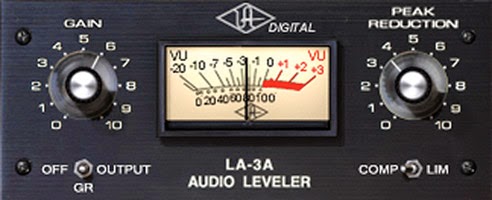
Universal Audio Teletronix LA-3A plugin image
It seems like a lot of you enjoy reading what kind of gear I like to use, as evidenced by the views for my top 10 mics, mic preamps, EQs and compressors. I'm going to continue the series with my "Top 10 Most Used Plugins."

Keep in mind that I use a lot of other plugs by other manufacturers, but these are the ones that I find are used somewhere on almost every mix that I do. Also, I'm a Pro Tools user, so some plugs are PT-centric.

1. Pro Tools 7 Band EQ: I love this plugin because it sounds pretty good, doesn't eat up any system resources, and has hi and low pass filters. Sometimes I'll just use it for the filters only (like on effects), but I always find a lot of these sprinkled across a mix in many other places.

2. Universal Audio 1176LN: My go-to compressor in most cases. UA has a lot of different variations in their Classic Limiter bundle, but this is the one that works best for me. I find it can just about work on anything if you adjust the attack and release times, but I'll almost always use it on bass for sure, toms, and probably vocals (although the UA LA-2A works great there as well).

3. PSP Vintage Warmer: Everything I use this on just sounds better, especially the mix buss. I rarely use much of it, but it makes a big difference on the glue of a final mix.

4. Lexicon PCM Native Hall: I love all the Lexicon reverbs, but I find I use the PCM Hall almost all the time, mostly for things that need depth like strings and pads. The Lexicon PCM Plate is a close second, but the Pro Tools D-Verb can be surprisingly good in many places as well.

5. Universal Audio Teletronix LA-3A: Back in the hardware days I always used these on electric or acoustic guitars, since I've never found anything better on those instruments. It's no different with the plugin. It's also good on keys.

6. Soundtoys MicroShift: I looked around for a long time for a plugin with that old Harmonizer sound. The MicroShift is the first plug that I found that really does it (although you can also now get the same sound from the Eventide Ultrachannel). It's dead easy to use and provides that extra presence or smoothing like nothing else.

7. Universal Audio Precision Limiter: There are other great limiters (like the Waves L series and the Slate Digital FG-X), but this is my favorite for the stereo buss to just take care of those nasty peaks that result in overs. I don't use much of it (a dB or 2), and it's very transparent already, so you don't hear it while it does the job.

8. TT Dynamic Range Meter: This is an excellent plugin that tells you when you're squashing the mix too much. It provides precision output metering, plus that great dynamic range meter, and its FREE. Let's keep the hypercompression out of music. Use this meter.

9. Pro Tools Long Delay: There are other great delay plugs (Soundtoys Echoboy and the PSP 42 and 85 come to mind), but this is the one I reach for all the time. It's not as versatile as many plugins, but it's fast to set up, and once again, takes up virtually no system resources (which can be important on a large mix). I alter it with a previously mentioned PT 7 Band EQ ahead of it to get the sound I need and keep it out of the way of the vocal.

10. Sample Magic Magic AB: This is one of my new favorites. It provides an instant AB against any audio file. You can load up to 9 sources to AB against, and easily match the level between them all for a tight comparison. Plus you can even loop a section if you want. It's great for making sure your mix is really in the ballpark.

Like I said before, there are a lot of other great plugins that I use by a variety of companies, and there are many that I haven't tried yet, but these are the ones that I use on every single mix that I do.

What are your favorites?
----------------------------------

Tuesday, June 24, 2014

Keeping Your Studio Cool On A Budget

Mini-split air conditioner image
The components for a mini-split air conditioner
One of the things that frequently happens when building your own studio in your basement or garage is that you construct it to get as much isolation as possible, then realize that the temperature inside always hovers around tropic-level heat, even while the weather is below zero outside. That's because the last thing that most home builders consider is ventilation and air exchange, or they think they don't have enough money to get the job done properly.

Here's a quick excerpt from my Studio Builder's Handbook (written with Dennis Moody) that covers what might be the best way to make those studio temperatures comfortable without spending a lot of cash.

"HVAC (heating, ventilation, air conditioning) is a bigger part of any studio than you might realize, so it has to be taken into consideration right in the beginning. Don’t even think of using a window air conditioner since they’re way too noisy and will defeat any isolation you might’ve built. For real studio HVAC you really only have two options; forced-air or a mini-split.

Forced-air is certainly the way to go but gets very expensive very quickly, since the ductwork has to use a lot of right angle bends and diffusors to lower the air speed so it doesn’t make any noise (air noise is a vocal killer). It also requires a concrete slab to mount it on the ground outside. Finally comes the installation labor, which must be done by a pro.

A much more viable solution is known as a "mini-split". This is a system that’s very popular in Europe and Asia were the compressor is located outside the building and the air handling unit inside. All that’s required is a 1" hole that’s cut through the wall to allow access for a hose to go from the compressor unit outside to a cooling head mounted on the wall inside the studio, and a small drainage hose. The cooling head is mounted on a wall and is very quite. Depending upon how large your space is, a unit that puts out between 9,000 and 12,000 BTU unit may be enough. A big plus for the mini-split is that not only is it inexpensive, it’s very quiet as well. They are also available with an optional “heat pumps” for those cold winter days that everyone experiences (even in warm climates).

While you can install a mini-split yourself, your might want to get a pro HVAC technician to do the complete job. It should only take a few hours to install, so it won’t be outrageously expensive, but because these units need freon gas to function, you’ll have to have a professional technician do the freon work and they charge a lot for handling this gas. Even with the extra expense of a professional tech, at least you’ll be sure that it’s done right. Make sure that you have the unit serviced every year, and keep the filter clean as that helps to keep the unit from getting noisy.


If you do decide to install a forced-air system, it’s important to know where your feeds and returns are going to be. For instance, you don't want to place an air conditioning feed directly over the mixing position of your console, or directly over were your drums are going to be set up. As practical as this might sound, you’ll find this kind of direct placement will mean that it will become uncomfortably cold when the air blows directly on you. Make sure you put the feed in a place where it will be defused and quiet."

You can read additional excerpts from The Studio Builder's Handbook on the excerpts section of bobbyowsinski.com. You might also want to check out my Music Studio Setup and Acoustics video course on lynda.com.
----------------------------------

Monday, June 23, 2014

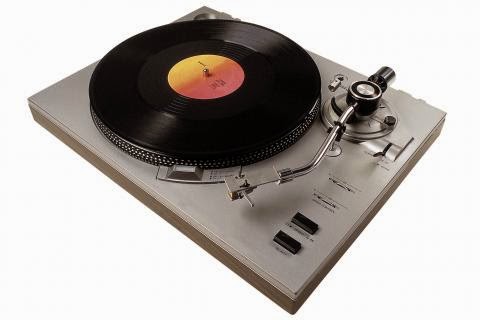
5 Reasons To Own A Turntable

Turntable image
Despite the naysayers, sales of turntables are rising right along side of the vinyl record boom. Where 5 years ago you had to really search to find one to buy (especially if you were on a budget), today you can find one even in your local Urban Outfitters. Here are 5 good reasons to own a turntable and playing vinyl records.

1. You get to own your music in a physical way. There's nothing like holding something that you purchased in your hand. It's tangible and real in a way that digital can never be.

2. You get to appreciate the artwork and liner notes. One of the best parts of the vinyl album is the cover artwork and liner notes. Many an album was purchased on these alone if compelling enough.

3. You have to listen all at once. This means that you can get into the spirit of the music and better feel what the artist was trying to portray. Sure, you can select a track at a time, but its far from the random access experience we have with digital. Some might call this a negative, but making that commitment to listen to 20-25 minutes of music can be an important part of enjoying and discovering music.

4. You have to own the necessary equipment. This forces you to consider your sound reproduction equipment, since every piece in the signal chain grows in importance. With digital, everything is made to be as simple as possible, which leads us to compromise on the playback gear almost without thinking. It can be quite fun (and expensive) too.

5. It sounds different from digital. Love it or hate it, there's something very organic about vinyl that more and more of us appreciate after years of exposure to digital only music. Some have never been exposed to anything else (see "When A 20 Year Old Hears Vinyl For The First Time"), and vinyl can be a revelation as to what music could sound like.

Don't have a turntable? Check out this article for suggestions.

What are your reasons to own a turntable?
----------------------------------

Sunday, June 22, 2014

New Music Gear Monday: Eventide Ultrachannel Channel Strip

Here's a cool plugin that you'll find useful for so many reasons. It's the Eventide Utrachannel channel strip that features a pair of dynamics processors that include an emulation of the famous Omnipressor, and a micropitch function from the Harmonizer. The plug also has a 5 band EQ, a gate, and a feature known as  FlexiPath, which allows routing of the different modules by just dragging and dropping.

I'm most excited about the micropitch function as that was the secret weapon used many engineers back in the hardware outboard gear days. If you have a uneven vocal, pitch one side up a 8 cents or so, and the other side down by the same amount, and suddenly it sounds more in tune. Great for widening background vocals, guitars, and anything else that requires a little extra magic.

Here's the best news though - Ultrachannel is free until July 8th, and then it goes back to its retail price of $249. Just go to the download page and use Access Code 07D96411. You must have an iLock account to be able to install the plug and take advantage of this free offer. The plug doesn't require you to use an iLok USB dongle, but you must use the iLok Manager for authorization. The plugin is 64 bit AAX, AU and VST compatible.

Don't pass this up, as it will be something that I guarantee you'll use on every mix.


----------------------------------

Friday, June 20, 2014

Jamie Scott Of 3rd Power Amplifiers On Today's Inner Circle Podcast

Jamie Scott from 3rd Power amplifiers image
On today's Inner Circle Podcast features boutique amplifier maker Jamie Scott from 3rd Power Amplification. Jamie will discuss his unique amps (complete with a cabinet that garnered a patent) and his obsession with Marshall Plexi amps (he has 13 of them).

I'll also discuss the winners and losers of the Beats/Apple deal, and a look at the comeback that electric guitars seem to be making.

This is podcast #10 already, and you can hear them all at bobbyoinnercircle.com or on iTunes.

By the way, if you dig what you're hearing, be sure to leave a comment on iTunes!
----------------------------------
Thursday, June 19, 2014

Rush "Tom Sawyer" Isolated Drum Track

There are some songs that we all know because they've been a staple of AOR or classic rock radio since their release. Rush's "Tom Sawyer" (from their big Moving Pictures album) is one of these, and even if you're not a Rush fan, you sort of know the song by the osmosis process of hearing it for so long.

Here's Neil Peart's isolated drum track from the song. There's a split of opinion about Peart's playing in that some think he's the best drummer on the planet, while others feel his playing is robotic and soulless. Regardless of how you feel, this is a great drum track that's worth checking out. Here's what to listen for:

1. Check out the flange effect on the cymbals on the opening downbeat

2. You can't miss the long dark reverb on the snare. You never hear it with the rest of the instruments because it's so dark.

3. Unlike many of today's mixes, the high hat is panned to the center rather than to the right as you see it.

4. The tom fills that start at 1:00 sound like they're really tightly tuned and almost out of place with the rest of the kit. That said, the floor tom fills that start at 2:40 still sound like they're tuned high, but are more in line with the sound of the kick and snare.


You might also like my Deconstructed Hits series of books that take an X-ray look inside hits from all genres. Check out some excerpts on the excerpts section of bobbyowsinski.com.
----------------------------------

Wednesday, June 18, 2014

Should We All Be Using Ra Natural Tuning?

I've written a number of posts about tuning in the past, mostly about how our now standard A440 was arbitrarily selected. Here's a great video by composer Alan Howarth where he describes Ra tuning (which is centered around 424Hz instead of 440), which is said to be more in tune with nature. As Howarth explains, Ra resonant tuning can be found in ancient structures of the Egyptians and Mayans, and how creating in it allows you to quickly enter "the zone" where everything seems easy.

Check out the video and ramusic.com for more info. You can also convert your own music to Ra tuning on the site to have a listen for yourself, as well as some samples from The Beatles and Bob Dylan.


----------------------------------
Tuesday, June 17, 2014

5 Steps To Checking Your Drum Phase When Mixing

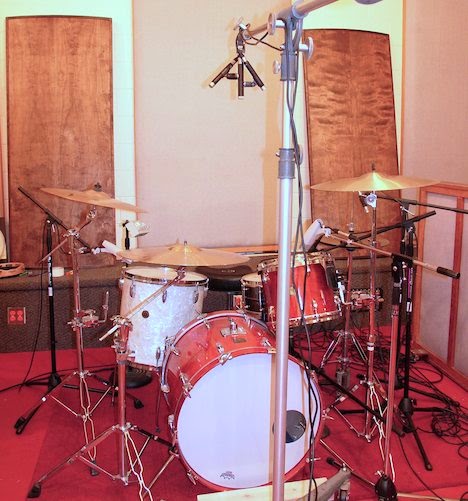
Drum kit with ORTF overheads imageOne of the most important yet overlooked parts of a drum mix is checking the phase of the drums. This is because not only will an out-of-phase channel suck the low end out of the mix, but it will get more difficult to fix as the mix progresses.

I covered how to check the polarity of the drum mics a few weeks ago, but here's an excerpt from my Audio Recording Basic Training book (also covered in the Audio Mixing Bootcamp book) that covers a way to check the phase when you're setting up for a mix as well.

"A drum mic can be out of phase due to a mis-wired cable or poor mic placement. Either way, it’s best to fix it now before the mix goes any further.

1) With all the drums in the mix, go to the kick drum channel and change the selection of the polarity or phase control. Is there more low end or less? Chose the selection with the most bottom end.

2) Go to the snare drum channel and change the selection of the polarity or phase control. Is there more low end or less? Chose the selection with the most bottom end.

3) Go to each tom mic channel and change the selection of the polarity or phase control. Is there more low end or less? Chose the selection with the most bottom end.

4) Go to each cymbal mic or overhead mic and change the selection of the polarity or phase control. Is there more low end or less? Chose the selection with the most bottom end.

5) Go to each room mic channels and change the selection of the polarity or phase control. Is there more low end or less? Chose the selection with the most bottom end."

You'd be surprised how many times that flipping the phase on one or two of the drum mic channels results in a better, fuller sounding kit, even on one that's well-recorded.

To read additional excerpts from the Audio Recording Basic Training book or any of my other books, go to the excerpts section of bobbyowsinski.com.
----------------------------------

Monday, June 16, 2014

Thinking Outside The Box With 10 Second Songs

Most musicians are pretty good at imitating another artist or style, or even two, but usually don't go much beyond that. Anthony Valbiro can do a lot more than than just a couple, and he displays it here with a video of how 19 different artists would perform Jason Derulo's "Talk Dirty." All told there are 20 different versions of the same song, each 10 seconds long.

This is a great idea of thinking outside the box both in terms of displaying your ability and doing a good piece of viral video marketing as well. Anthony has a website entitled tensecondsongs.com that has additional examples of the technique, as well as custom song offerings for fans and businesses (also a great idea). Check it out.


----------------------------------
Sunday, June 15, 2014

New Music Gear Monday: Audiofile Spectre Metering Package

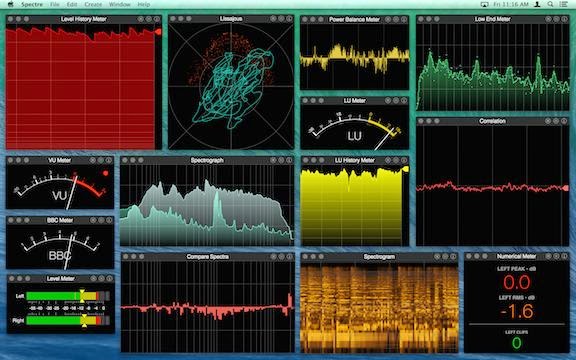
Audiofile Spectre metering package imageMetering is becoming more important than ever in just about every recording and mixing environment, but not every DAW has the metering necessary for every application. Now that deficiency can be easily and inexpensively rectified with Audiofile's latest Spectre metering package.

Spectre is filled with 20 different multichannel meters, including level, VU, spectragraph, spectrogram, oscilloscope, various phase meters, LU and more. You can have any or all meters open at once.

Spectre is a stand-alone package that sits on your desktop and can accept audio from a variety of sources, including your computer audio interface, so you always have a good idea of what's happening where it counts. The app is designed for OSX Mavericks and is Retina-ready.

Best of all, it's available right now for 50% off its retail price, so you can get it for an incredible $49.99. There's also a fully functional demo version available as well. It's a great deal and great bang for the buck. Check it out on the Audiofile website.
----------------------------------
LinkWithin

Related Posts Plugin for WordPress, Blogger...