Get This Free Cheat Sheet Guaranteed To Help Your Next Mix

Showing posts with label recording session etiquette. Show all posts

Tuesday, April 8, 2014

14 Studio Etiquette Tips

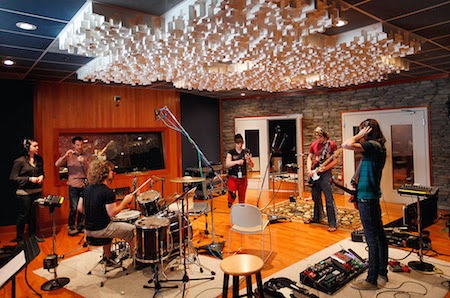
Recording Session image
Knowing the proper etiquette while recording is almost as important as doing your gig. If you make people uncomfortable or do something that's considered out of place and chances are that you won't be asked back.


Let's look at the way everyone expects you to act during the session with these 14 points taken from The Studio Musician's Handbook. Most of them apply to just about everyone on a session.
"1. If there’s creative dialogue with the artist, songwriter, producer or engineer, make sure that your opinions are wanted and warranted before you offer them. 
2. Be careful about musical references. You may think that the track you’re working on is great because it reminds you of Dusty Springfield’s classic “Son of a Preacher Man” only to find out upon your mention of it that it’s on the artist’s “Ten Most Overrated Songs” list. 
3. Whether you’re on your own or part of an ensemble, focus on your work first. If you have input for other players, make sure it’s warranted and you can actually help them out. Players often tweak each other’s parts or help one another to understand a written passage, remember a song’s form, or get a sound. 
4. Remember – always defer to whoever is in charge. That person is usually the producer, but you may be receiving guidance or input from a musical director, the artist, or the engineer. 
5. Keep an open mind. Greet suggestions with willingness and always respond positively. If you’re receiving input from more than one source and they contradict one another, diplomatically point that out and let them resolve it. 
6. And don’t forget – if you can’t keep your cell phone outside the studio, TURN IT OFF (not just on vibrate - that’s a distraction too). 
7. Put away the magazines, computers, iPhones, and anything else that can be a distraction. The last thing a producer wants to see is you updating your Facebook status in between takes! 
8. If you need time to check your messages or Facebook, make sure you ask first. Most sessions have timed or natural breaks when you can meet you individual needs, but be sure to always ask if you wish to leave the recording environment while there’s work being done, even if you’re not directly involved at that moment. 
9. Your behavior should always be positive, and you should strive to be “present for the moment.” 
10. There’s a time and a place for everything, but sometimes cajoling, goofing around or humor doesn’t belong at a session. Then on another day with the same people, the session may be all about the gags and laughs. Studio pro’s know how to “go with the flow” and are experts at reading people and situations. 
11. If people are conversing, treat the session like any other workplace and try to avoid potential conversational “hot spots”: politics, religion, family and money. 
12. Everyone likes a good conversation and a funny joke, but it’s best not to risk being misinterpreted or misperceived as offensive. 
13. Earn and honor rank. That means if there are players on the session with more professional or personal history with the artist or producer than you have accumulated, let them lead. Everyone benefits when everyone gets along and knows their place 
14. Always wait until the job is done before you ask the powers that be if they are open to your creativity. It’s appropriate to do so before you offer your ideas. Always ask first if they are open to your input. If so, and you hear it in your imagination, let them know."
 The best way to endear yourself to everyone on a recording session is to act like a pro. Follow these 14 etiquette tips, and you'll encounter very few problems along the way. What are your tips?

To read additional excerpts from The Studio Musician's Handbook and my other books, check out the excerpts section of bobbyowsinski.com.

Monday, December 14, 2009

Recording Session Etiquette - Part Three

In the third and last part of recording session etiquette, we take a look at  what should happen when the session ends. As with parts one and two, this list is a partial excerpt from The Studio Musician's Handbook.
  • It’s perfectly natural to develop relationships with people you meet on sessions, but make sure you don’t ruffle any feathers in your noble efforts to make new friends or create more work for yourself. You want to get called back for the next session and you want the team you just worked with to refer you for more work.
  • After your tracks are completed and you’ve basked in compliments during playback, let whoever hired you or your point of contact know how much you enjoyed the experience and how much you’d like to come back again.
  • Remember to honor rank and be careful to defer to established relationships. If you just finished a synthesizer overdub for a producer but his engineer got you the gig, your best bet is thank the engineer for the referral at a time when the producer is present. Then let them both know you are available for more work. You’ll quickly develop a keen sense of when it’s cool to hang out or if you should quickly be on your way.
  • Be careful not to be overly friendly with the staff. This can be misinterpreted and come back at you later if you make someone feel the least bit uncomfortable.
  • Be careful about making unsolicited referrals for your friends. A general rule of thumb is only refer someone when you’re asked to recommend a player or singer for work. If you’re good at what you do and act professionally, producers, artists, contractors, engineers and managers will inevitably ask you for recommendations and then you’ll have ample opportunity to create your own ”A Team”.
  • Fast friends and strong bonds can be made amongst recording musicians. Often a sense of “family” prevails and often it’s perfectly appropriate to hang out and socialize after sessions. Recording musicians often end up touring or doing media promo dates with artists for whom they’ve made records, and lifetime bonds can be formed. Just remember to acknowledge the individual(s) who create these opportunities.
Follow these pointers and the ones from the first two posts and you'll always be perceived as a professional, which can go a long way to getting you more work. Make no mistake, you need talent to make it in the recording business, but talent alone will get you nowhere unless people like working with you.

Sunday, December 13, 2009

Session Etiquette - Part Two


Knowing the proper etiquette while recording is almost as important as doing your gig. If you make people uncomfortable or do something that's considered out of place and chances are that you won't be asked back.


In recording session etiquette part two, we'll look at the way everyone expects you to act during the session. Once again, these are points taken from The Studio Musician's Handbook, but most of them apply to just about everyone on a session.
  • If there’s creative dialogue with the artist, songwriter, producer or engineer, make sure that your opinions are wanted and warranted before you offer them.
  • Be careful about musical references. You may think that the track you’re working on is great because it reminds you of Dusty Springfield’s classic “Son of a Preacher Man” only to find out upon your mention of it that it’s on the artist’s “Ten Most Overrated Songs” list.
  • Whether you’re on your own or part of an ensemble, focus on your work first. If you have input for other players, make sure it’s warranted and you can actually help them out. Players often tweak each other’s parts or help one another to understand a written passage, remember a song’s form, or get a sound.
  • Remember – always defer to whoever is in charge. That person is usually the producer, but you may be receiving guidance or input from a musical director, the artist, or the engineer.
  • Keep an open mind. Greet suggestions with willingness and always respond positively. If you’re receiving input from more than one source and they contradict one another, diplomatically point that out and let them resolve it.
  • And don’t forget – if you can’t keep your cell phone outside the studio, TURN IT OFF (not just on vibrate - that’s a distraction too).
  • Put away the magazines, computers, iPhones, and anything else that can be a distraction. The last thing a producer wants to see is you updating your Facebook status in between takes!
  • If you need time to check your messages or Facebook, make sure you ask first. Most sessions have timed or natural breaks when you can meet you individual needs, but be sure to always ask if you wish to leave the recording environment while there’s work being done, even if you’re not directly involved at that moment.
  • Your behavior should always be positive, and you should strive to be “present for the moment.”
  • There’s a time and a place for everything, but sometimes cajoling, goofing around or humor doesn’t belong at a session. Then on another day with the same people, the session may be all about the gags and laughs. Studio pro’s know how to “go with the flow” and are experts at reading people and situations.
  • If people are conversing, treat the session like any other workplace and try to avoid potential conversational “hot spots”: politics, religion, family and money.
  • Everyone likes a good conversation and a funny joke, but it’s best not to risk being misinterpreted or misperceived as offensive.
  • Earn and honor rank. That means if there are players on the session with more professional or personal history with the artist or producer than you have accumulated, let them lead. Everyone benefits when everyone gets along and knows their place.
  • Always wait until the job is done before you ask the powers that be if they are open to your creativity. It’s appropriate to do so before you offer your ideas. Always ask first if they are open to your input. If so, and you hear it in your imagination, let them know.
Tomorrow - Session Etiquette Part Three

Thursday, December 10, 2009

Session Etiquette - Part One


The way you act at a session many times counts for so much more than your performance. If you make anyone uncomfortable in the slightest way, you can bet that you probably won't be asked back, so being aware of proper studio etiquette is extremely important.

Studio etiquette applies to before, during and after a session as well. In part one, we'll look at what's expected before the red light is turned on.

These points come from The Studio Musician's Handbook, but most apply to everyone connected with a recording session as well as the musicians.

Before the session begins:
  • On any session, always know who your point of contact is.
  • ALWAYS SHOW UP EARLY. To be early is to be on time. To be on time is to be late. To be late is almost like not showing up at all! If the downbeat is for 2PM, show up at least a half-hour early at 1:30!
  • Let the powers that be know you’ve arrived. Make your presence known at a session as soon you roll up on the studio property. If you’re there and no one knows it, you can cause the session to start late if you’re hanging out in the lounge instead of the studio while everyone is waiting for you because they’re unaware that you’ve already arrived.
  • Load your gear in quickly and quietly. Accept help with this if it’s offered. If it’s your first time there, introduce yourself to those you make contact with, and find out what the plan for the session is.
  • You may be immediately welcomed in the studio or control room, or you may not. You may be asked to wait in the lounge instead. While you’re waiting, use those people skills and find out what’s going on. Be friendly and respectful but don’t be overly formal.
  • After you’re set up and ready to play, keep your warm-ups and noodling to an absolute minimum. Get your sound and follow the producer’s or engineer’s direction “to the t”. If you’re playing an electric instrument, it’s totally cool to turn your volume all the way down and do your warm-ups.
  • If there are headphones in use, try putting them on with the volume all the way down (studio headphones are capable of being loud enough to cause hearing damage, so don’t hurt yourself), and slowly turn them up to see what’s happening with the mix. If there are other people in the room, you might want to “keep one ear on, one ear off” until recording begins in case someone talks to you. Always keep your focus on the music and what’s right here, right now.
Part 2 next post - Etiquette during the session.

LinkWithin

Related Posts Plugin for WordPress, Blogger...