Get This Free Cheat Sheet Guaranteed To Help Your Next Mix

Showing posts with label Studio Musicians Handbook. Show all posts

Wednesday, March 30, 2016

Legendary Trumpeter Jerry Hey On Miking Horns

Jerry Hey imageEngineers that don't work with horn players much often don't understand the difficulties or the technique for getting a great sound. Here's an interview with Jerry Hey, who may be the most widely recorded horn player ever, from my Studio Musician's Handbook that explains things from the player's point of view.

I understand that you have strong feelings about how people mike your horn.
I guess I have strong feelings because over the course of my experience, being in great situations and being in awful situations, I’ve learned a lot.

You carry your own mics, don’t you?
I have for about 10 or 12 years. When you go into studios like Capitol or Oceanway, they have a good microphone collection so you don’t have to worry. But with home studios being such a big part of recording now, a lot of times they don’t have any good mics. It forced me to take one part of the equation and make it the same every time so that I always know that it’s not the microphone’s fault if something doesn’t sound right. I carry 3 Royers (model R-121) with me now.  

Why 3 Royers?
Usually in my horn section there are 2 trumpets, one trombone and one sax. The trumpets play on one mic, and trombone and sax play on a mic each. The Royer has become sort of a standard for horns now. Most of the studios now have bought them so I don’t have to even take them in to a lot of places.

So do you just have someone use your mics right away or do you wait to see what it sounds like?
It depends on the engineer. For instance Bruce Swedien has a great mic collection that he bought new that no one else has ever touched, and he’s put a whole host of microphones in front of us. We did a very high intensity tune for Michael Jackson once where he put his RCA 44 on the trumpets and I told him “Bruce, you’re the only guy that I’d ever let put that microphone in front of us”. He said, “Wait until you hear it”. It just sounded amazing because it was in such pristine condition. In a situation like that where a guy has world-class microphones, there’s usually not a problem. But in situations where I’m in somebody’s home and they have little or no microphone selection and they put up something that I know doesn’t sound good, I’ll tell them I have the Royers available.  

Do you have a favorite placement?
Because the Royers have a figure 8 pattern, the room is an issue in the placement. If you’re in a smaller room with 4 horns, you can’t have the mics too far away from the trumpets at the level we play because the room becomes a factor on the back side of the mic. So the placement can be anywhere from a foot and a half to 4 feet or so away. We’ve done some Earth, Wind and Fire stuff where it’s been 6 feet away. That was kind of roomy because the room was small but that was that sound that we were going for; kind of a “live” kind of sound. So it does depend on the size of the room and how far away you are from the wall that you’re playing toward and how much slap off the wall you’re going to get. But generally I’d say about 2 feet from the end of the trumpet bell takes most of the room away from it.  

How do you determine where in the room you’re going to play?
That depends on the acoustics of the room. In a moderate size room like Oceanway, Conway or Capitol, when you play soft it sounds like you’re playing soft and when you play loud it sounds like you’re playing loud and you can hear yourself all the time. Almost anywhere in those rooms sounds great. If you go into another room that has carpeting on the floor or soft walls or ceilings, the quality of sound doesn’t change that much (from soft to loud) and you feel like you have to work harder. In a deader room it helps to be closer to a wall so you can get a little feedback from what you’re playing otherwise it’s easy to overblow and work harder than you need to work.

Do you mean play into the wall?
Not into the wall but move a step or two closer to get a little bit of feedback.  When you’re playing trumpet your effort is a factor on how much you can hear yourself so in a deader studio it makes it a lot more difficult to play and to hear everybody. So if you move up a little closer to the glass or the wall, it can make you not work so hard.  

Does that still matter if you’re wearing headphones?
We always us one sided headphones because it’s very difficult to expect the engineer to get your balance good enough with the rhythm section, and also balance the horn section the way it should be in order to play in tune with double-side phones. That puts another cog in the link of recording when you have to make the engineer work that hard. Also, with one headphone we can hear everyone in the room which helps keep the time and phrasing the same.  

Do you always play with the same guys?

If I can. The other trumpet player is Gary Grant and we’ve played together for over 30 years. I know what he’s going to do and he knows what I’m going to do so it’s just like a clone standing right next to you. The saxophones have changed a bit over the years with Dan Higgins or Larry Williams or a few others that I’ve used. Bill Reichenbach on trombone has been the guy for a very long time. It’s understood that we go in there as a team with everyone going at it at the same level. It makes life easier and we have a good time.


Wednesday, December 30, 2015

16 Ways That Playing In The Studio Is Different From Live

Live vs. Studio playing imageI've talked to a number of musicians lately who are used to playing live, but have been having some trouble adapting to recording. I've posted it before, but I thought that this excerpt from The Studio Musician's Handbook might be appropriate. It's about the 16 ways that playing in the studio is different from playing live.

"You’ve probably had a lot of experience playing live, but playing in the studio is a distinctively different experience. The thought process is different, the mindset is different, the approach is different, and the chain of command is different.

In an effort to contrast these two different experiences, let’s move from the most simple differences to those that are, shall we say, a bit more subtle.

1. Repertoire - Most live gigs rarely change repertoire without rehearsal. A session musician has to be ready to change material on the fly. Not only are they are expected to learn it “on the fly,” but also come up with the appropriate parts that will help make the song not only as memorable as possible but as accessible and pleasing to not only the artist and producer but to listeners who may make the song part of their lifetime’s musical soundtrack. No pressure!!!

2. Scrutiny - On stage whatever you play is gone as soon as you play it. In the studio, what you play is under a microscope and will likely be analyzed, dissected and reorganized all in the name of making the performance stronger.

3. Equipment - The gear you use on a gig won’t always translate to the studio. You choose the gear for a gig based upon versatility, durability and general ruggedness. The only thing that counts in the studio is the sound. While one size might fit all on a gig, it usually makes for a boring recording, especially if you’re recording multiple tracks or more than one song. The studio requires a wide range of sonic possibilities, so you’ll need to bring different guitars, amps and pedals to get there.

4. Leadership - On a gig you have a bandleader that calls the songs, counts them off, possibly may direct the solos, and ends the songs. In the studio you’re answering to a hierarchy consisting of the producer, artist, and engineer (in cases of sonics). The producer is the ultimate decision maker, with ultimate authority over everything you play.

5. Nuance - The little things count in the studio. Everything you play can be critical so nuances are just as important as the body of what you’re playing. When you play live the nuances are usually gone in the wind, overcome by the the stage volume, acoustics and attention of the players and audience. In the studio, everything you play is scrutinized and that’s too much pressure for some players. In the studio, you’ve got to be great every time, every take.

6. The Live ‘Feel” versus the Studio ‘”Feel” - Players well versed in both idioms tend to exhibit more finesse and restraint in the studio and cut loose in a different way. The studio requires the musician to play to a whole different set of variables created by the signal chain after the instrument and the needs of the session.

7. Etiquette - You can get away with being a jerk on a live gig since the other players usually will put up with you (up to a point) as long as you perform well or the audience loves you. Not so in the studio. If you make someone feel even slightly uncomfortable for any reason, chances are you probably won’t be asked back. 

8. It’s hard work -  That’s not to say that playing or singing on a 4 or 5 hour gig isn’t difficult, but you play a lot of different songs every set and get the glory of audience feedback. In the studio, the only feedback you get is from the producer, artist and maybe the engineer, and 99% of the time they’re analyzing how you can play a part better rather than singing your praises. And the level of concentration is definitely up a few notches. On a gig you can breeze through the music, almost losing yourself in your playing. In the studio, every note counts and requires your utmost attention.

9. Preparation - Live gigs almost always require sufficient rehearsal. Most recording sessions happen with little or no preparation. As a result, a session musician has to be highly adaptable and be able to learn music on the fly.

10. Approach - Studio musicians can be asked to change their approach in the middle of a take! Not so in a live performance.

11. Pace - Early in a session, studio musicians often hear, “We really like what you’re doing but we don’t like the sound. We’re going to change a few things in here.” Rarely, if ever, do live performances stop to tweak sounds, but it’s very common in any recording context for those on the production/engineering side of the glass to stop mid-take and say “You’re doing great but we have to fix a few things.” A session player needs to always be ready to move at the pace determined by the environment. Things may change on the fly from breakneck speed to time-crawling meticulousness.

12. Creation versus Interpretation - Live musicians are usually expected to re-create a pre-existing repertoire, where the studio cats create the repertoire. 

13. The Required Skill Set - For rhythm section players, there’s a whole different level of musical literacy required. Not only should one be able to read music well, but the top session musicians can access a variety of styles and feels on a moment’s notice. It also takes a really good set of ears and musical taste buds to make it to the top of the session musician hierarchy. 

14. Artist vs. Entertainer - Live musicians entertain, studio musicians create entertainment. It’s like the difference between going to see actors in a play and actors on the silver screen. Both achieve the same end, but theater changes from performance to performance while film is a one-time document meant to stand the test of time and to weather repeated exposures.

15. Venue Variables and Studio Situations - Live performance almost always presents the same circumstances for the musician. His or her instrument(s), collaborators, and set list (see Repertoire above) will usually not change much or without fair warning. Not so in the studio. Except for the great studio bands of the ‘60’s and ‘70’s, studio musicians are used to seeing new faces frequently, almost always play new material, and although the venues change, it’s not in the ways live venues do. The session musician learns to expect change at any moment since the tune can morph and he may be asked to play a different part or instrument.

16. The Live Wolf Pack and the Studio Lone Wolf - Most live performances require a group and a sizable supporting cast, unless you’re a DJ or a solo singer/songwriter. Recording musicians usually convene at a studio, arriving on their own, so a different camaraderie exists than the “We’re all together on this bus!”, mentality of live work. Recording musicians are independent and can work with different people every time they play music. Not usually so for the live players."


Wednesday, May 13, 2015

6 Things All Great Studio Musicians Have In Common

The Wrecking Crew image
The ultimate group of studio musicians - The Wrecking Crew
When people think of studio musicians they immediately think of great technique, but there are a number of other traits that you'll find common in all successful players who make their living in the studio.

Here's an excerpt from The Studio Musician's Handbook (which I wrote with the great studio bass player Paul ILL) that takes a look at everything expected when you hire some for a studio gig.

A studio musician:

1. Has Great Chops - Studio musicians are expected to be creative, extremely versatile, and have a formidable skill set. They are usually the best musicians in town in terms of plain physical dexterity, and are able to play numerous styles convincingly.

Your ability to read music will determine the type of sessions you can play on. For record dates, the ability to read and transcribe lead sheets is essential, but many other sessions like jingles and television and movie scores require expert sight reading.

2. Has Great Gear - A wide variety of gear in excellent working order is a must. Having only one sound makes for a boring recording, so the wider the variety of sounds you can get or the more you can double on other instruments, the more valuable you become.

3. Is Easy To Work With - Your reputation among other musicians and those in our industry who make the recordings is what gets you hired and keeps you working, so if other session musicians, producers and engineers like you as a person, like how you play, and like the feeling you bring to a session, then you’re more likely to get calls for work.

Smiles and a pleasant, accommodating attitude, as well as superb personal hygiene and an appropriate sense of style go really far in the session business. There are a lot of great players out there and unless you’re something unbelievably special, the people paying your check will always take the easiest to work with all things being equal. No back-talk, no sass, no snide remarks, nothing other than a wide smile and a “Tell me what you want,” and “No Problem!” attitude.

4. Has No Ego - Everyone has their own idea of how they should sound, how the song should be played, how others should be playing it, and a host of other musical items both large and small. That all goes out the window when you’re being hired to play on someone’s recording.

You’ve got to have a thick skin while recording, and realize that even if the artist-producer-songwriter listens to your idea it might not carry much weight or be acted upon. If they listen to you and actually use one of your suggestions, consider it a good day.

5. Takes Criticism Well - If you have a fragile ego, being a session musician is not for you. Except for the times when you’re playing a written part, you can bet that every take is going to be listened to under a microscope and picked apart with a fine toothed comb.

As difficult as that might seem, you can’t take this personally because the artist-producer-songwriter only wants what’s best for the song. You may play a part with a bitchin’ feel, but if the sound isn’t right and doesn’t mesh with the track, chances are you’ll do it again.

6. Uses Proper Studio Etiquette - There’s a way to do things in the studio and it differs from playing live. A studio musician’s protocol exists and you’ll be expected to abide by it.

There's an entire chapter dedicated to this in The Studio Musician's Handbook, but suffice it to say that if you like being the center of attention, studio work may not be for you.

To read additional excerpts from The Studio Musician's Handbook and my other books, go to the excerpts section of bobbyowsinski.com.

Tuesday, April 8, 2014

14 Studio Etiquette Tips

Recording Session image
Knowing the proper etiquette while recording is almost as important as doing your gig. If you make people uncomfortable or do something that's considered out of place and chances are that you won't be asked back.


Let's look at the way everyone expects you to act during the session with these 14 points taken from The Studio Musician's Handbook. Most of them apply to just about everyone on a session.
"1. If there’s creative dialogue with the artist, songwriter, producer or engineer, make sure that your opinions are wanted and warranted before you offer them. 
2. Be careful about musical references. You may think that the track you’re working on is great because it reminds you of Dusty Springfield’s classic “Son of a Preacher Man” only to find out upon your mention of it that it’s on the artist’s “Ten Most Overrated Songs” list. 
3. Whether you’re on your own or part of an ensemble, focus on your work first. If you have input for other players, make sure it’s warranted and you can actually help them out. Players often tweak each other’s parts or help one another to understand a written passage, remember a song’s form, or get a sound. 
4. Remember – always defer to whoever is in charge. That person is usually the producer, but you may be receiving guidance or input from a musical director, the artist, or the engineer. 
5. Keep an open mind. Greet suggestions with willingness and always respond positively. If you’re receiving input from more than one source and they contradict one another, diplomatically point that out and let them resolve it. 
6. And don’t forget – if you can’t keep your cell phone outside the studio, TURN IT OFF (not just on vibrate - that’s a distraction too). 
7. Put away the magazines, computers, iPhones, and anything else that can be a distraction. The last thing a producer wants to see is you updating your Facebook status in between takes! 
8. If you need time to check your messages or Facebook, make sure you ask first. Most sessions have timed or natural breaks when you can meet you individual needs, but be sure to always ask if you wish to leave the recording environment while there’s work being done, even if you’re not directly involved at that moment. 
9. Your behavior should always be positive, and you should strive to be “present for the moment.” 
10. There’s a time and a place for everything, but sometimes cajoling, goofing around or humor doesn’t belong at a session. Then on another day with the same people, the session may be all about the gags and laughs. Studio pro’s know how to “go with the flow” and are experts at reading people and situations. 
11. If people are conversing, treat the session like any other workplace and try to avoid potential conversational “hot spots”: politics, religion, family and money. 
12. Everyone likes a good conversation and a funny joke, but it’s best not to risk being misinterpreted or misperceived as offensive. 
13. Earn and honor rank. That means if there are players on the session with more professional or personal history with the artist or producer than you have accumulated, let them lead. Everyone benefits when everyone gets along and knows their place 
14. Always wait until the job is done before you ask the powers that be if they are open to your creativity. It’s appropriate to do so before you offer your ideas. Always ask first if they are open to your input. If so, and you hear it in your imagination, let them know."
 The best way to endear yourself to everyone on a recording session is to act like a pro. Follow these 14 etiquette tips, and you'll encounter very few problems along the way. What are your tips?

To read additional excerpts from The Studio Musician's Handbook and my other books, check out the excerpts section of bobbyowsinski.com.

Tuesday, February 14, 2012

16 Ways Studio Playing Differs From Live

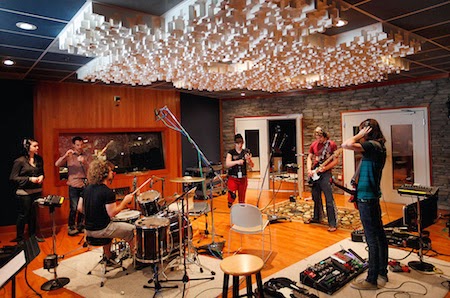
Studio Musicians image from Bobby Owsinski's Big Picture production blog
I've been getting a lot of emails lately about becoming a studio musician, so I thought that this excerpt from The Studio Musician's Handbook might be appropriate. It's about the 16 ways that playing in the studio is different from playing live.
--------------------------

"You’ve probably had a lot of experience playing live, but playing in the studio is a distinctively different experience. The thought process is different, the mindset is different, the approach is different, and the chain of command is different.

In an effort to contrast these two different experiences, let’s move from the most simple differences to those that are, shall we say, a bit more subtle.

1. Repertoire - Most live gigs rarely change repertoire without rehearsal. A session musician has to be ready to change material on the fly. Not only are they are expected to learn it “on the fly,” but also come up with the appropriate parts that will help make the song not only as memorable as possible but as accessible and pleasing to not only the artist and producer but to listeners who may make the song part of their lifetime’s musical soundtrack. No pressure!!!

2. Scrutiny - On stage whatever you play is gone as soon as you play it. In the studio, what you play is under a microscope and will likely be analyzed, dissected and reorganized all in the name of making the performance stronger.

3. Equipment - The gear you use on a gig won’t always translate to the studio. You choose the gear for a gig based upon versatility, durability and general ruggedness. The only thing that counts in the studio is the sound. While one size might fit all on a gig, it usually makes for a boring recording, especially if you’re recording multiple tracks or more than one song. The studio requires a wide range of sonic possibilities, so you’ll need to bring different guitars, amps and pedals to get there.

4. Leadership - On a gig you have a bandleader that calls the songs, counts them off, possibly may direct the solos, and ends the songs. In the studio you’re answering to a hierarchy consisting of the producer, artist, and engineer (in cases of sonics). The producer is the ultimate decision maker, with ultimate authority over everything you play.

5. Nuance - The little things count in the studio. Everything you play can be critical so nuances are just as important as the body of what you’re playing. When you play live the nuances are usually gone in the wind, overcome by the the stage volume, acoustics and attention of the players and audience. In the studio, everything you play is scrutinized and that’s too much pressure for some players. In the studio, you’ve got to be great every time, every take.

6. The Live ‘Feel” versus the Studio ‘”Feel” - Players well versed in both idioms tend to exhibit more finesse and restraint in the studio and cut loose in a different way. The studio requires the musician to play to a whole different set of variables created by the signal chain after the instrument and the needs of the session.

7. Etiquette - You can get away with being a jerk on a live gig since the other players usually will put up with you (up to a point) as long as you perform well or the audience loves you. Not so in the studio. If you make someone feel even slightly uncomfortable for any reason, chances are you probably won’t be asked back. 

8. It’s hard work -  That’s not to say that playing or singing on a 4 or 5 hour gig isn’t difficult, but you play a lot of different songs every set and get the glory of audience feedback. In the studio, the only feedback you get is from the producer, artist and maybe the engineer, and 99% of the time they’re analyzing how you can play a part better rather than singing your praises. And the level of concentration is definitely up a few notches. On a gig you can breeze through the music, almost losing yourself in your playing. In the studio, every note counts and requires your utmost attention.

9. Preparation - Live gigs almost always require sufficient rehearsal. Most recording sessions happen with little or no preparation. As a result, a session musician has to be highly adaptable and be able to learn music on the fly.

10. Approach - Studio musicians can be asked to change their approach in the middle of a take! Not so in a live performance.

11. Pace - Early in a session, studio musicians often hear, “We really like what you’re doing but we don’t like the sound. We’re going to change a few things in here.” Rarely, if ever, do live performances stop to tweak sounds, but it’s very common in any recording context for those on the production/engineering side of the glass to stop mid-take and say “You’re doing great but we have to fix a few things.” A session player needs to always be ready to move at the pace determined by the environment. Things may change on the fly from breakneck speed to time-crawling meticulousness.

12. Creation versus Interpretation - Live musicians are usually expected to re-create a pre-existing repertoire, where the studio cats create the repertoire. 

13. The Required Skill Set - For rhythm section players, there’s a whole different level of musical literacy required. Not only should one be able to read music well, but the top session musicians can access a variety of styles and feels on a moment’s notice. It also takes a really good set of ears and musical taste buds to make it to the top of the session musician hierarchy. 

14. Artist vs. Entertainer - Live musicians entertain, studio musicians create entertainment. It’s like the difference between going to see actors in a play and actors on the silver screen. Both achieve the same end, but theater changes from performance to performance while film is a one-time document meant to stand the test of time and to weather repeated exposures.

15. Venue Variables and Studio Situations - Live performance almost always presents the same circumstances for the musician. His or her instrument(s), collaborators, and set list (see Repertoire above) will usually not change much or without fair warning. Not so in the studio. Except for the great studio bands of the ‘60’s and ‘70’s, studio musicians are used to seeing new faces frequently, almost always play new material, and although the venues change, it’s not in the ways live venues do. The session musician learns to expect change at any moment since the tune can morph and he may be asked to play a different part or instrument.

16. The Live Wolf Pack and the Studio Lone Wolf - Most live performances require a group and a sizable supporting cast, unless you’re a DJ or a solo singer/songwriter. Recording musicians usually convene at a studio, arriving on their own, so a different camaraderie exists than the “We’re all together on this bus!”, mentality of live work. Recording musicians are independent and can work with different people every time they play music. Not usually so for the live players."


----------------------------------
Help support this blog. Any purchases made through our Amazon links help support this website with no cost to you.


You should follow me on Twitter for daily news and updates on production and the music business.


Don't forget to check out my Music 3.0 blog for tips and tricks on navigating social media and the new music business.


Sunday, September 25, 2011

Tips For Getting A Gig

I've given tips on how to get gigs both as a studio musician and on the road as a sideman in excerpts from The Studio Musician's Handbook and The Touring Musician's Handbook. Now UK session player Bob Knight provides a bit of reinforcement during a recent interview on the excellent musiccoaching.com blog.
----------------------------

"The most important thing for me, talent aside, is finding musicians that understand the music. It sounds flippant. But I’m not a fan of the gospel chops approach of playing higher, faster, louder, better. I think a lot of people don’t really grow out of that. I’ve seen so many people blow auditions by getting their chops out, because they feel that they need to prove they can play rather than just play the song. The majority of things I book are song based. So, chops aren’t that important. You need to have a  degree of facility or technique beyond the music you’re playing, but that’s kind of a given. We all studied lots of things we don’t necessarily need so they would open up our musical vocabulary.

Personally, I’m really looking for people with ears, people with a good attitude and people who go the extra mile when the paycheck doesn’t necessarily dictate that they have to. I want them to want to go that extra mile because they care about turning in a good performance. Obviously, budgets these days are a real fight. I’m also looking for people who are socially aware and know how to behave in front of an artist and with other musicians. And because I’m a drummer, I’m always looking for the feel.

From a non-musical perspective, I need people to be punctual, always. You can never be the last in the lobby. You should always strive to be the first for a bus call, a lobby call or a sound check. To turn up last, a minute before the call time and say, “I’m here on time” really isn’t good enough for me. Specific timings are set out by tour managers as the latest you can arrive, not the time you should arrive; because there’s something that can go wrong – public transport or your own private transport, etc. If people are late for me, I usually give them a three strikes option. And on the third strike, they get fired. I’ve seen it through on a couple occasions, and it’s not particularly pretty. I don’t think people think you’re actually going to do it. But in a professional environment, music can be a bit deceptive:  it feels quite social; everyone is getting on; you’re not in an office. I think sometimes people forget they’re at work, and they think they can take a lot of liberties.

Of course, maintenance of equipment and general personal hygiene, etc., as ridiculous as it sounds, are all really important. You don’t want guys coming on tour with a toothbrush and one shirt when you’re away for six weeks. But you’d be amazed."

Read the entire interview here. 
----------------------------------
Help support this blog. Any purchases made through our Amazon links help support this website with no cost to you.

You should follow me on Twitter for daily news and updates on production and the music business.

Don't forget to check out my Music 3.0 blog for tips and tricks on navigating social media and the new music business.

LinkWithin

Related Posts Plugin for WordPress, Blogger...