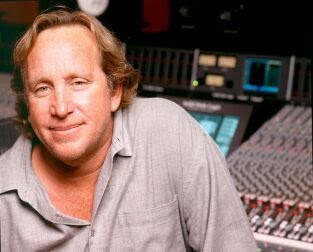
On the latest Inner Circle Podcast, I look back at the biggest stories in both the music industry and the world of recording and audio in the last year.
So much happened in 2014 that it almost seems like two different years, with many of the biggest stories happening in the first half. It just goes to show how much things can change during the course of 12 months.
I'll take a look at the 10 biggest stories that happened in the music business, as well as the big stories in the world of audio, then I'll tell you my Top 5 audio products for the year. It's all there in this year-end special.
Remember that you can find the podcast either on iTunes or at BobbyOInnerCircle.com, and now also on Stitcher.
Help Support This Blog
Saturday, December 27, 2014
Thursday, December 25, 2014
Van Halen "Running With The Devil" Isolated Guitar
The first 3 Van Halen albums were spectacular in many ways. Of course, Eddie's playing was a revelation, but overlooked was the sound of those records. The band managed to stay fairly bare bones in its recording style with few overdubs, yet still sound huge. Here's a look inside one of the band's early hits with the isolated guitar track from "Running With The Devil" from the very first self-titled Van Halen album.
The song doesn't begin until 0:30. Listen for the following:
1. The trademark sound on the early Van Halen albums was the reverb on the guitar. Listen to how the somewhat dry guitar is on the left while the delayed reverb is on the right. It's also a very long reverb.
2. Eddie is a very sensitive player and this song shows him at his best. Listen to how intense he plays the choruses, but then backs off during the verses. I bet if he did this song again today there would be three guitar parts instead on just the 1: the chorus guitar, a verse guitar and another playing the fills. I like this one way better, as the entire part is a performance.
3. There's only a single overdub and that's during the solo, where a new guitar enters and switches sides. It's a bit edgier and has less reverb.
The song doesn't begin until 0:30. Listen for the following:
1. The trademark sound on the early Van Halen albums was the reverb on the guitar. Listen to how the somewhat dry guitar is on the left while the delayed reverb is on the right. It's also a very long reverb.
2. Eddie is a very sensitive player and this song shows him at his best. Listen to how intense he plays the choruses, but then backs off during the verses. I bet if he did this song again today there would be three guitar parts instead on just the 1: the chorus guitar, a verse guitar and another playing the fills. I like this one way better, as the entire part is a performance.
3. There's only a single overdub and that's during the solo, where a new guitar enters and switches sides. It's a bit edgier and has less reverb.
Labels:
Eddie Van Halen,
isolated guitar,
reverb,
Van Halen,
video
Wednesday, December 24, 2014
The Top 30 Christmas Songs Are All Old
This is the last day for Christmas songs until next year, but here's something worthing thinking about.
With all the great songwriters that are currently in the business, it's a wonder that there hasn't been any new Christmas songs of note in decades. This Washington Post chart shows that the majority of our most popular Christmas songs were penned in the 1940s and 50s, with the most recent Christmas staple coming in the 90s.
The thought is that new Xmas songs haven't been adopted because the songs that are still popular are the ones that baby boomers became familiar with in their youth, but if we keep playing the same songs over and over each year, that becomes a perpetual motion machine with each generation growing up to the same songs.
That said, enjoy the songs for one more day, have a very merry Christmas, and thank you for your continued support of this blog!
With all the great songwriters that are currently in the business, it's a wonder that there hasn't been any new Christmas songs of note in decades. This Washington Post chart shows that the majority of our most popular Christmas songs were penned in the 1940s and 50s, with the most recent Christmas staple coming in the 90s.
The thought is that new Xmas songs haven't been adopted because the songs that are still popular are the ones that baby boomers became familiar with in their youth, but if we keep playing the same songs over and over each year, that becomes a perpetual motion machine with each generation growing up to the same songs.
That said, enjoy the songs for one more day, have a very merry Christmas, and thank you for your continued support of this blog!
Labels:
Christmas songs,
inforgraphic,
Washing Post
Tuesday, December 23, 2014
EMI's Famous Consoles And Little Known Ambiophony Technology
Here are couple of excerpts from the Ken Scott autobiography Abbey Road To Ziggy Stardust that I cowrote with him both involving some of the gear used at EMI's Abbey Road Studios back in the heyday of The Beatles. These are both sidebars from Chapter 7 entitled "Engineering Other EMI Artists," and cover the famous EMI consoles as well as a little known feature of the the large Abbey Road Studio 1 called Ambiophony.
"The EMI Consoles
The sound of The Beatles came from a number of custom consoles designed in-house by EMI; the REDD.37 and REDD.51 “Stereosonic” Four-Track Mixer Desks, and later the TG12345. Although the very first Beatles album was recorded on the REDD.37, the REDD.51 was used to record about 85% of their songs, according to Recording The Beatles. Both consoles were nearly identical and were based around valve (vacuum tube) electronics. The consoles were what we’d consider very simple by today’s standards, but were quite sophisticated for their time and very scary the first time I ever saw one as a 16 year old kid. They each had 8 input channels that fed 4 output (subgroup/buss) faders, with two aux sends and 2 stereo returns. The console also had two Auxiliary line inputs, but they were rarely used because of the lack of EQ on these channels.
Since the REDD series consoles were woefully inadequate for 8 track recording, a new console was eventually brought in. In 1968, EMI installed the solid state TG12345 in Number 2 control room. It boasted 24 inputs and 8 subgroups/busses, four echo sends, two separate cue mixes, and a limiter/compressor on every channel.
I worked very little on the TG, using the one in Number 2 for a few tracks on the Mary Hopkin album Postcard and for the majority of A Salty Dog by Procol Harum, as far as I recall. I have to say that I'm a bad judge of the TGs though. The change from the old REDD desks to the more modern TG was a painful one for most of us at the studio, and I don't think any of us liked it. It had none of the warmth, both literally and physically, that the REDDs had. That being said, some great sounding records were made on it, but first impressions go a very long way.
Ambiophony
Even though Studio 1 was one of the largest recoding rooms in the world, it only had a short reverb time; 2.4 seconds if you want to be precise. While this was plenty for most music recording, many classical producers preferred a longer reverb time like that of Kingsway Hall, a place many classical recordings were being made by both EMI and Decca at the time. In an attempt to remedy the situation, EMI employed an experimental system known as Ambiophony.
The system was built around a new piece of technology known as a delay drum; a rotating metal disc drum on the outside with oxide that acted just like a piece of magnetic tape. The difference was that it doesn’t take long for a tape loop to start to wear out, something the drum never did. A signal from the studio was sent to the drum, then multiple playback heads placed around the outside of it would pick off the signal and send it out to different speakers placed around the studio.
In the end, the Ambiophony system wasn’t much of a success, since even though it may have been very clever for its time, it was extremely touchy to set up and suffered from feedback in the studio. It was, apparently, used by Geoff (Emerick) on one Beatles song, the incredible orchestral overdub on “A Day In The Life” from Sgt. Pepper."
To read additional excerpts from Abbey Road To Ziggy Stardust and my other books, go to the excerpts section of bobbyowsinski.com.
Labels:
Abbey Road studios,
Abbey Road To Ziggy Stardust,
ambiophony,
EMI console,
Ken Scott,
REDD.37 console,
TG12345
Monday, December 22, 2014
The World's 12 Richest Bass Players
Bass players generally get the least attention in a band, but that doesn't mean they don't profit from it just as much as singers and guitar players. The Richest took a look at the top bottom enders and it found there's quite a bit of wealth in those low notes. Here's what it found:
1. Paul McCartney – $1.2 billion (no surprise there)
2. (tie) Sting – $300 million
2. (tie) Gene Simmons (Kiss) – $300 million
4. Roger Waters (Pink Floyd) – $270 million
5. Adam Clayton (U2) – $150 million
6. Flea (Red Hot Chili Peppers) – $115 million
6. John Deacon (Queen) - $115 million
8. John Paul Jones (Led Zeppelin) – $80 million
8. Bill Wyman (Rolling Stones) - $80 million
10. Geezer Butler (Black Sabbath) – $65 million
11. Tony Kanal (No Doubt) – $45 million
12. Krist Novoselic (Nirvana) – $40 million
Here's the trick. All of the above except for Wyman are songwriters as well as bass players, which proves the old music adage, "If you want to get rich, write a hit song!"
1. Paul McCartney – $1.2 billion (no surprise there)
2. (tie) Sting – $300 million
2. (tie) Gene Simmons (Kiss) – $300 million
4. Roger Waters (Pink Floyd) – $270 million
5. Adam Clayton (U2) – $150 million
6. Flea (Red Hot Chili Peppers) – $115 million
6. John Deacon (Queen) - $115 million
8. John Paul Jones (Led Zeppelin) – $80 million
8. Bill Wyman (Rolling Stones) - $80 million
10. Geezer Butler (Black Sabbath) – $65 million
11. Tony Kanal (No Doubt) – $45 million
12. Krist Novoselic (Nirvana) – $40 million
Sunday, December 21, 2014
Bobby O's Top 5 Audio Products Of 2014
There are always a number of new audio products that stand out from crowd, at least for me, and I'd like to solute some of them in my first annual Top 5 Products list. I'm going to list the pieces in no particular order and tell you why I thought they were cool.
SSL XL-Desk - A new console featuring 500 series slots. How cool is that? Of course this concept was no big deal in the 60s and 70s when a number of console manufacturers operated using cartridge modules, but few modules were interchangeable between manufacturers then. Now they are, making the XL-Desk very flexible.
Sample Magic Magic AB plugin - Anyone thats mixing knows that it can be a pain to easily A/B you mix against another. Magic AB makes this easy, since it's a plugin that goes across your stereo buss and allows you to compare up to 9 different songs, as well as loop them at just the right points, and precisely match levels.
PreSonus StudioLive RM - The PreSonus StudioLive console provides a tremendous bang for the buck, but one of the cooler features is how it can be remotely controlled from a laptop or iPad. PreSonus takes this concept one step further with the StudioLIve RM by providing just the I/O and leaving the control to your laptop or a specially built touch sensitive surface. The fewer controls, the less you pay, and it's so cool to use something so futuristic as well.
UAD AMS RMX16 - You might say that the RMX16 was the sound of the 80s in that it was part of the drum sound on so many hit records, especially those coming out of England. Universal Audio released a plugin version of the reverb a few months ago (coded by the original designer of the RMX16) and it sounds so much like the hardware version that it's scary. Just dial in the Nonlinear or Ambience setting and you'll know what I mean.
Blue Mo-Fi Headphones - The world of monitor speakers changed for the better when powered monitors became the norm, and now the same thing may be on the horizon for headphones as well, thanks to the Blue Mo-Fi's. It has three selections - using the built-in amp in the headphones, bass boost, or bypassed so it works like a normal headset. This is another one under the category of, "Why didn't anyone think of this before."
Special Mention: Audionamix ADX Trax - This is the software that so many of us have wanted for so long. It allows you to precisely isolate a vocal from a finished stereo mix, then raise and lower the level as needed. I don't know how they do it, but it's very cool indeed.
These products really caught my attention this year, but there are lots of others that are worthy of inclusion as well. I'm sure you have your own top 5 and I'd love to hear them. What did I miss that was cool?
Labels:
ADX Trax,
AMS RMX16,
Blue Mo-Fi Headphones,
PreSonus StudioLive,
Sample Magic,
SSL XL Desk,
Top 5 Audio Products
Friday, December 19, 2014
Microphone Master Dave Thomas From Advanced Audio Microphones On The Latest Inner Circle Podcast
If you ever wanted to get a look inside the workings of a boutique microphone manufacturer, now's your chance on my latest podcast with Dave Thomas from Advanced Audio Microphones as my guest.
I'm a big fan of his mics myself, and you'll know why after Dave explains how he went from owning one of the biggest and best studios in Canada to making some of the best mics (and best values) anywhere.
On the show intro I'll also discuss the music taste of Americans in 2014, as well as 4 ways that you can avoid any client client problems (since we all work for someone in the music business) that might arise.
Remember that you can find the podcast either on iTunes or at BobbyOInnerCircle.com, and now also on Stitcher.
I'm a big fan of his mics myself, and you'll know why after Dave explains how he went from owning one of the biggest and best studios in Canada to making some of the best mics (and best values) anywhere.
On the show intro I'll also discuss the music taste of Americans in 2014, as well as 4 ways that you can avoid any client client problems (since we all work for someone in the music business) that might arise.
Remember that you can find the podcast either on iTunes or at BobbyOInnerCircle.com, and now also on Stitcher.
Labels:
Advanced Audio Microphones,
BobbyOinnercircle.com,
Dave Thomas,
Inner Circle podcast,
music tastes,
nightmare client
Thursday, December 18, 2014
Bruce Springsteen "Born To Run" Isolated Vocals
One of the things that we can learn from isolated tracks is what works in the context of a particular hit record. The reverb, compression, performance, and production all make a big difference in how we ultimately perceive the song. That's why this week's isolated track, the vocal on Bruce Springsteen's breakout "Born To Run," is so cool, since it readily exhibits all of those things. Here's what to listen for.
1. The vocal is very compressed, but it's not sibilant. What happens is that we can hear every breath and it just raises the passion of the performance. We might cut out those breaths today in a DAW (as is the norm), but we'd lose a lot of what really makes the performance work.
2. The reverb is delayed, long and dark. Once again, that's probably not what we'd add today since this sound is not in vogue at the moment, but it works very well here. You don't hear it in the track as reverb, and that's what reverb does many times - it just adds glue and a sheen to the mix.
3. Bruce doesn't double track his vocal until the end at 4:02, unlike so many other vocalists and songs of the time. He comes across pretty well without it though. In fact, when the doubling does occur on the outro it's rather startling. You could see how it wouldn't work in any other part of the song.
4. Listen for the not-so-obvious vocal punch at 1:21 where a breath is cut off, and the overdubbed count only on the left side at 3:05 before the last verse.
1. The vocal is very compressed, but it's not sibilant. What happens is that we can hear every breath and it just raises the passion of the performance. We might cut out those breaths today in a DAW (as is the norm), but we'd lose a lot of what really makes the performance work.
2. The reverb is delayed, long and dark. Once again, that's probably not what we'd add today since this sound is not in vogue at the moment, but it works very well here. You don't hear it in the track as reverb, and that's what reverb does many times - it just adds glue and a sheen to the mix.
3. Bruce doesn't double track his vocal until the end at 4:02, unlike so many other vocalists and songs of the time. He comes across pretty well without it though. In fact, when the doubling does occur on the outro it's rather startling. You could see how it wouldn't work in any other part of the song.
4. Listen for the not-so-obvious vocal punch at 1:21 where a breath is cut off, and the overdubbed count only on the left side at 3:05 before the last verse.
----------------------------------
Wednesday, December 17, 2014
7 Unusual But Useful Christmas Gifts For Musicians
Like it or not, most working musicians have a lot of grunt work to do when gigging. Setting up and tearing down is a thankless part of the job, so let's make it as easy as possible. Here are a number of tools that are staples of stagehands all over the world, but can really come in handy in those moments when all you want to do is get everything gig ready.
1. Gerber Flik Multitool - It's a pliers, it's a knife, it's a scissors, it's a screwdriver. Why carry a tool box when you can have it all in one tool? About $40, but it's the best there is.
2. Ultimate Focus Tool - This one tool will replace a whole kit of crescent wrenches. If you only use it once, it will be worth it. Around $30.
3. Streamlight Scorpion Flashlight or Olight M20-X Tactical Flashlight - LED flashlights are now the norm, but what you want is a really bright one for looking behind a rack or on a dark floor for that little screw or connector that you dropped. The intensity of the light stream sets these two flashlights apart from everything else. Around $40.
4. Hothands Fleece Gloves - How often have you had to play in a venue that was really cold, or even outdoors during the fall or winter? If you've done it, you know what kind of torture that can be. Now you can make it easier with these heated gloves, which warm up for up to 10 hours when you put their chemical Warmers in place. Around $25.
5. Setwear Hothands Insulated Gloves - And speaking of gloves, musicians, roadies, and engineers have to carry large heavy things constantly, so why not protect your hands while doing so? These gloves are the best, and they're insulated in case you have to handle hot lights as well. Around $40.
6. Burt's Bees Lip Balm - Everybody hates chapped lips, and they're so easy to get in bad weather riding to a gig. Burt's Bees Lip Balm beats anything from a drug store by a long shot. Around $8.
7. Sharpie 24 Pack - Sharpies are the most convenient writing tool available for a band, artist or engineer. Need to write a set list that's large enough to see on stage? You need a Sharpie. Need to mark a cable or console input strip? You need a Sharpie. Here's a multicolored 24 piece pack for around $10.
Need a more traditional gift? Check out my books.
Social Media Promotion for Musicians
The Mixing Engineer's Handbook
The Recording Engineer's Handbook
Music 4.0: A Survival Guide For Making Music In The Internet Age
The Touring Musician's Handbook
The Studio Builder's Handbook
How To Make Your Band Sound Great
and many more.
You can read excepts from all my books at bobbyowsinski.com.
Need more ideas for last minute music or studio gifts? Check out this post for 10 more.
1. Gerber Flik Multitool - It's a pliers, it's a knife, it's a scissors, it's a screwdriver. Why carry a tool box when you can have it all in one tool? About $40, but it's the best there is.
2. Ultimate Focus Tool - This one tool will replace a whole kit of crescent wrenches. If you only use it once, it will be worth it. Around $30.
3. Streamlight Scorpion Flashlight or Olight M20-X Tactical Flashlight - LED flashlights are now the norm, but what you want is a really bright one for looking behind a rack or on a dark floor for that little screw or connector that you dropped. The intensity of the light stream sets these two flashlights apart from everything else. Around $40.
4. Hothands Fleece Gloves - How often have you had to play in a venue that was really cold, or even outdoors during the fall or winter? If you've done it, you know what kind of torture that can be. Now you can make it easier with these heated gloves, which warm up for up to 10 hours when you put their chemical Warmers in place. Around $25.
5. Setwear Hothands Insulated Gloves - And speaking of gloves, musicians, roadies, and engineers have to carry large heavy things constantly, so why not protect your hands while doing so? These gloves are the best, and they're insulated in case you have to handle hot lights as well. Around $40.
6. Burt's Bees Lip Balm - Everybody hates chapped lips, and they're so easy to get in bad weather riding to a gig. Burt's Bees Lip Balm beats anything from a drug store by a long shot. Around $8.
7. Sharpie 24 Pack - Sharpies are the most convenient writing tool available for a band, artist or engineer. Need to write a set list that's large enough to see on stage? You need a Sharpie. Need to mark a cable or console input strip? You need a Sharpie. Here's a multicolored 24 piece pack for around $10.
Need a more traditional gift? Check out my books.
Social Media Promotion for Musicians
The Mixing Engineer's Handbook
The Recording Engineer's Handbook
Music 4.0: A Survival Guide For Making Music In The Internet Age
The Touring Musician's Handbook
The Studio Builder's Handbook
How To Make Your Band Sound Great
and many more.
You can read excepts from all my books at bobbyowsinski.com.
Need more ideas for last minute music or studio gifts? Check out this post for 10 more.
Tuesday, December 16, 2014
Ed Cherney On Recording The Rolling Stones
One of the most versatile and talented engineers of our time, Ed Cherney has recorded and mixed projects for The Rolling Stones, Iggy Pop, Bob Dylan, Was, Michael Jackson, Elton John, Bob Seger, Roy Orbison, and John Mayer as well as many others. Ed has also recorded and mixed the multiple Grammy-winning Nick of Time and Luck of the Draw CD's for Bonnie Raitt as well as engineered the Grammy-winning "Tears in Heaven" track for the Eric Clapton scored film, Rush.
Here's an excerpt from the interview that appears in my Recording Engineer's Handbook where Ed talks about his time recording The Stones.
"When you’re tracking, do you go just for a good drum track or do you try to get as much as you can?
I try to get as much as I can. I think it’s musically a lot better that way. Also, I don’t isolate a lot of instruments that much any more. I did the Rolling Stones and the amps were in the room with just a little bit of baffling, but basically open so that they could hear them. Everything was leaking into everything, but that just gave it that glue, especially when it was played well.
So leakage doesn’t bother you?
It depends on the band and what you’re trying to do. If you know that everything is going to be swinging with the drums, then you’re going to try to get it. Otherwise, you’re just laying down a template so you have to isolate things as good as you can if you know you’re going to be layering guitars and that kind of stuff.
What are you using on guitar amps?
Like pretty much everybody else, I’ve used 57’s forever, but lately I’ve been using Royer R-121’s. I’ve been liking those and the musicians I’ve been working with have been liking them too. It’s pretty much just put the fader up and they capture what’s going on with the amp. They’ve got a very sweet character.
Do you only use one mic on the cabinet?
Usually, unless it’s in stereo. Sometimes I’ll use a 414 or a large diaphragm condenser back off the cabinet if we want the room sound, but typically I’ve been putting up a 121 in front of the cabinet.
Do you take bass direct or do you use an amp as well?
Again it depends, but I try to do both. If you don’t have a lot of space and you don’t have any isolation, I’ll go with a direct, depending on the player, but usually I’ll go with both with a FET 47, or something like that on the cabinet, and a DI I like using the Groove Tube DI, but then again it depends. If it’s an active bass, then you might want to use a DI with transformer in front of it.
Do you EQ when you record?
Heck yeah, but dipping more than anything. If something is a little dark, then it might be because 200 or 300 is building up, so you dip a little of that out and maybe add a little top. If you’re going to tape, then you might want to add a little top anyway. If you’re going to Pro Tools, then you might want to dip a little 2, 3, 4K to take the edge off it.
Was it any different recording the Stones from anyone else?
It’s a rock gig, but there’s five guys there that have been around and know what they want to hear. You’re really not allowed to screw up. Some younger guys might let you get away with something, but you’ve got to be on top of your game more so than with anyone else.
How did you approach Charlie’s drums?
It’s just a straight-ahead rock kit. The less you do the better off you are. You put some mics up and try to capture the drum kit like it’s one instrument rather than separate drums. You just get out in the room, have a listen and try to recreate that but there’s not a lot of work involved. The work is in the perception and not in the knob twisting.
How did you determine where to place everyone in the room?
I think I sat there for a day and half before I did it. I’d go out and sing a song, clap my hands and stomp around and try to create a space where everyone can see each other. I tried to get some things off-axis yet keep the room kind of open and live so people weren’t just relying on their headphones and could hear their amps and have that interplay. I tried to make sure that the line of sight was intimate, yet keep some separation. Also, I’ll ask the assistant where they usually set everything up (laughs).
Do you have a philosophy of recording?
I want to get the sounds to tape as quickly as possible, then play it back so you can talk about it. It’s real at that point. “That’s too bright. That’s too dull. That should be louder. That should be a different part. That should be a different snare drum.” It’s easy to modify once you can hear it. I’ve been in places where you dick around a lot before you play any music and the session doesn’t move forward. You just can’t make music that way."
To read additional excerpts from The Recording Engineer's Handbook and my other books, go to the excerpts section of bobbyowsinski.com.
Monday, December 15, 2014
Mixing Tips From Andy Wallace
Andy Wallace is one of my favorite mixing engineers. He's mixed megahits for Nirvana, Linkin Park, Sheryl Crow, Guns n' Roses, Paul McCartney, Kelly Clarkson, Coldplay, and many more, and every mix he's done is a work of art. Here are some words of wisdom from a class Andy did for Mix with the Masters that outlines a little of his mixing technique.
Labels:
Andy Wallace,
Mix With The Masters,
mixing tips,
video
Sunday, December 14, 2014
New Music Gear Monday: Audio Technica MSR7 Headphones
Audio Technica has been making great studio-quality headphones for a long time, and its recent M50 model has become an unofficial studio standard. Now the company is trying to take sonic quality to yet a new level with its new ATH-MSR7 to take advantage of the upcoming leap into streaming hi-res audio.
The MSR7 features the company's 45mm True Motion drivers for extended dynamic and tonal range, along with 3 precisely placed air vents designed to control airflow inside the cup. The headset also features an inline mic and remote so it could be easily used with your computer or mobile device.
Comfort is a big deal when it comes to headphones, especially when wearing them for a long session or plane trip, so AT used memory foam for the ear pads to keep those ears from feeling pinched. A padded headband also helps raise the comfort level for extended use periods.
The Audio Technica ATH-MSR7 is scheduled to ship in March with a suggested retail of $249, although some import models can be found available now for Christmas delivery at higher prices.
The MSR7 features the company's 45mm True Motion drivers for extended dynamic and tonal range, along with 3 precisely placed air vents designed to control airflow inside the cup. The headset also features an inline mic and remote so it could be easily used with your computer or mobile device.
Comfort is a big deal when it comes to headphones, especially when wearing them for a long session or plane trip, so AT used memory foam for the ear pads to keep those ears from feeling pinched. A padded headband also helps raise the comfort level for extended use periods.
The Audio Technica ATH-MSR7 is scheduled to ship in March with a suggested retail of $249, although some import models can be found available now for Christmas delivery at higher prices.
----------------------------------
Labels:
ATH-MSR7,
Audio Technica,
headphones,
New Music Gear Monday,
video
Subscribe to:
Comments (Atom)


