Get This Free Cheat Sheet Guaranteed To Help Your Next Mix

Showing posts with label Paul McCartney. Show all posts

Friday, April 8, 2016

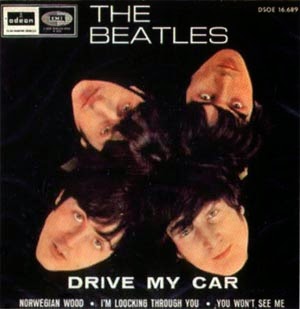
The Beatles "Drive My Car" Isolated Bass

Beatle Bass imagePaul McCartney is one of the most influential bass players ever, and it's always very cool to be able to listen to his isolated bass tracks. Today we'll take a listen to The Beatles "Drive My Car" from the Rubber Soul album. Here's what to listen for.

1. Listen to the pickup notes at the end of the bass phrase during the verse. He doesn't play it all the time, but it makes for a very funky bass line when he does.

2. Paul plays the bass line of the chorus differently, sometimes even within the same chorus. Sometimes each note is held out, and other times it's very staccato.

3. The bass track is far from perfect, with a major clam at 1:57 and some minor ones along the way. That said, it took another 10 years or so until production techniques really focused on each individual part and how it interacted with the other elements of the song, as well as how consistently each part was played.

In other words, it's a great track for its time, but would have been fixed or replayed in today's production environment.


----------------------------------

You should follow me on Twitter and Facebook for daily news and updates on production and the music business.

Don't forget to check out my Music 3.0 blog for tips and tricks on navigating social media and the new music business.

Friday, December 4, 2015

4 Isolated Paul McCartney Bass Lines

Paul McCartney 1976 image
We all know Paul McCartney as a fabulous songwriter and singer, but it's easy to overlook what an influential bass player he is as well. Paul, along with Motown's James Jamerson, changed bass playing from laying down a foundation of root notes to a melodic thing of beauty.

Although the following video may not be comprised of the best examples of Paul's genius, it does give you an idea of his style.

You'll hear individual snippets from the songs "With A Little Help From My Friends," "Come Together,""Golden Slumbers," and "Band On The Run" with the bass mostly isolated. 

Sometimes you'll hear other instruments also on the bass track (like the tambourine on "Help From My Friends"), which wasn't all that unusual, according to Beatle engineer Ken Scott's book Abbey Road To Ziggy Stardust (which I was lucky enough to help him write). Have a listen.


Friday, April 3, 2015

The Beatles "Drive My Car" Isolated Vocals

The Beatles "Drive My Car" image
It's always both interesting and informative to look back on recordings created during a simpler time, when arrangements were lean and tracks were few. Here's the isolated vocals from a rather enduring Beatles song from their 1965 Rubber Soul album called "Drive My Car." Here's what to listen for (it begins at 0:07).

1. The verses are clearly Paul McCartney on the top vocal and John Lennon on the bottom. When you listen to the full arrangement Paul jumps out of the mix, but John is somewhat buried.

2. As with most Beatle recordings, it's slathered in that syrupy Abbey Road reverb that seems to fit into the track regardless of how much is used.

3. The excellent Beatle three part harmony is in evidence in the turnaround and the chorus, with George Harrison joining McCartney and Lennon with the middle harmony part.

4. The second turnaround ("I can show you a better time") is not really together timing wise and McCartney's voice cracks on "time." You really don't hear this when mixed with the other instruments. Of course, we'd fix this right away if recorded today, but that also contributed to the character of the song.

5. The second and last chorus has the harmony vocals doubled, as are the "beep, beeps."

6. The first two "And baby I love you" sung by Lennon sound like they were overdubbed, as the background leakage changes. The last one is doubled.


----------------------------------

You should follow me on Twitter and Facebook for daily news and updates on production and the music business.

Don't forget to check out my Music 3.0 blog for tips and tricks on navigating social media and the new music business.

Friday, February 20, 2015

The Beatles "Something" Isolated Bass

After The Beatles became hit makers Paul McCartney played more and more keyboards on basic tracks and did all his bass tracks as overdubs. Paul liked this process because he felt it helped him forge a better bass line that fit better with the other layers of the song. Some say that's why his lines were so melodic, and nowhere is this more in evidence than in George Harrison's classic "Something" from the classic Abbey Road album.

Here's the isolated bass track and some things to listen for.

1. You can hear the influence of Motown's James Jamerson in the way connects the notes between sections, weaving a line that gets from one part to another in a sometimes unusual manner.

2. The part is busy by today's standards with some sections that make you think, "How'd he think of that?"

3. The part isn't played perfectly as there are some occasional brief timing issues, usually being a little late on a note.

4. The very last note of the song is a flam.


Don't forget to check out my Music 3.0 blog for tips and tricks on navigating social media and the new music business.

Monday, December 22, 2014

The World's 12 Richest Bass Players

Krist Novoselic image
Bass players generally get the least attention in a band, but that doesn't mean they don't profit from it just as much as singers and guitar players. The Richest took a look at the top bottom enders and it found there's quite a bit of wealth in those low notes. Here's what it found:

1. Paul McCartney – $1.2 billion (no surprise there)

2. (tie) Sting – $300 million
2. (tie) Gene Simmons (Kiss) – $300 million


4. Roger Waters (Pink Floyd) – $270 million


5. Adam Clayton (U2) – $150 million


6. Flea (Red Hot Chili Peppers) – $115 million

6. John Deacon (Queen) - $115 million

8. John Paul Jones (Led Zeppelin) – $80 million

8. Bill Wyman (Rolling Stones) - $80 million

10. Geezer Butler (Black Sabbath) – $65 million

11. Tony Kanal (No Doubt) – $45 million


12. Krist Novoselic (Nirvana) – $40 million


Here's the trick. All of the above except for Wyman are songwriters as well as bass players, which proves the old music adage, "If you want to get rich, write a hit song!"

Thursday, August 14, 2014

The Beatles "Hello Goodbye" Isolated Bass And Drums

It's always good to get a Beatles fix and here's a great one with the isolated bass and drums from "Hello, Goodbye" off of the band's Magical Mystery Tour album. This one's a lot of fun to listen to because you just hear the stripped down rhythm section (except for the leakage), spread with the drums to the left and the bass to right, without any of the many overdubs on the song. Here's what to listen for:

1. The drums are extremely compressed and distorted. The various Beatle engineers used to use a Fairchild 660 on the drums, but on this song it was really cranked.

2. Take notice that Ringo actually doesn't play a lot in the song except for the kick drum, as the motion is mostly carried by a shaker. Despite that, this song is a perfect illustration of his excellent time and showcases his very unique tom fills.

3. The bass is pretty spot on and ever so slightly ahead of the beat. By this time, Sir Paul was overdubbing his bass towards the end of the production so he could better tailor the part to fit the song. This is a perfect illustration of that technique.

4. Listen to the bass part on the outro after about the 3:00 mark. This is something that I hadn't heard on the record before.

5. It's interesting to hear the piano, organ and percussion leakage on the left and the vocal on the right.

This video will no doubt be taken down soon, so enjoy it while you can.


----------------------------------

Thursday, July 31, 2014

Wings "Band On The Run" Isolated Bass and Drums

There's nothing like listening to the isolated bass and drums of a track to really feel its essence. The essence of Wings' "Band On The Run" (from the album of the same name) is totally Paul McCartney, as he played both bass and drums on the track.

Most of the album was recorded at the EMI studios in Lagos, Nigeria after Sir Paul decided he wanted to try recording in a more exotic place than England. Just prior to departing for Nigeria, both lead guitarist Henry McCollough and drummer Denny Seiwell left the band. Paul and band members Linda McCartney and Denny Laine decided to carry on anyway, with Paul now taking on drum and lead guitar duties as well as bass. Here are some things to listen for.

1. The drums are amazingly solid for someone who doesn't spend most of his time playing drums. Listen especially to the ride cymbal work in the first part of the song, which is like a metronome.

2. While Paul can lay down a drum beat, he has a little trouble with fills. Listen to the one at 3:08 and at 4:50, both of which are a bit lazy and late.

3. Paul's bass playing is mostly behind the beat and sometimes even flams with the drums. This happens throughout the song, but especially in the first section of the song. Today this all would have been fixed if not during the recording, then in editing afterward.

4. He is one of the most innovative bass players ever though. McCartney is noted for coming up with melodic parts that most other bass players or arrangers would never think of. Listen to the bass part of the last section (the "Band on the run" part). Few players would come up with something similar.

5. The recording is great, even though it was done on an 8 track machine in less than ideal conditions. Geoff Emerick provides one of his best engineering jobs.


----------------------------------

Thursday, August 29, 2013

Paul McCartney "Maybe I'm Amazed" Isolated Guitar Solo

Here's the isolated guitar solo from one of my all-time favorite songs. It's "Maybe I'm Amazed" from Paul McCartney's first solo album. Paul plays basically the same solo twice in the song and you'll here them both back to back. Here's what to listen for.

1. I suspect this was played through some sort of Fender amp since you can hear the built-in reverb boing at the end of his phrases.

2. You can hear some slight mis-fingerings and undeveloped technique, but Macca makes up for it with an extremely lyrical solo melody. Most guitar players with better technique would probably just wail with a lot of notes instead, but this is a solo worth remembering. It's stands out as much as the rest of the song.

3. Listen to the string noise in between the phrases. We'd trim these in the workstation today so you wouldn't hear them, but you don't hear on the final record anyway.


----------------------------------

You should follow me on Twitter for daily news and updates on production and the music business.

Don't forget to check out my Music 3.0 blog for tips and tricks on navigating social media and the new music business.

Wednesday, February 27, 2013

McCartney "Maybe I'm Amazed" Isolated Vocal And Guitar

One of my all-time favorite songs is from Paul McCartney's self-titled first solo album called "Maybe I'm Amazed." Here's a great video featuring the keyboards, vocal and guitar solo (also one of my favs).

What I especially like is the double of the piano line on the chromatic line up, which is one of the McCartney arranging gems that only he would think of. Also listen to how compressed the vocal is.

Usually isolated tracks can be boring to listen to after the a minute or so but this one holds up as a great song all the way through.

It begins at 6 seconds and unfortunately cuts a bit of the outro off, but it's still very cool.


----------------------------------

You should follow me on Twitter for daily news and updates on production and the music business.

Don't forget to check out my Music 3.0 blog for tips and tricks on navigating social media and the new music business.

Monday, August 13, 2012

The Beatles "Something" Isolated Bass And Drums

Here's a wonderful insight into the backbone of The Beatle's ever enduring success, a listen to the isolated rhythm section of Ringo Starr on drums and Paul McCartney on bass. This is as solid and as creative a combination as modern music has ever seen. As you listen to just the bass and drums of "Something," be aware of the following:

1) Listen to how far behind the beat Ringo's snare is. He plays the song every bit the way a blues drummer would. Actually, "Something" uses somewhat of a blues song form, with 10 bars instead of the the normal 12.

2) Ringo doesn't play a high hat during the verse. It's just kick and snare. You hear the ride cymbal during the guitar solo section, and the hat only during the very last B-section of the song.

3) Listen to the constant tom fills during the bridge. It's easy to overlook this when all the instruments are in the mix.

4) Listen to how improvised the bass part is. The only part that seems written is the B-section ("I don't want to leave her now").

5) The sounds of both the bass and drums are great; big and round sounding with plenty of definition. This was done on the solid state TG console at Abbey Road Studios that no one particularly liked the sound of, but it holds up very well as compared to what came after.

If you'd like to read more about recording The Beatles and Abbey Road Studios, check out Ken Scott's book Abbey Road To Ziggy Stardust.


----------------------------------

You should follow me on Twitter for daily news and updates on production and the music business.

Don't forget to check out my Music 3.0 blog for tips and tricks on navigating social media and the new music business.

Monday, July 16, 2012

4 Isolated McCartney Bass Lines

We all know Paul McCartney as a fabulous songwriter and singer, but it's easy to overlook what an influential bass player he is as well. Paul, along with MoTown's James Jamerson, changed bass playing from laying down a foundation of root notes to a melodic thing of beauty. Although I don't think the following video is comprised of the best examples of Paul's genius, it does give you an idea of his style.

You'll hear individual snippets from the songs "With A Little Help From My Friends," "Come Together,""Golden Slumbers," and "Band On The Run" with the bass mostly isolated. Sometimes you'll hear other instruments also on the bass track (like the tambourine on "Help From My Friends"), which wasn't all that unusual, according to Beatle engineer Ken Scott's book Abbey Road To Ziggy Stardust (which I was lucky enough to help him write). Have a listen.


----------------------------------

You should follow me on Twitter for daily news and updates on production and the music business.

Don't forget to check out my Music 3.0 blog for tips and tricks on navigating social media and the new music business.


Saturday, April 21, 2012

Don't Forget To Celebrate Record Story Day!

Record Store Day logo graphic from Bobby Owsinski's Big Picture production blog
Today is the fifth annual Record Store Day when music lover everywhere head for their local record store to buy some vinyl and help surport a dwindling, but absolutely necessary part of the industry.

A number of artists are celebrating the day by releasing special vinyl records, including Katy Perry (with 12" pink vinyl), David Bowie (with a picture disc of "Starman"), Arcade Fire, Flaming Lips, Paul McCartney, and even some never before heard songs by James Brown.

Most record stores are small independent "mom and pop" stores these days and they really do need our help to survive. Head out to a store today. Look through the albums and CDs, and maybe even buy something.

Support your local record store. You'll be glad you did.

----------------------------------

You should follow me on Twitter for daily news and updates on production and the music business.

Don't forget to check out my Music 3.0 blog for tips and tricks on navigating social media and the new music business.

Sunday, August 14, 2011

Brian Ray On Getting The McCartney Gig

Here's an interview with Paul McCartney guitarist/bassist Brian Ray from my book "How To Make Your Band Sound Great." In it he explains how the got the job with Sir Paul. As you'll see, sometimes the gig of a lifetime happens in an unexpected way.
-------------------------

"At my birthday party my friend Abe (drummer Abe Laboriel Jr.), who toured with me with Mylene Farmer and Johnny Hallyday, told me he was now working with Paul McCartney and they were going on tour but were looking for a guitar player who could play bass.  I just put my arm in the air and said, “I’d love a shot at that,” which was way out of my character to do something like that. I’d always gone from gig to gig by word of mouth and I was normally too shy to stick up for myself like that.

A couple weeks later I got a call from Paul’s producer David Kahne to come to his office in Hollywood. We just talked music and then he handed me a bass and I played a little while we were just chatting. Then he handed me a guitar and we chatted some more when he finally said, “We’re doing one song at the Super Bowl in 2002 and we’re looking for someone to play bass. Are you into it?”  Of course I was into it!  He said that they were looking at a couple of other guys but he had a good feeling about me and would put my name forward. The next day I got a call to see if I could be on a plane to new Orleans the day after that to play a song with Paul McCartney! 

I played the gig and it seemed to have worked out well. I was shaking Paul’s hand at the end where I said, “Thank you.  It was a real privilege and if I don’t get to see you again, thank you very much,” when I realized that I couldn’t let go of his hand (laughs), but he invited me back to the bar for a drink with the rest of the band.  At the end of the night he was saying his goodbyes to everyone when he said, “Welcome aboard, Brian.  Stick with Abe and Rusty (guitar player Rusty Anderson) to show you the ropes and I’ll see you in five weeks.” I couldn’t believe that I was in after only one song! So I just ran home and started woodshedding and cramming.

I set myself up like I was training for the Olympics and went through all his material from The Beatles to Wings to the solo stuff and just applied myself to it for five weeks, knowing that he may come in and change everything that I learned or even just let me go. So I didn’t treat it like I had the gig, I treated it like I had another audition. It just so happens that we had five days of rehearsal as a band before Paul got there so we were all prepared by the time he arrived. After the first rehearsal he said, “Hey guys, sounds great.  I’ll see you tomorrow.” That was really the first time I allowed myself to think, “I’m going on tour with Paul McCartney.”

You can read additional excerpts from this book and others at bobbyowsinski.com.
----------------------------------
You should follow me on Twitter for daily news and updates on production and the music business.

Don't forget to check out my Music 3.0 blog for tips and tricks on navigating social media and the new music business.

Wednesday, August 3, 2011

Paul McCartney On Songwriting

I went to a Paul McCartney concert a few years ago, and just like most people, I was totally blown away. As a Grammy winning producer/songwriter friend explained, "It's like watching Beethoven!" The funny thing was that a while later I ran into Brian Ray, one of Macca's guitar players, and when I told him how much I loved the show, he said, "You've got to come hear us now. We're so much better!" Sounded very much like a club band player, but it made me realize that musicians are still musicians and bands are still bands no matter what level you're on.

Here's a great video from the Michael Parkinson talk show of Paul talking about songwriting in general, writing a song for Sinatra, and playing a few of his lesser-known songs. Note a rather bored looking David Gilmour in the background, which is understandable since he wasn't doing much.


----------------------------------
Help support this blog. Any purchases made through our Amazon links help support this website with no cost to you.

You should follow me on Twitter for daily news and updates on production and the music business.

Don't forget to check out my Music 3.0 blog for tips and tricks on navigating social media and the new music business.

Wednesday, January 5, 2011

"While My Guitar Gently Weeps" Isolated Bass

Here's the isolated bass part from The Beatles classic "While My Guitar Gently Weeps" off of the their White album. Usually isolated bass parts are somewhat boring but not this one. Listen closely for a number of unconventional techniques from Sir Paul McCartney.

1) The sound of the bass is interesting in that it has a lot of treble and sounds very much like a guitar at times.

2) Likewise, the part is played like a guitar. Listen to the second verse (and beyond) where Paul actually plays chords on the bass.

3) The bass is exactly doubled by a clean guitar in chorus, and it's a somewhat intricate line which is sometimes a little stiff feeling and sometimes very loose.

4) The bass part keeps changing throughout the song. Maybe evolving is a better word. Check out the way Paul plays the last verse and adds the extra notes.

5) There's a clear mistake on the outro at about 4;37, but it's at the end of the fade so you never hear it on the record.


----------------------------------
You should follow me on Twitter for daily news and updates on production and the music business.

Don't forget to check out my Music 3.0 blog for tips and tricks on navigating the music business.


Tuesday, October 26, 2010

"Back In The USSR" Isolated Vocals

Today we'll listen to the isolated vocals from "Back In The USSR," the opening track from The Beatles so-called "White Album." Written and sung by Paul McCartney, who also played drums on the song, the track was recorded during the period where Ringo Starr temporarily quit the band.

1) I never heard the claps in the chorus and guitar solo before, but there are always little acoustic gems in tracks that are mixed down or covered with something else so they're barely audible.

2) All of the vocals are dry, but they still sound perfect for the song - present and in your face.

3) It's interesting to hear how much the background shouts add to the excitement of the track.


----------------------------------
Follow me on Twitter for daily news and updates on production and the music business.

Don't forget to check out my Music 3.0 blog for tips and tricks on navigating the music business.

Wednesday, August 4, 2010

James Jamerson Isolated Bass

Yesterday I talked about how Paul McCartney was, in my opinion, the most innovative bass player in rock besides James Jamerson. It wouldn't be fair not to listen to Jamerson after listening to Paul, so here are a number of Motown hits featuring Jamerson's signature bass playing. Of course, Jamerson was one of the mainstays of the Motown house band known as the Funk Brothers.

Here are a couple of his greatest parts including Marvin Gaye's What's Goin' On, and The Four Tops' Bernadette.

1) On What's Goin' On, listen to how Jamerson builds the intensity of the track as it goes on. You can just  feel him pushing the track as his line gets more and more complex and he digs in harder.

2) Jamerson's bass has a distorted edge to it. He supposedly went direct while recording and used an Ampeg B-15 when playing live, but the tone on this song sure sounds like a B-15 to me.

3) Bernadette may be Jamerson's masterpiece. He's playing a fairly busy part yet it's always in the pocket and always seems effortless.

) Bernadette is also a really good example of how a Motown track is put together when you hear all the instruments fall in with the bass.


-----------------------------------
Follow me on Twitter for daily news and updates on production and the music business.

Check out my Big Picture blog for discussion on common music, engineering and production tips and tricks.

Tuesday, August 3, 2010

Paul McCartney Bass Lines

Paul McCartney has never gotten nearly enough credit for his innovations as a bass player. I personally believe that he's the most influential bass player of the rock age besides Motown's James Jamerson.

Like Jamerson, McCartney playing evolved into mini-melodies, being part hook and part counterpoint to the rest of the instruments in the band. As a result, the band always sounds full even with a minimum of overdubs.

I believe this was because the bass became an overdub that happened in the late stages of Beatle tracks, instead of being recorded the traditional way during tracking of the basics. This allowed Paul the freedom to come up with a line that fit better with the final track.

Here's an interesting video that showcases McCartney at his best (except for the last track). Have a listen to A Little Help From My Friends, Come Together, and Band On The Run.


----------------------------------
Follow me on Twitter for daily news and updates on production and the music business.

Don't forget to check out my Music 3.0 blog for tips and tricks on navigating the music business.

Monday, August 3, 2009

And The Concert Business Gets Worse


We've been seeing signs that the bubble has burst for the concert industry just the way it did for the rest of the music industry with this summer's ongoing discounts from mega-promoter LiveNation. Now comes an article from Reuters that indicates that virtually no one is selling out a tour this season.

That's right - even superstars like Paul McCartney, AC/DC, Bruce Springsteen, Jonas Brothers, Coldplay (big surprise), and U2 are struggling to fill seats.

For certain, the economy has finally caught up to the concert industry, but that's not all. The high prices and perceived gouging have caught up too. Couple all that with the fact that most of these mega acts have toured in major locations so much that it's not an event any more, especially for what amounts to be such a big bite out of the the consumer's pocketbook.

In fact, demand is so low that the legal ticket scalper StubHub has begun selling tickets at a massive loss instead of their normal hefty markup. Indeed, it's been reported that some consumers "have already purchased tickets as low as $1 for Springsteen and Coldplay, $9 for Kenny Chesney and $10 for the Jonas Brothers this season, with tickets listing for as low as $16 for upcoming McCartney shows this weekend in Maryland," according to the Reuters article.

It's also been reported that Live Nation is extending its half price ticket deal at ampitheaters as well as expanding its summer long "No Fee Wednesdays" promotion to include more than 1500 smaller shows at clubs and theaters.

Could this be a turning point in the concert business? Has the final music industry bubble burst? We'll know by the end of the month when the summer concert season ends.

Tuesday, June 2, 2009

The Beatles: Rock Band Introduction At E3

Yesterday Paul McCartney and Ringo Starr introduced the new Beatles: Rock Band game at the E3 gaming conference in Los Angeles. While I've been hard on Rock Band and it's players in past posts, I must admit that this looks pretty cool. Plus, there's empirical evidence everywhere that the Rock Band and Guitar Hero games have actually driven kids to learn to play instruments, which is a good thing culturally and musically.

Enjoy this sample of the game (the graphics are great!).


LinkWithin

Related Posts Plugin for WordPress, Blogger...