Get This Free Cheat Sheet Guaranteed To Help Your Next Mix

Showing posts with label headphones. Show all posts

Monday, February 1, 2016

New Music Gear Monday: Waves NX Virtual Monitoring Plugin

Waves NX imageMixing with headphones has always been an iffy situation. While it can be done, the mixer runs the risk of missing on the low-end component of the mix since the phones are so close to your hears. It's not how much of the world listens to music, so you end up constantly comparing your mix on speakers anyway. All this might change with the introduction of Waves NX however.

Waves NX is a virtual monitoring plugin that lets you hear the acoustics of a high-end mix room over headphones. It tracks your head via your computer camera to optimize the sweet spot, and allows you to monitor either in stereo or in 5.1 surround on your regular stereo headphones.

NX attempts to bridge the gap between monitoring on speakers and monitoring on headphones so that you no longer have to worry that what you’ve mixed on headphones will sound different once you switch to speakers. The plugin lets you hear the same natural depth and stereo spread on headphones that you would hear on external monitors so there's less need for cross-referencing between the two.

Waves NX works on most DAW apps on both Mac or PC. Nx requires a webcam, and will support any webcam that works on your system. It's available at an introductory price of only $49. Check out the Quick Start tutorial below.


Monday, July 20, 2015

New Music Gear Monday: AKG M90Q Quincy Jones Headphones

Quincy Jones AKG N90Q Headphones image
There are a number of speaker systems, monitor controllers and stand-alone apps that will analyze the listening environment and tune your monitors to it accordingly. This used to be something akin to voodoo but it's so widely and inexpensively available now that we hardly blink an eye.

What is different is the new AKG N90Q by Quincy Jones headphones that feature something called TruNote, that uses the same analysis technology to customize the headphone's to the shape of the wearer's ear. Of course, Q himself was heavily involved with designing these phones, hence the name.

The N90Q is truly a work of engineering. Besides tuning themselves to your ear via a pair of tiny mics in each earcup, they also provide a built-in 96k DAC and a USB port so you can plug in directly to your computer's digital stream and bypass the limited internal DACs for a better sound.

Then there's the fact that they're noise canceling, have bass and treble controls on the left earphone and volume, On-Off, and DSP settings (Normal, Studio, Surround Sound) on the right cup.

The phones carry about an 8 hour charge, and can be rejuiced via the USB connection or via a supplied backup battery called a Powerbank that connects via USB as well, for much more control of the audio than the normal headphone.

The AKG N90Q by Quincy Jones headphones comes with a travel case, travel pouch, Powerbank battery, and various cables and adaptors so that the phones will work in just about any setting. These aren't for everybody however, thanks to the $1,500 price tag, which puts them out of the range of most studios. That said, if you're looking for the best and money is no object, they'll be worth checking out when available in early September.


Wednesday, July 15, 2015

6 Tips To A Better Click Track

Beyer DT102 headphones image
Many musicians, producers and engineers fight with the click track for various reasons, but most of the time it's because the player just can't hear it in a way that's conducive for playing in the pocket.

Here are 6 tips from The Music Producer's Handbook about not only getting the click to cut through the mix and making it groove, but preventing any bleed into open microphones as well.

"Many times just providing a metronome in the phones isn’t enough. What good is a click if you can’t hear it, or worse yet, groove to it? Here are some tricks to make the click not only listenable, but cut through the densest mixes and seem like another instrument in the track too.

1. Pick The Right Sound. Something that’s more musical than an electronic click is better to groove to. Try either a cowbell, sidestick, or even a conga slap. Needless to say, when you pick a sound to replace the click, it should fit with the context of the song. Many drummers like two sounds for the click; something like a high go-go bell for the downbeat and a low go-go bell for the other beats or vice-versa.

2. Pick The Right Number Of Clicks Per Bar. Some players like 1/4 notes while others play a lot better with 8ths. Whichever it is, it will work better if there’s more emphasis on the downbeat (beat 1) than on the other beats.

3. Make It Groove. By adding a little delay to the click you can make it swing a bit and it won’t sound so stiff. This makes it easier for players that normally have trouble playing to a click. As a side benefit, this can help make any bleed that does occur less offensive as it will seem like part of the song.

Preventing Click Bleed
OK, now the click cuts through the mix but it does it so well that it’s bleeding into the mics. You’ll find this mostly with drummers (who usually want to hear it at near ear-splitting levels) and string players (who play very quietly and therefore need the gain of the mics turned up). Try the following:

4. Try a different set of headphones. 
Try a pair that has a better seal. The Sony 7506 phones provide a fairly good seal, but the Metrophones "Studio Kans," the Vic Firth S1H1’s, or even the Radio Shack "Racing Headphones" (they’re mono though), will all isolate a click from bleeding into nearby mics.

5. Run the click through an equalizer and roll off the high end just enough to cut down on the bleed.

6. Have the players use one-eared headphones. Many times players will leave the phones loose so they can hear what’s going on with the other players in the room. If they can have click in one ear (in the headphone) that’s sealed closely to the head, then they get the live room sound in their free ear. One-eared phones have become almost standard for ensemble recording for horn and string sections, and are sometimes preferred by vocal groups as well. A good example is the Beyer DT102 (shown on the left)."

Sometimes all it takes is one of these tricks to put a smile on the face of everybody both in and out of the control room, so give them a try.

Thursday, June 25, 2015

The Truth About Beats Headphones

How Beats Tricks You Into Thinking It Makes a Premium Product
Beats Headphones most important part
Those of us in the studio community that are used to listening on reasonably good headphones are constantly appalled at the market penetration of Beats brand headsets. Thankfully, you don't see them much in studios unless you're recording R&B clients, but if you've ever listened you know how bad they sound.

PopMech did a detailed teardown of Beats most popular Solo headphones and found that they're incredibly cheaply made with corners cut just about everywhere. For instance, Beats uses glue where most quality makers use screws, so they're really very fragile. Beats also claims that its drivers are specially designed for the company but it turns out that they're just cheap off-the-shelf units.

But Beats pulls out one trick that you probably never considered. The company makes its headphones feel more substantial and worth the money by adding weight!

In fact, 30% of the weight of the phones comes from 4 tiny parts that do nothing else but make them feel heavier (see the photo above).

So do yourself a favor and grab something that's worth the money the next time you're buying phones. Three models that I use all the time are the Monoprice 8323 (for really inexpensive but great sounding phones), the broadcast standard Sony MDR 7506, and Audio Technica ATH-M50x.

What are your favorite headphones?

UPDATE: It appears that the unit that was dismantled by PopMech was a knockoff.

Wednesday, May 27, 2015

4 Tips For A Great Headphone Mix

headphones on console image
Most musicians perform better with a great mix and headphones that work perfectly. Here's an excerpt from The Recording Engineer's Handbook 3rd edition that provides 4 tips for getting those headphones session-ready.

"Perhaps the greatest detriment to a session running smoothly is the inability for players to hear themselves comfortably in the headphones. This is one of the reasons that veteran engineers spend so much time and attention to the cue mix and the phones themselves. In fact, a sure sign of an inexperienced engineer is treating the headphones and cue mix as an afterthought instead of spending as much time as required to make them sound great.

While it’s true that a veteran studio player can shrug off a bad or distorted phone mix and still deliver a fine performance, good “cans” makes a session go faster and easier, and takes a variable that can sometimes be the biggest detriment to a session out of the equation.
1. Long before the session begins, test every headphone to make sure there’s no distortion and they’re working correctly (test with actual music). 
2. Make sure that there’s plenty of cable available so that the musicians can move around as needed. Use cable extenders as necessary. 
3. Check to make sure that the cables are not intermittent (nothing stops a session as fast as a crackling phone). 
4. Some engineers send the stereo monitor mix (the mix that you’re listening to in the control room) to the phones first, then add a little of the individual instruments as needed (“more me”). This is a lot easier than building up individual mixes, unless that’s what the musicians request.
Where at one time each studio had to jury-rigged together their own headphone amp to power their cue mixes, these days its easy and fairly inexpensive to buy a dedicated headphone amplifier from any number of manufacturers that’s easy to set up and sounds great.

Companies like Behringer, Furman, PreSonus, Rolls and Aphex all make units that will work better and can be a lot cheaper than the traditional method of a large power amp and resistors."

To read additional excerpts from The Recording Engineer's Handbook and my other books, go to the excerpts section of bobbyowsinski.com.

Sunday, December 14, 2014

New Music Gear Monday: Audio Technica MSR7 Headphones

Audio Technica has been making great studio-quality headphones for a long time, and its recent M50 model has become an unofficial studio standard. Now the company is trying to take sonic quality to yet a new level with its new ATH-MSR7 to take advantage of the upcoming leap into streaming hi-res audio.

The MSR7 features the company's 45mm True Motion drivers for extended dynamic and tonal range, along with 3 precisely placed air vents designed to control airflow inside the cup. The headset also features an inline mic and remote so it could be easily used with your computer or mobile device.

Comfort is a big deal when it comes to headphones, especially when wearing them for a long session or plane trip, so AT used memory foam for the ear pads to keep those ears from feeling pinched. A padded headband also helps raise the comfort level for extended use periods.

The Audio Technica ATH-MSR7 is scheduled to ship in March with a suggested retail of $249, although some import models can be found available now for Christmas delivery at higher prices.


----------------------------------

Wednesday, December 10, 2014

10 Great Christmas Gifts For Musicians And Engineers 2014

We could all use a little bit of shopping help when it comes to buying holiday gifts for the people around us in the music and recording business. If you're in a quandary about what to buy, you're in luck as I have a list of recommendations that covers a wide variety of items and price ranges. All of these following products (except for the last one) I use regularly.

1. Etymotic Reaserach ER 20 Hear Protection Ear Plugs
I personally never go into a loud audio situation without these little gems. They are soooo much better than foam or wax earplugs in that they cut the level down without affecting the frequency response. Since I found the Etymotic Ear Plugs I feel absolutely naked and scared when I don't have them on me. At less than $10, you just can't go wrong.


Equator D5 monitors image from Bobby Owsinski's Big Picture blog
2. Equator DS5 Monitors
You want to know my secret weapon when it comes to mixing? It's these little Equator monitors. I've used them on every mix for the last 2 years and all I can say is they're the best small monitor I've ever used. You just can't find a better pair of speakers at this price point ($399) anywhere. Get the matching isolation pads too, an absolute bargain at $20!


3. Monoprice 8323 Headphones
It's shocking how good these phones are for about $23. They're pretty comfortable, have a really tight fit, and provide a surprisingly balanced sound. In fact, I would trust the low end on the 8323's more than on a couple alternatives that I have that cost 4 or 5 times more. Don't let the "DJ-style" in the description scare you, these are terrific for the price.


4. Books by Bobby Owsinski
Okay, so I'm a little biased, but if you're looking for a book for someone in the music business, you'll hopefully find one of mine that will hit the sweet spot. There's something for everyone, including books on mixing, recording, recording drums, mastering, being a studio musician or a touring musician, improving your band, producing, navigating the new music business (the newly released third edition of Music 4.0), social media for musicians, studio building, guitar tone, and making videos. From about $16 to $30.


Blocklite LED flashlight image

5. The Blocklite 
This falls under the category of "Why didn't I think of that?" Blocklite is a simple LED add-on to any 9 volt battery that turns it into a flashlight that's perfect for checking all those dark spaces during a session or a show.


Lynda.com Audio Mixing Bootcamp image from Bobby Owsinski's Big Picture blog
6. Lynda.com Courses
If you don't know about Lynda.com then you really should. They're the #1 portal on the Internet for video learning, with over 3800 high-quality courses on just about any kind of tech you can think of. While you're there, check out the courses I've done for Lynda. Lynda is just $24.99 for a full month, which allows you to access as many courses as you can watch. Here's a free 7 day trial.


7. Advanced Audio Microphones
If you're looking for some modern versions of the vintage mics that we all know and love but can't afford, then take a look at the Advanced Audio line of microphones. These mics are used in studios around the world every day and on some of the biggest movies made in Hollywood too. And you won't believe how low the prices are. I own and use some, and I'm going to get a few more.


8. Snark SN-1 Guitar Tuner 
We've all gotten used to using software guitar tuners, but when you want to tune as fast as possible, this is the best tuner I've found. It clips right onto the guitar so you don't even have to plug it in. At $8.99, it's unbeatable.


9. Golden Age Project Pre-73
Everybody wants a Neve preamp but a lot of us can't spring for a couple of channels of 1073s. The Golden Age Project Pre-73 was built to sound a lot like the 1073 and it does a pretty good job of it. It's not the real thing, but for only $350 it's surprising how close it gets.


10. Audio Technica AT-LP60USB Turntable
If you want to get into the vinyl world but don't want to worry about a special phono preamp, this turntable by Audio Technica takes care of all that for you. It has a built in preamp, the the USB port means you can plug it directly into your computer if you want. It even comes with a phono to 1/8" adaptor cable and a copy of Audacity software.


Monday, January 20, 2014

Burning In Headphones: Myth Or Fact?

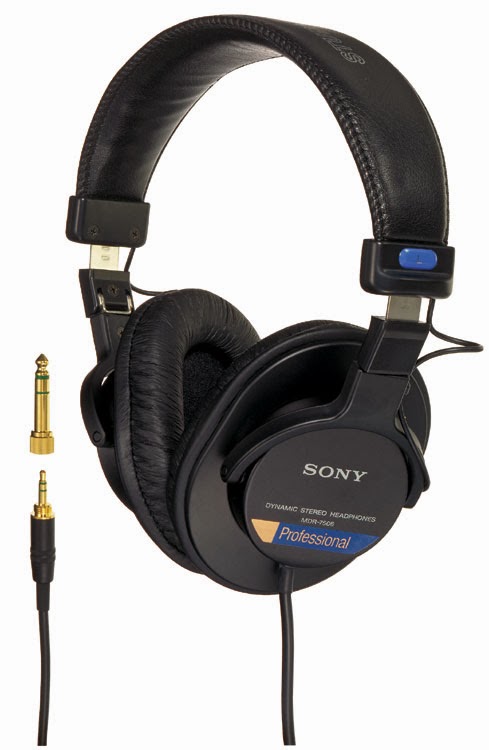
Sony 7506 Headphones image from Bobby Owsinski's Big Picture Blog
Have you ever burned in your headphones before you used them? Yeah, me neither. That's why I was surprised to read about the more or less common practice of burning in headphones for as much as 400 hours before using them. Want to guess who does that? Right - audiophiles, of course.

It seems that many audiophiles have extensive rituals for burning in phones, from playing music continually through them for 24 hours, to blasting them with 40 hours of pink noise, to a large dose of Lou Reed's Metal Machine Music. Me - I just buy them and use them. I haven't noticed a difference between a well kept pair of older Sony 7506's or Fostex T20's (or my favorite cheap phones - the Monoprice 8323) and new ones unless the company upgraded the drivers. It all seems like a myth to me.

Shure has apparently looked into this phenomena as well and have found that if the phones haven't been abused, there's no evidence that the frequency response changes over time. Of course, if the phones are used in the studio where the musician has control over the level, chances of abuse are pretty good, as we all know too well.

Here's something else to think about on the subject. The competition in headphones in pretty fierce these days, so don't you think a manufacturer would do everything in their power to make their phones sound as good as possible right out of the box? If that meant burning them in for 400 hours before shipping, don't you think they'd do that?

To my knowledge, no headphone manufacturer uses a burn-in process yet, but if you know of one, let me know. I'm dying to hear the evidence that the practice is worth the time. If it is, I'll be getting out my pink noise generator.
----------------------------------

You should follow me on Twitter and Facebook for daily news and updates on production and the music business.

Don't forget to check out my Music 3.0 blog for tips and tricks on navigating social media and the new music business.

Thursday, November 28, 2013

Black Friday For Musicians

We all love a deal and Black Friday is the day for it, so I decided to put together my own BF list especially for musicians. Here are some cool items that make great gifts for any musician or engineer (and the prices are great as well).

Social Media Promotion For Musicians cover image


Social Media Promotion For Musicians - If you don't have the online presence or response you think you should, then this book's for you. Covers Facebook, Twitter, YouTube, Google+, Pinterest, bookmarking sites like Digg and Delicious, your website, blog and mailing list. Take 20% off  on the print version today only by using code 2HJQXWBT (the Kindle version is already discounted).


Blocklite LED flashlight image


Blocklite - This goes under the category of "Why didn't I think of that?". Blocklite is a simple LED add-on to any 9 volt battery that turns it into a flashlight that's perfect for checking all those dark spaces during a session or show. Cheap too at only $3.54 each.


Monoprice 8323 Headphones - Tired of spending big money on replacing trashed headphones? At $32 you won't find a cheaper and better sounding replacement.


Mixing Engineer's Handbook 3rd Edition - Are your mixes not sounding the way you think they should? The latest version of the Mixing Engineer's Handbook (written especially for the home or small studio) to the rescue. New interviews and a new "advanced" chapter make it a must have for any musician who records.


Etymonic Research ER20 Earplugs - The best earplugs on the planet, they reduce the volume but don't change the frequency response. I don't know what I'd do without them. You'll use them more than you ever thought. Only $12 a pair.


lynda.com online training tutorialsLynda.com - Have you ever wanted to learn a piece of software, but hated the "how-to" videos you found on YouTube with bad audio and lighting and people that barely know what they're doing? Try Lynda.com, with more than 1500 courses with super high production values by experts and in small digestible bites. Check out my courses, and get 7 days free of unlimited access to lynda.com.


Tascam Vocal and Instrument Trainer/Recorder - This is a unit that I wish I had when I was starting out. It allows you to slow down an MP3 or a recording so you can figure out exactly what's being played. At 44 bucks it can't be beat. There's a dedicated Guitar Trainer as well.


Recording Engineer's Handbook 3rd Edition - Not sure how to mic a tabla, marimba or fiddle? Here's the book that will show you not only one, but multiple ways how as well as the principles behind getting a great recording every time. Invaluable to the recording musician.


Pyle Pro PCT 40 Cable Checker - The average studio or sound system today has so many different types of cables that troubleshooting can sometimes be difficult. Enter the PCT40 cable checker, about the most comprehensive unit that you'll find, testing all the audio connection flavors as well as USB, Ethernet and Speakon. A steal at $35.


Snark SN-1 Guitar Tuner - We've all gotten used to using software guitar tuners, but when you want to tune as fast as possible, this is the best tuner I've found. It clips right onto the guitar so you don't even have to plug it in. At $7.99 each, it's unbeatable.

Shop Amazon - Black Friday Deals in Electronics


----------------------------------

You should follow me on Twitter and Facebook for daily news and updates on production and the music business.

Don't forget to check out my Music 3.0 blog for tips and tricks on navigating social media and the new music business.

Wednesday, July 31, 2013

How About Headphone Implants?

Ear Magnet Implants imageMany of us have a love/hate relationship with headphones when we use them. Earbuds usually don't sound that great and they tend to pop out at the most inopportune times. Full over-the-ear headphones sound a lot better, but are bulky and difficult to wear for long periods of time. Has the time come for surgically implanted earphones?

Rich Lee actually had magnet implants in the tragus of his ears that work like headphones, so he has none of these problems. He never mentions what they actually sound like in the video though.

The crazy thing is that he says you can actually buy a kit on ebay to do this, although I couldn't find one. Check out his explanation.


----------------------------------

You should follow me on Twitter for daily news and updates on production and the music business.

Don't forget to check out my Music 3.0 blog for tips and tricks on navigating social media and the new music business.

Tuesday, December 11, 2012

The Evolution Of Headphones

Headphones have become a necessary part of our audio lives, whether we're in the studio or just listening for pleasure. The choices we now have are many and we all have our favorites, but that wasn't always the case. Here's a cool infographic on the evolution of headphones that's bound to bring up some trivia that you weren't aware of. Click on it to make it larger.

Evolution of Headphones Infographic from Bobby Owsinski's Big Picture blog

----------------------------------

You should follow me on Twitter for daily news and updates on production and the music business.

Don't forget to check out my Music 3.0 blog for tips and tricks on navigating social media and the new music business.

Thursday, August 16, 2012

The History Of Headphones

There are a few basic and critical audio devices that haven't changed much almost from their original conception despite huge advances in general technology. I'm talking about microphones and speakers. Sure, they've evolved and become more linear and efficient, but the basic concept is still the same as it ever was.

Since headphones are basically near field speakers placed over the ears, they fall into the same category, but there certainly has been a lot of evolution through the years. Cool Material recently ran a great article on the history of headphones. Here's an excerpt, but be sure to catch the full article on their site.


1881 – Way before MP3s, dubstep and premium Spotify accounts, headphones had little to do with music at all. Back in the 1880’s, the first headphones (or at least their early ancestors) were used by telephone operators. It was a single earpiece that rested on the user’s shoulder and weighed over 10 pounds (kinda like placing a boombox on your shoulder).Source 


1910 – Nathaniel Baldwin began manufacturing the first modern headphones. He crafted them in his kitchen and sold them all to the U.S. Navy. This was the first time a pair of cans resembled something you’d see today. Baldwin never patented them, however, because he was an idiot. Source


1958 – John C. Koss changed the headphone game in a way that would make Dr. Dre jealous. In 1958, Koss created the first stereo headphones (Koss SP-3) and launched an all out assault on awaiting ear canals. Over the next few decades, Koss would come to dominate the headphone industry, and he would do it all without the need for a pesky college education. Source


1980’s – For the man who was prone to headphone hair, the 80’s offered the first solutions. Both the earbud and the in-ear headphone made their way onto the scene in the 80’s even though they wouldn’t reach their peak in popularity until one Steven Paul Jobs changed the music game years later. Source


2001 – The iPod changed up the whole music universe. It became common to see people with a white cord running from their pocket to their ears multiple times a day. From their inception in 2001 to today, over 300 million iPods have been sold all with the accompanying pair of earbuds. Source


2012 – Headphones have become as much about style as they are sound quality. This may never have been more relevant than when Lil Wayne wore these $1 million dollar pair of Beats. Source


There are more than just these examples so be sure to check out the entire article here.

----------------------------------

You should follow me on Twitter for daily news and updates on production and the music business.

Don't forget to check out my Music 3.0 blog for tips and tricks on navigating social media and the new music business.

Tuesday, July 10, 2012

How Headphones Are Made

Every wonder how headphones are made? Here's a segment from the television show How It's Made that shows the making of some AKG K702 phones. As you'll see, there's quite a bit done manually. Fascinating!


----------------------------------

You should follow me on Twitter for daily news and updates on production and the music business.

Don't forget to check out my Music 3.0 blog for tips and tricks on navigating social media and the new music business.

Sunday, April 15, 2012

The Pros And Cons Of Mixing On Headphones

pink headphones from Bobby Owsinski's Big Picture production blog
Christine Lavin recently sent in the following question: "Where do headphones fit in the mix for you, or do you listen just to the speakers? I've been in studios where they have 3 sets of speakers -- small medium and large -- and the producer or mixer (if it's someone else) listen on all three.  But I'm a headphone person. Wonder what your opinion of that is?"


I'm a firm believer that you can get great mixes out of virtually any set of speakers in just about any room, and that includes headphones as well. The trick is that you have to have enough listening time to get a reference point as to what sounds good or bad when you play your mix back elsewhere. That's why mixers began to take their own speakers wherever they went (or asked for NS-10s) in the first place. It was something that they were familiar with, and since they were nearfields, the room didn't come too much into play during the mix so they could be surer of the result.

Mixing on headphones does have 4 significant downsides though:
1) You can't wear them for as long as you need to (8, 10, 12 hours) before your head and ears get tired from the extra weight. 
2) You have a tendency to turn them up, which can lead to some quick ear fatigue, again limiting your ability to mix for long periods. 
3) Because most of the more expensive professional headphones really sound great, you get a false sense of what the mix is like (especially on the low end), and it causes you not to work as hard getting the frequency balance of the mix right. 
4) The vast majority of the audience won't listen on phones after the mix is completed. Since a mixer is always aiming for a mix that sounds great on most speakers that the material is played on, you want to stay in that realm if possible, and even listen on some crappy speakers if possible as a check. Headphones just sound too good for that.
That said, headphones do have their place. They're great for editing in that you can hear clicks, pops and inconsistencies that you may otherwise miss while listening on speakers, and they're a great check for panning and checking reverb tails when mixing, but I wouldn't personally use them for an entire mix.

But if you're mixing in your bedroom and don't want to wake the the kids, significant other or neighbors, then by all means, go for it. Just make sure that you listen to some other material that sounds great on speakers first so you have a reference point of what sounds good and what doesn't.

Here's a bonus question also from Christine: "Do you think it's optimum to mix in a different studio from where you record, and/or bring in someone with fresh ears who hasn't been there for the recording of all the tracks?"

The only time I think that it's worth going to a different studio to mix is if you think that your mix is going to sound a whole lot better as a result, like in the case of mixing through a console rather than in the box. Otherwise, I'd stay in the same studio that you tracked, if for no other reason than not having to worry about software and plugin compatibilities that always seem to crop up when you go to a different system.

As for getting a different mixer, if you're stuck on the sound of the project for some reason, then it's great to have a fresh set of ears (as in someone else's) for the mix. Also, if you can hire someone who's a great mixer who you think can beat anything that you might come up with, then it may definitely worth it ("may" is the operative word here - you might not get what you expect). Otherwise, I think you're a lot better off using the same team that tracked the song(s) from the beginning for the sake of vision and continuity.

Any other questions? Feel free to send them along to requests@bobbyowsinski.com.

----------------------------------

You should follow me on Twitter for daily news and updates on production and the music business.

Don't forget to check out my Music 3.0 blog for tips and tricks on navigating social media and the new music business.

Wednesday, February 1, 2012

Are You Ready For Smart Headphones?

smart earbuds image from Bobby Owsinski's Big Picture production blog
Headphones are a pretty mundane piece of audio gear, which is precisely why it's time to smarten them up a bit. I don't know about you, but one of the things about phones that always bothers me is when the the cups get mixed up where the right and left one are reversed. Thanks to a bit of technology, that may not be a problem that much longer.

Researchers at the Igarashi Design Interface Project recently developed a set of "universal headphones" that are so smart that they can do the following:
  • Sense when you've placed an earbud or headphone on the wrong ear, then change the channels to accomodate. 
  • Sense when two people are sharing earbuds and change the channels so each earbud contains both the left and right channels (and even allow each listener to hear different tracks at the same time).
  • Automatically pause and resume play depending if the phones are on or off your ears.
The way the development team came up with right/left ear sensing is by attaching a proximity sensor to one of the earpieces to measure the distance from the ear. When placed in the right ear, the sensor detects the ear behind it. If it's then placed in the left ear, it knows that the distance has changed and then signals a on-board processor to switch channels.

It's so cool when old technology like speakers, mics and headphones get a new technological twist. Although these updates aren't available in a commercial product yet, expect to see them soon.

----------------------------------
Help support this blog. Any purchases made through our Amazon links help support this website with no cost to you.


You should follow me on Twitter for daily news and updates on production and the music business.


Don't forget to check out my Music 3.0 blog for tips and tricks on navigating social media and the new music business.


Tuesday, January 17, 2012

Silent Events Spread

An advertisement for Silence Events. 
Okay, here's something really new that I'm totally down with - silent events. The concept is that everyone at the event listens on headphones instead of a traditional sound system, and it seems to be the hot thing this year around Paris discos.

I know, I know, you're not a jetsetter or part of the Eurotrash scene. No problem, the trend is beginning to spread all over Europe, which means it's only a matter of time until it reaches the States.

Here's why so many like this idea:

1) The fidelity is so much better when you listen on headphones.

2) The privacy is way better too, both to those listening, and those not.

3) You don't have to worry about annoying your neighbors, which apparently is a big deal in Paris these days. In fact, there's a "no noise" curfew at 10PM for live events, and a silent outdoor disco keeps the riot squad away.

If these things ever catch on in a big way, a byproduct could be an increased demand for better audio quality, which is something that so many in the pro audio community have been hoping would happen for years. Don't hold your breath though. I'll believe it's for real when I get my first invite in LA and they ask me to bring my headphones. Then again, no one thought that the house concert scene would ever take off either. For more on silent events, check out this article.
----------------------------------
Help support this blog. Any purchases made through our Amazon links help support this website with no cost to you.

You should follow me on Twitter for daily news and updates on production and the music business.

Don't forget to check out my Music 3.0 blog for tips and tricks on navigating social media and the new music business.

LinkWithin

Related Posts Plugin for WordPress, Blogger...