Get This Free Cheat Sheet Guaranteed To Help Your Next Mix

Showing posts with label the beatles. Show all posts

Tuesday, April 26, 2016

The Abbey Road ADT Story

Abbey Road ADT imageThe Beatles, and John Lennon in particular, loved to double track vocals but hated the act of doing it. Not only that, back in the 4 and 8 track days, the doubled vocal would take up a track that could have been used for another element of the production.

That's why Abbey Road chief engineer, technical director, and later studio manager Ken Townsend came up with an ingenious way of simulating a double by using a couple of tape machines that's still tough to duplicate even today (although Waves now has a nice simulation). He called the effect ADT or Artificial Double Tracking.

Here's Ken describing how the effect worked.


Friday, April 8, 2016

The Beatles "Drive My Car" Isolated Bass

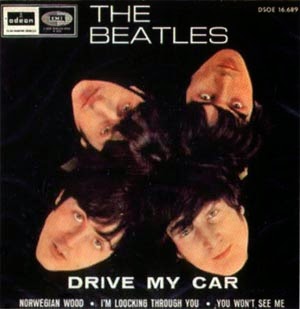
Beatle Bass imagePaul McCartney is one of the most influential bass players ever, and it's always very cool to be able to listen to his isolated bass tracks. Today we'll take a listen to The Beatles "Drive My Car" from the Rubber Soul album. Here's what to listen for.

1. Listen to the pickup notes at the end of the bass phrase during the verse. He doesn't play it all the time, but it makes for a very funky bass line when he does.

2. Paul plays the bass line of the chorus differently, sometimes even within the same chorus. Sometimes each note is held out, and other times it's very staccato.

3. The bass track is far from perfect, with a major clam at 1:57 and some minor ones along the way. That said, it took another 10 years or so until production techniques really focused on each individual part and how it interacted with the other elements of the song, as well as how consistently each part was played.

In other words, it's a great track for its time, but would have been fixed or replayed in today's production environment.


----------------------------------

You should follow me on Twitter and Facebook for daily news and updates on production and the music business.

Don't forget to check out my Music 3.0 blog for tips and tricks on navigating social media and the new music business.

Wednesday, March 16, 2016

How George Martin Changed The Finances Of The Record Business

George Martin and The Beatles 1966 imageThe recent passing of record producer George Martin has brought effusive thoughts, memories and well-deserved accolades from all quarters of the music business. Most have dwelled on Sir George’s creative accomplishments, and truly there were many. Just his work with The Beatles alone changed the way we make music forever, not to mention his work with other top selling artists like America, Jeff Beck, Paul McCartney, Little River Band, Gerry & The Pacemakers, Kenny Rogers, Kate Bush and many more.

But an unsung Martin contribution to the music business is the way he changed the finances of making a record. And, as sometimes happens with many giant changes that occur, it has been to the betterment of some and at the expense of others.

Martin’s career as a producer began in 1950 when he joined EMI Records as an assistant to Oscar Preuss, the head of EMI's Parlophone Records. When Preuss retired in 1955, Martin took over as head of the label, which at the time specialized in classical and Baroque music, original cast recordings, and regional British music, and was a rather insignificant subsidiary of the company.

Martin turned the rather sleepy division into a moneymaker though, by concentrating on comedy and novelty records by the likes of Peter Sellers, Spike Milligan, Dudley Moore and Peter Cook, among others, but it wasn’t until he signed The Beatles that the label hit gold - vaults of it. The band went on to sell hundreds of millions of records worldwide and reap EMI record-setting profits within a very short period, but Martin was still only a salaried employee with no participation in the profits he had such a big part in developing, which was a common trait of record producers of the time.


In 1969, after being passed over for a small bonus even though The Beatles had made EMI another year of historic profits with a succession of #1 worldwide hits, Sir George decided to use his considerable leverage to obtain a piece of the action by leaving his EMI staff position and going his own way. Soon many other successful producers followed, finally starting to cash in on large advances as well as receiving a piece of their best-selling artist’s pie. Read the rest on Forbes.


Some of the above is an excerpt from The Music Producer's Handbook. You can read more from The Music Producer's Handbook and my other books on the excerpt section of bobbyowsinski.com.

Tuesday, November 3, 2015

Today's Best Drummers Explain Why Ringo Is Awesome

Ringo Drum Kit
Ringo Starr is many times overlooked for his contribution to The Beatles, but not by the world's best drummers.

Hear Dave Grohl and Taylor Hawkins of the Foo Fighters, Abe Laboriel Jr, Jim Keltner, Stewart Copeland of The Police, Questlove of The Roots, Tré Cool of Green Day, Max Weinberg of Bruce Springsteen and the E Street Band, and Chad Smith of the Red Hot Chili Peppers express their admiration for Mr. Starkey.


Friday, October 16, 2015

The Beatles "The End" Isolated Drums

Alternate Cover
Abbey Road alternate album cover
Ringo Starr has always been an under-rated drummer, but while not flashy by any means, he was as solid and lyrical as they come. Here's the isolated drum track from "The End" from The Beatles now legendary Abbey Road album. Listen for the following:

1. Ringo's time is super solid even during a solo and drum fills, which is where most drummers have trouble.

2. The kick drum is very punchy, especially for the time.

3. The panning is rather odd. Although the drums are in very wide stereo, the snare and hat are leaning to the right side, while the toms go from the center to the left.

Stereo was still in its infancy in those days, so this was as good a choice as anything else at the time. Besides, it fits the track well and no-one has ever complained about the drum panning in the almost 50 years since.


----------------------------------

You should follow me on Twitter and Facebook for daily news and updates on production and the music business.

Don't forget to check out my Music 3.0 blog for tips and tricks on navigating social media and the new music business.

Friday, June 19, 2015

The Beatles "Girl" Isolated Vocals

Girl cover - The Beatles image
For many, Rubber Soul is the consummate Beatles album that really turned the genre into an art form. One of the most covered songs from that album is "Girl," and we'll take a look at its isolated vocals today. Here's what to listen for.

1. There's a count off at the beginning that you won't hear on the final album mix.

2. The lead vocal features just a single John Lennon vocal track on the verses. This is unusual in that Lennon didn't like the sound of his voice and always preferred to double it (which happens in the chorus) on most of the songs that he sang.

3. There's a fair amount of compression on the vocals along with the famous Abbey Road reverb that just melts into the track.

4. The Beatles harmonies vocals are doubled (except at the end of the bridge) and as beautiful as ever. Listen to the end of the bridge at 1:20 where it gets a little pitchy, and a mistaken vocal entrance at 2:02. Obviously, these aren't heard in the final mix.

Friday, April 10, 2015

The Beatles "All You Need Is Love" Backing Track

The Beatles "All You Need Is Love" image
Here's a real studio gem. It's the backing track from The Beatles 1967 worldwide broadcast of "All You Need Is Love."

Surprisingly the song was thrown together at almost the last minute as the band had been asked by the BBC to take part in the first event of its kind. The only guidance they were given was to keep it simple and keep the theme universal.

It's hard to believe that this is actually part of the final track as parts seem so ragged. Paul McCartney played standup bass, George Harrison is on a very shaky violin, John Lennon played harpsichord (which you don't hear much on the final version), George Martin on piano, and Ringo was the human metronome.

Especially take a listen at 1:13 where everything seems to fall apart.


Friday, April 3, 2015

The Beatles "Drive My Car" Isolated Vocals

The Beatles "Drive My Car" image
It's always both interesting and informative to look back on recordings created during a simpler time, when arrangements were lean and tracks were few. Here's the isolated vocals from a rather enduring Beatles song from their 1965 Rubber Soul album called "Drive My Car." Here's what to listen for (it begins at 0:07).

1. The verses are clearly Paul McCartney on the top vocal and John Lennon on the bottom. When you listen to the full arrangement Paul jumps out of the mix, but John is somewhat buried.

2. As with most Beatle recordings, it's slathered in that syrupy Abbey Road reverb that seems to fit into the track regardless of how much is used.

3. The excellent Beatle three part harmony is in evidence in the turnaround and the chorus, with George Harrison joining McCartney and Lennon with the middle harmony part.

4. The second turnaround ("I can show you a better time") is not really together timing wise and McCartney's voice cracks on "time." You really don't hear this when mixed with the other instruments. Of course, we'd fix this right away if recorded today, but that also contributed to the character of the song.

5. The second and last chorus has the harmony vocals doubled, as are the "beep, beeps."

6. The first two "And baby I love you" sung by Lennon sound like they were overdubbed, as the background leakage changes. The last one is doubled.


----------------------------------

You should follow me on Twitter and Facebook for daily news and updates on production and the music business.

Don't forget to check out my Music 3.0 blog for tips and tricks on navigating social media and the new music business.

Friday, February 20, 2015

The Beatles "Something" Isolated Bass

After The Beatles became hit makers Paul McCartney played more and more keyboards on basic tracks and did all his bass tracks as overdubs. Paul liked this process because he felt it helped him forge a better bass line that fit better with the other layers of the song. Some say that's why his lines were so melodic, and nowhere is this more in evidence than in George Harrison's classic "Something" from the classic Abbey Road album.

Here's the isolated bass track and some things to listen for.

1. You can hear the influence of Motown's James Jamerson in the way connects the notes between sections, weaving a line that gets from one part to another in a sometimes unusual manner.

2. The part is busy by today's standards with some sections that make you think, "How'd he think of that?"

3. The part isn't played perfectly as there are some occasional brief timing issues, usually being a little late on a note.

4. The very last note of the song is a flam.


Don't forget to check out my Music 3.0 blog for tips and tricks on navigating social media and the new music business.

Thursday, January 22, 2015

The Beatles "I Feel Fine" Isolated Guitars

It's always fun to listen to hits of years past and dissect the parts, and today's song is no exception. It's "I Feel Fine" by The Beatles, a big hit for them from way back in 1964. This might have been the first example of feedback electric guitar (John Lennon's amplified Gibson acoustic J-160E) on record, but it was discovered accidentally when Lennon leaned his guitar up against the amp after a take. The band loved it and later edited it in to the beginning of the song.

John, who wrote and sang the song, claimed that the riff was based around a Bobby Parker song the band used to play live called "Watch Your Step." What you'll hear comes from the last of 8 basic track takes. Here's what to listen for (it starts at 0:05):

1. John plays the main riff on his Gibson while George Harrison sometimes doubles, and other times plays rhythm on his Gretsch Tennessean.

2. As was the production norm of the day, the parts of the two guitars aren't really defined. They both drift from playing the riff to playing the chords at different times. Today the parts would be much more worked out with every lick in mind.

3. Georges rhythm is a little out of tune, especially in the beginning, but you don't it notice in the track.

4. Listen through to the end to hear the ending not on the record.

Thursday, November 13, 2014

Eric Clapton Isolated Solo "While My Guitar Gently Weeps"

I posted this a few years back, but it's one of the posts I keep on getting requests to post again. It's Eric Clapton's isolated guitar track from George Harrison's "While My Guitar Gently Weeps" off the The Beatles White Album.

Didn't know it was Clapton playing lead? It was a loosely held secret for a while, but EC was one of the few ringers that The Beatles used on their records. Clapton was brought in because he was a close mate of Harrison's, and since George wrote the song, he felt he had more say in who played on it. Here are some things to listen for.

1) There's always been a question as to what gear Clapton used on the song, and none of the people at the session can remember exactly.

Here's what Ken Scott (who engineered the session) said in the book we wrote together Abbey Road To Ziggy Stardust:
"The “While My Guitar Gently Weeps” sessions I’d really like to remember since I’ve been repeatedly asked about them, especially the Eric Clapton overdub session, but the only recollection I have is of mixing the song. Eric had been reluctant to play on the record because “no one plays on Beatle records,” but was convinced by his good friend George that the rest of the band would be okay with it. To his credit, he wanted to sound as far away from Eric Clapton as he could, so he insisted on not using any of his own gear and used The Beatle’s gear already set up in the studio instead (I wish I could remember exactly what gear he used). 
This wish to sound as un-Clapton-like as possible extended to mixing as well. In order to make it sound “more Beatley,” the ADT setup (see sidebar) was used to get the warbling sound that’s on the lead guitar and organ, since they were both on the same track. Chris Thomas was put in charge of manually turning the varispeed of the tape machine up and down during the mix to obtain the distinctive wobble. 
I thought it was stupid because it was such a gimmick, but that’s what they wanted because Eric didn’t want it sound like him. They wanted it really extreme so that’s what I did. I did that for hours. It was so bloody boring.Chris Thomas (George Martin's assistant)"
What you'll be hearing here is only Clapton's track, which was probably submixed to another track along with the organ to open one up for additional overdubs.

2) What struck me about the performance is how loose it is. It sounds like a single take as you hear EC switch between playing rhythm and lead. He never sounds sure of exactly what he's playing though, and you can hear the odd flub, especially in the B section and the transition between sections.

3) Listen for the toe taps as EC keeps time.


----------------------------------

You should follow me on Twitter and Facebook for daily news and updates on production and the music business.

Don't forget to check out my Music 3.0 blog for tips and tricks on navigating social media and the new music business.

Thursday, October 23, 2014

The Beatles "Something" Isolated Vocal

The Beatle's "Something" is one of the most covered songs ever, and may be George Harrison's best song. That's why it's so cool to go back and have a listen to the isolated vocal track from this song from the iconic Abbey Road album. Here's what to listen for:

1. The vocal is very in tune, which can't always be said for vocals from this era.

2. You'll hear the nice Abbey Road Studios reverb all around the vocal, which is very mellow sounding due to the EQ they used.

3. The vocal double on the B section isn't too close. This could have been because it was either another take, or they just didn't care much about getting it close.

4. Listen for Harrison singing the guitar solo almost note for note. Doesn't this contradict a passage in engineer Geoff Emerick's book that states that Harrison played both the guitar solo and the vocal at the same time on the last track available? You can hear the guitar solo was already recorded from the headphone leakage.

5. The harmonies, as with all Beatle harmonies, is gorgeous even though it's only two part. Sometimes it's with Harrison himself, sometimes with Paul McCartney.


----------------------------------

You should follow me on Twitter and Facebook for daily news and updates on production and the music business.

Don't forget to check out my Music 3.0 blog for tips and tricks on navigating social media and the new music business.

Thursday, October 16, 2014

The Beatles "Octopus's Garden" Isolated Vocals

It's time for a look inside another classic hit. This time it's the isolated vocals from The Beatle's masterpiece album Abbey Road with the Ringo centerpiece "Octopus's Garden." Let's take a close look at the vocals. The quality isn't that great (it sounds like it's the isolated center channel derived from a vinyl record), but you still get the idea.

1. Ringo has an interesting vocal trait in that the end of each phrase is always a little flat.

2. The vocals are bone dry.

3. Listen to the vocal double on the B-section. It's not very closely matched, but still does the job.

4. The harmony background part during the bridge has a strong vibrato on it, and you can really hear the bubble sound effect.

5. The Beatles harmony vocals were always top-notch, as they are here in the chorus. They sound like they were double tracked.


----------------------------------

Thursday, August 14, 2014

The Beatles "Hello Goodbye" Isolated Bass And Drums

It's always good to get a Beatles fix and here's a great one with the isolated bass and drums from "Hello, Goodbye" off of the band's Magical Mystery Tour album. This one's a lot of fun to listen to because you just hear the stripped down rhythm section (except for the leakage), spread with the drums to the left and the bass to right, without any of the many overdubs on the song. Here's what to listen for:

1. The drums are extremely compressed and distorted. The various Beatle engineers used to use a Fairchild 660 on the drums, but on this song it was really cranked.

2. Take notice that Ringo actually doesn't play a lot in the song except for the kick drum, as the motion is mostly carried by a shaker. Despite that, this song is a perfect illustration of his excellent time and showcases his very unique tom fills.

3. The bass is pretty spot on and ever so slightly ahead of the beat. By this time, Sir Paul was overdubbing his bass towards the end of the production so he could better tailor the part to fit the song. This is a perfect illustration of that technique.

4. Listen to the bass part on the outro after about the 3:00 mark. This is something that I hadn't heard on the record before.

5. It's interesting to hear the piano, organ and percussion leakage on the left and the vocal on the right.

This video will no doubt be taken down soon, so enjoy it while you can.


----------------------------------

Monday, February 10, 2014

The Beatles "White Album": The Untold Story

Beatles Playback image
In this, the 50th anniversary year of The Beatles conquering America, interest in the band is the highest it’s been in years, partially thanks to the CBS event commemorating the Fab Four’s break into the States on the Ed Sullivan show. You’ll read many stories about the group and those times in the next few days, but likely won’t see such a rare inside look at what it was like to work with the band recording the songs that today are considered modern standards. Here’s an excerpt from Abbey Road to Ziggy Stardust, the memoir of engineer/producer Ken Scott (which I was lucky enough to co-write), one of only five engineers ever to work with the band. Here’s a rare look at what it took to finish the band’s biggest selling album ever - The White Album.

“The White Album was very different from what The Beatles had done before, and that led to it being much disliked when it came out. People were expecting Sgt. Pepper Number Two, but that was not The Beatles way, as in their world, everything needed to constantly change. People seemed shocked by this album. It was stark and much more basic rock n’ roll compared to Pepper, but thankfully over time it’s grown to become one of the most loved Beatle albums, even climbing to number 10 on Rolling Stone magazine’s “The 500 Greatest Albums Of All Time.”

The White Album was also different from other Beatle albums in that it was specifically mixed for stereo, and The Beatles were actually there to approve the stereo mixes. They’d never been interested in stereo before as their working process had been to mix a song in mono as soon as it was finished, and then leave the stereo to be mixed a while later, almost as an afterthought. Stereo still hadn’t really caught on in England at the time so no-one, not even the Fab Four, particularly cared about it. 

As in the past, the stereo mixes for The White Album tended to be put off until the last minute again even though they were now deemed to be important. The reason for the importance was not what one might expect though. Paul explained to me whilst mixing the stereo version of “Helter Skelter” that it had to sound different from the mono version. Apparently fans started to buy both the mono and stereo albums and wrote to them asking if they knew there were differences between the versions, so Paul and/or the band saw this as a great way to boost sales." Read more on Forbes.

To read additional excerpts from Abbey Road To Ziggy Stardust and my other books. go to the excerpts section of bobbyowsinski.com.
----------------------------------

You should follow me on Twitter and Facebook for daily news and updates on production and the music business.

Don't forget to check out my Music 3.0 blog for tips and tricks on navigating social media and the new music business.

Thursday, October 17, 2013

The Beatles "This Boy" Isolated Vocals

I post a lot of isolated Beatles tracks on this blog, but there's a good reason. They're the prototype for so much of the music we enjoy today. Plus, their songs were so strong that we still enjoy them 40+ years later.

One of the things that we loved best about them were their vocal harmonies. Anyone who's ever sung in a band knows that it actually takes longer to get your vocal harmonies tight than it does the band. Of course, The Beatles put in their 10,000 hours prior to breaking out, playing 7 sets a night in Hamburg, which made their vocals as strong as they were.

Here's one of the best examples of the boys excellent blend in an isolated track from a song featured in their first film A Hard Day's Night called "This Boy." Here's what to listen for:

1) The blend is great, but their releases aren't. There always seems to be someone hanging over at the end of the phrases. They got better at this as they got more recording experience.

2) We're not listening to something that's been doubled or artificially thickened like you would have today (except for the bridge); for most of the song you're hearing just John, Paul and George singing together on a single track.


----------------------------------

You should follow me on Twitter and Facebook for daily news and updates on production and the music business.

Don't forget to check out my Music 3.0 blog for tips and tricks on navigating social media and the new music business.

Thursday, September 26, 2013

"Here Comes The Sun" The Unheard Solo

Here's a great video that shows the value of a producer. It's a video of George Martin, his son Giles, and George Harrison's son Dhani listening to the tracks of George H's seminal "Here Comes The Sun" from one of The Beatles greatest albums - Abbey Road.

In the video you'll hear them soloing the individual tracks from the song, and then Dhani unmutes a guitar solo from George that wasn't included in the final track. As they marvel at it, you then also hear a Minimoog part that wasn't included as well.

Both of these parts are great in that they're performed well and add a lot to the song, but a producer's job is to sometimes pull in the reigns and say, "Enough" and not include a part because it takes a song in a different direct. George M obviously did that, and these parts were lost for decades before they were uncovered in this BBC documentary.


----------------------------------

You should follow me on Twitter and Facebook for daily news and updates on production and the music business.

Don't forget to check out my Music 3.0 blog for tips and tricks on navigating social media and the new music business.

Thursday, September 12, 2013

The Beatles "I Want To Hold Your Hand" Isolated Rhythm Track

Here's another interesting isolated track video, this time it's the song that broke The Beatles in the United States nearly 50 years ago - "I Want To Hold Your Hand." What you'll hear is the band's rhythm section of John Lennon's rhythm guitar, Ringo Starr's drums and Paul McCartney's bass.

These parts were all recorded onto a single track of a 4 track tape recorder, which was quite an innovation back then. As a matter of fact, "I Want To Hold Your Hand" was the very first song the band recorded on a 4 track, having done their previous recordings on 2 track machines. Listen for:

1. How tight the band is. You can tell they did their 10,000 hours before they hit the studio.

2. How Lennon's rhythm guitar pushes the song along. This is the perfect example of the rhythm element and how it works in to propel a song.

3. How good the track feels, especially during the bridges. Ringo's playing has always been extremely under appreciated.

4. How bright the snare and hat is, but it works great in context when the other tracks are added.


----------------------------------

You should follow me on Twitter for daily news and updates on production and the music business.

Don't forget to check out my Music 3.0 blog for tips and tricks on navigating social media and the new music business.

Monday, September 9, 2013

The Beatles "Abbey Road" Isolated Vocals

One of the things we loved about The Beatles is their vocals, especially their harmonies. Here is the isolated vocals of side 2 of the vinyl of Abbey Road. You can hear the boys at their vocal peaks, with beautiful in-tune vocals. After listening through, it's easy to see why this is one of the best albums ever recorded. Here are some of many observations.

1. Listen for how the vocals are strategically doubled in various parts for more strength.

2. The famous Abbey Road Studios reverb is set fairly long, but is very unobtrusive, a trademark of the studio. Also listen to how it's raised at the end of certain phrases, or dropped out in certain sections for contrast.

3. There's lots of interesting things that trickle into the mix, like the headphone leakage, finger snaps, and even a few comments.

4. At 3:00 you can hear the tambourine enter on the same track, but you also hear sound effects and piano in certain places as well because they'd run out of tracks.


Thursday, April 4, 2013

An Outtake From The Incredible Mr. Starr

Ringo Starr is often overlooked for the great drummer that he really is, since his personality and legacy now seem so large. Here's a great isolated outtake from the outro of "Good Morning" from The Beatles Sgt. Pepper album that not only showcases his style perfectly, but his playing as well.

I'm not sure if he did this with double kick drums or with a double bass pedal (were they even available during the 60's?), but it's solid. He misplays a fill at around :18, but other than that I find this cut very impressive. You don't here drummer like this any more, unfortunately.


----------------------------------

You should follow me on Twitter for daily news and updates on production and the music business.

Don't forget to check out my Music 3.0 blog for tips and tricks on navigating social media and the new music business.

LinkWithin

Related Posts Plugin for WordPress, Blogger...