Get This Free Cheat Sheet Guaranteed To Help Your Next Mix

Monday, December 17, 2012

Playing Advice From Keef

Here's an short interesting video interview excerpt with Rolling Stones guitarist Keith Richards where he gives advice about playing in time. I'm not so sure I'm down with the advice, since the Stones and Keith aren't the tightest players in the first place, and Keef doesn't exactly explain himself well, but this is the first video I've seen where he comes off as genuine, without any of the usual snarky attitude. He is right about playing with a great drummer though.


Just for fun, here are a few Keith Facts from a great article in The Guardian.

1. On the night of the infamous 1967 Redlands drug bust, Keef was so far gone on LSD that when the police arrived at his Sussex country mansion, he mistook them for uniformed dwarves, welcoming them in with open arms.

3. He once nearly burned down the Playboy Mansion (in his words: "basically it's a whorehouse"). At a party in the 1970s, he and sax player Bobby Keys accidentally set fire to a bathroom while playing "smörgåsbord" with their doctor's drugs. When staff finally broke down the door to put out the fire, a drugged-up Keef, oblivious to the flames, asked: "How dare you burst in on our private affair?"

6. Jumping Jack Flash was actually Keef's gardener at Redlands, Jack Dyer. The inspiration for the song came when the stomping of Jack's rubber boots woke Jagger from a hazy drug-induced sleep. The front man then appended the word "Flash" to the nickname Jumping Jack, the two riffed on the gardener's rural childhood, and a hit was born.

----------------------------------

You should follow me on Twitter for daily news and updates on production and the music business.

Don't forget to check out my Music 3.0 blog for tips and tricks on navigating social media and the new music business.

Sunday, December 16, 2012

13 Holiday Gift Ideas For The Musician Or Engineer

It's that time of year again when it's time to buy some gifts. It you're in a quandary about what to buy for that musician or recording engineer in your life, you're in luck. I have a list of recommendations that covers a variety of items and price ranges. Most of these products I use regularly.


Abbey Road to Ziggy Stardust image from Bobby Owsinski's Big Picture blog1. Abbey Road To Ziggy Stardust
Ken Scott is a true legend, having worked with the likes of The Beatles, David Bowie, Elton John, The Stones, Kansas, and Devo, to name just a very few, and his story is a great one. I admit that I'm biased since I co-wrote the book, but I gotta say that every time I read something from it, I get drawn back in and forget that I was even involved. A great gift for anyone that's a fan of the music, engineering or the music business. You can read more about it at abbeytoziggy.com.


Audio Mixing Bootcamp image from Bobby Owsinski's Big Picture blog

2. Books by Bobby Owsinski
Okay, so I'm a little biased, but if you're looking for a book for someone in the music business, you'll hopefully find one of mine that will hit the sweet spot. There's something for everyone, including books on mixingrecordingrecording drumsmastering, being a studio musician or a touring musicianimproving your bandproducingnavigating the new music business (the second edition of Music 3.0), studio buildingguitar tonemaking videos, as well as a couple of new exercise books for mixing and recording. From about $16 to $30.


Etymonic ER20 Earplugs image from Bobby Owsinski's Big Picture blog
Lynda.com Audio Mixing Bootcamp image from Bobby Owsinski's Big Picture blog

3. Etymonic ER20 earplugs
I personally never go into a loud audio situation without these little gems. They are soooo much better than foam or wax earplugs in that they cut the level down without affecting the frequency response. Since I found the Etymotic Ear Plugs, I feel absolutely naked and scared when I don't have them on me. At around $10, you just can't go wrong.


4. Courses From Lynda.com
If you don't know about Lynda.com then you really should. It's the #1 portal on the Internet for video learning, with over 1600 high-quality courses on just about any kind of high-tech you can think of. I was lucky enough to do a version of the Audio Mixing Bootcamp and Audio Recording Basic Training books for them that a lot of people really like. Lynda is just $24.99 for a full month, which allows you to access as many courses as you can watch. I watch them all the time and they're the best training there is (beats the crap out of YouTube). Here's a free 7 day trial, and you can also check out my free Mastering for iTunes course.


5. NewerTech Voyager Q Hard Drive Dock
Granted, this is a little geeky, but a total boon to the hard working in-the-box engineer. Raw hard drives are so much cheaper than buying them already in the cases, but how to connect them? Use a drive dock, that's how. This version of the Voyager is the one I use every day. It allows you to hot-swap drives and connects to the computer via Firewire 400 and 800. eSATA, and USB 3, so you won't have any hiccups editing video or that project with 100 96k/24 bit tracks. It's about $75.
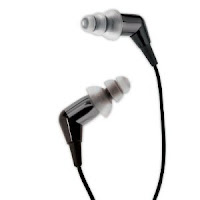


Etymonic ER4 Earphones image from Bobby Owsinski's Big Picture blog


6. Etymonic Research ER4 Micropro Earphones
Not only do these things sound great, but they're the absolute best for traveling, as they're small and compact and provide great isolation and high-quality audio. If they're too pricy for you at $80, try the $49 HF5's instead. Either one makes a terrific gift.


Equator D5 monitors image from Bobby Owsinski's Big Picture blog

7. Equator DS5 Monitors
I just covered these in the last edition of New Music Gear Monday, but let me say that you just can't find a better pair of monitors at this price point ($299) anywhere. Heck, you might have a hard time at twice as much, they're that good. Get the matching isolation pads too, an absolute bargain at $20!


8. FMR Really Nice Compressor
Everybody wants big bang for the buck and you can't get a bigger bang than the products from FMR, especially their Really Nice Compressor. The RNC provides excellent high-quality compression complete with a special "Super Nice" mode that chains multiple compressors together internally for an especially smooth sound. At $188, it can't be beat. While you're at it, buy one of their Really Nice Preamp as well, a great sounding preamp for an amazing price.


Music 3.0 book cover image from Bobby Owsinski's Big Picture blog

9. Music 3.0: A Survival Guide For Making Music In The Internet Age
Sorry, but I had to feature one of my own books. Music 3.0 is the definitive book on the music business today as it shows you how to take advantage of the vast number of changes that the industry has undergone recently. It includes everything about social media that you need to know in order to communicate, promote and sell directly to your client or fan, as well as some traditional media tricks as well. You can read more about the Music 3.0 Internet Music guidebook, as well as some excerpts, here. Once again, a great gift for that music or engineer alike!


10. Golden Age Project Pre-73
Everybody wants a Neve preamp but a lot of us just don't have the dough to spring for a couple of channels of 1073s. The Golden Age Project Pre-73 was built to sound a lot like the 1073 and it does a pretty good job of it. It's not the real thing, but for only $350 it's surprising how close it gets.


Music Success in 9 Weeks image from Bobby Owsinski's Big Picture blog

11. Ariel Hyatt's Music Success In 9 Weeks
Ariel Hyatt is one of the smartest people in the music public relations business and a real pioneer in social PR. This book teaches you the right way to get ahead in the business using social media, and fills in where Music 3.0 leaves off.

Monoprice 8323 Headphones image from Bobby Owsinski's Big Picture blog


12. Monoprice 8323 Headphones
It's shocking how good these phones are for about $28. They're pretty comfortable, have a really tight fit, and provide a surprisingly balanced sound. In fact, I would trust the low end on the 8323's more than on a couple alternatives that I have that cost 4 or 5 times more. Don't let the "DJ-style" in the description scare you, these are terrific for the price.


13. Royer R-101 Ribbon Microphone
There's now a number of cheap ribbon mics on the market, but let's face it, they sound like crap compared to the real deal like a Royer R-121 or a vintage RCA DX-44. Now you can own a great ribbon mic for a reasonable price thanks to Royer's new R-101. It's about 40% cheaper than it's big brother and just the thing for recording electric guitars and horns of all type. Plus, it's a real Royer.


That's it for this year. Hopefully there's a little something in the price range you're looking for. I probably could have written about 10 more gift ideas, but I think I'll save them for next year. In the meantime, don't you deserve a present too?

----------------------------------

You should follow me on Twitter for daily news and updates on production and the music business.

Don't forget to check out my Music 3.0 blog for tips and tricks on navigating social media and the new music business.

Thursday, December 13, 2012

The Beatles Final Ed Sullivan Appearance

For those of you who watched the 121212 Telethon last night for the victims of Hurricane Sandy (please donate, they really need your help), you saw Paul McCartney and his great band rock the house at the end of the show. Of course, Paul was in another great band before he went solo (and I don't mean Wings). Here's a great clip of Paul with his former band The Beatles on their final appearance on The Ed Sullivan Show on August 14, 1965.

Ed gave a great portion of his one hour show to the band, allowing them to play "I Feel Fine," "I'm Down," "Act Naturally," "Ticket To Ride," "Yesterday," and "Help."

Notice a few things. First of all, Lennon screws up the words a lot on the first and last songs. Secondly, all the amps were miked, which didn't happen on TV back in the 60's, certainly not on their pervious appearances on the show. Then there's the single mic on Ringo's drums. And finally, The Beatles were truly a great band, being able to bring it live just like in the studio. Those vocals are awesome!

The quality of this video is really great, which is an added treat. All four of their Sullivan appearances are also available on a DVD.


----------------------------------

You should follow me on Twitter for daily news and updates on production and the music business.

Don't forget to check out my Music 3.0 blog for tips and tricks on navigating social media and the new music business.

Wednesday, December 12, 2012

Remembering Ravi

Ravi and George image from Bobby Owsinski's Big Picture blog
Indian sitar master Ravi Shankar passed away yesterday, so I thought it appropriate to tell a couple of stories of when I met the man. Now these were extremely brief, almost incidental encounters, but he left such an impression that I believe they're worth passing on in his honor.

I met Ravi at a party at Pacific Ocean Post Sound, which was then owned by co-founder Alan Kozlowski. Alan is a remarkable man in that here he was the CEO of one of the most influential post houses in Los Angeles, yet he was a great guitar player who refused to give it up. In fact, his passion was so great that he even played tamboura with Ravi on dates in the area. The two had a special bond, with Alan calling him "my father."

POP is a huge facility with 11 state-of-the-art mixing stages, but as soon as I got there I was drawn to one of the larger lounges for some reason. As I was peeking inside I found a radiant Ravi holding court. Radiant is a good word for him because he was indeed brighter than anyone else in the room almost like there was a halo around him. Now I wasn't a particularly big fan of his, so this has nothing to do with being star-struck, but there was something about him that was indeed larger than life. And he really glowed! It was as if there was a shining light around him that I can still see in my mind.

There was something about the man that drew everyone to him. He was quiet and demure and not at all trying to be the center of attention, yet he was the focus of everyone in the room. I don't attribute this to his superstardom or his talent as much as his spirituality. It was a magnetic and unrelenting forcefield that you were drawn to and couldn't break away from.

We were introduced, I said virtually nothing of importance, and was as nice as could be considering that was probably about the millionth time he was in that same situation. But I distinctly remember being in his presence and that is something that will live with me forever. I've met many a superstar and some have a distinct aura about them, but none could compare to whatever it was that came from that mild, soft spoken man.

My second experience with Ravi Shankar came a few weeks later. I was given some tickets to a concert that Alan was playing with Ravi at Pasadena City College. My tickets said they were in Row YY, which I assumed was as far back in the room as you could get. When I got there and gave my ticket to the attended, sure enough we went to the last row of the balcony, only to find that there was no Row YY there. After a brief conference with another attendant, the girl turned to me with a smile and said, "I know where you're going," and proceeded to take me down to a near center seat in the first row!

The concert started almost immediately so I didn't have much time to get my bearings in the grand scheme of where I was in the audience. At a Ravi concert, the doors are locked when the raga begins and everything gets respectfully quiet, so you have to get settled quickly. About 20 minutes into the raga (the first one lasted 45 minutes) I started to notice the people around me. On my left was a guy wearing an old red plaid flannel shirt with slightly long unkept hair and about a 3 day beard. I thought I knew him from somewhere but couldn't place him. Another 10 minutes and another quick look - could it be? Another 5 minutes - naw, can't be him. Finally at the end of the raga we were both clapping and looked at each other and smiled and I thought to myself, "I'm pretty sure that's George Harrison."

At the end of the next raga we exchanged some brief small talk, and of course, he had that unmistakeable Liverpool accent, but I still wasn't sure it was him until the end of the concert, when he climb on stage from his seat and hugged a rather pleased Ravi Shankar. Yes, it was George.

Let me just say that a Ravi Shankar concert held the exact same vibe as the man. It was larger than the music. It was a spiritual experience (the only other concert where I felt this was with Carlos Santana). You didn't have to like the music, because there was something larger than that involved, and it touched everyone who was there. Not many artists, especially these days, can do the same.

In my extremely brief time with him, Ravi made an indelible mark. I can only imagine what it could have been with more exposure. Hopefully he and George are now playing ragas together again.

----------------------------------

You should follow me on Twitter for daily news and updates on production and the music business.

Don't forget to check out my Music 3.0 blog for tips and tricks on navigating social media and the new music business.

Tuesday, December 11, 2012

The Evolution Of Headphones

Headphones have become a necessary part of our audio lives, whether we're in the studio or just listening for pleasure. The choices we now have are many and we all have our favorites, but that wasn't always the case. Here's a cool infographic on the evolution of headphones that's bound to bring up some trivia that you weren't aware of. Click on it to make it larger.

Evolution of Headphones Infographic from Bobby Owsinski's Big Picture blog

----------------------------------

You should follow me on Twitter for daily news and updates on production and the music business.

Don't forget to check out my Music 3.0 blog for tips and tricks on navigating social media and the new music business.

Monday, December 10, 2012

Building Your Mix: It's Not Just From The Kick

Building Your Mix image from Bobby Owsinski's Big Picture production blogMany musicians new to mixing are not aware that there are a number of places that you can build a mix from. There's a general feeling that starting from the kick drum is the best way, but that's far from the only starting point available. In this excerpt from The Audio Mixing Bootcamp book, you'll see that there are many alternative places to successfully start from when building a mix.

"Despite what you might think, there is no standard instrument to start and build a mix from. Modern mixers employ various techniques and they’re all valid, especially in different genres of music. For instance, here are the places from which a mix can be started:
  • From the Bass
  • From the Kick Drum
  • From the Snare Drum
  • From the Drum Overheads
  • From the Lead Vocal or main instrument
  • With all of the instruments and vocals in right from the beginning
  • When mixing a string section, from the highest string (violin) to the lowest (bass)
There are some mixers that just push up all the faders and mix with everything in the mix from the beginning. The theory here is that everything will eventually be in the mix anyway, you might as well start with it all in as soon as you can. The advantage to this method is that by hearing all the instruments and vocals, you’re able to make an aural space for everything. If you insert one instrument at a time, you begin to run out of space and frequently have to go back to the beginning to make sure everything fits together properly.

I start with everything on and I work on it like that. The reason is that, in my opinion, the vocal is going to be there sooner or later anyway. All the instruments are going to be there sooner or later so you might as well just get used to it. And I think that’s also what helps me see what I need to do within the first passage.  Jon Gass (mixer for eighty top 20 hits, one hundred top 40 hits, and more than a hundred gold and platinum albums)
Wherever you start from, it’s a good idea that the lead arrangement element (usually the the vocal) be inserted into the mix as soon as possible. Since the vocal is the most important element, it will use up more frequency space than other supporting instruments. Many mixers find that by waiting until late in the mix to put the vocal in, there’s not enough space left and the vocal just never sits right with the rest of the track."

You can read additional excerpts from this and my other books at bobbyowsinski.com.
You also might want to check out the Audio Mixing Bootcamp video course at Lynda.com.

----------------------------------

You should follow me on Twitter for daily news and updates on production and the music business.

Don't forget to check out my Music 3.0 blog for tips and tricks on navigating social media and the new music business.


Sunday, December 9, 2012

New Music Gear Monday: Equator D5 Monitors

Equator Audio D5 image from Bobby Owsinski's Big Picture production blog
Monitor speakers are such a personal thing, almost like clothing or hair styles. What works for one person probably doesn't work for another. There is one thing that works for everyone though, and that's high quality at a low price. The only problem is that combination doesn't come around that often.

That's not the case with the Equator Audio D5's, a monitor speaker that at $299 a pair has such a big bang for the buck that it borders on amazing. Equator sells these direct so there's no dealer or sales rep or any other middleman costs involved, which can add up fast. You're not paying them here so you get a pair of monitors for $299 that probably would be sell for nearly twice that otherwise.

But enough about the price. I can say that I've been using them for a month or so and they've become by go-to nearfield. Why? They use a dual concentric speaker (meaning that the tweeter is set in the center of the voice coil of the woofer) so the phase is perfectly aligned, and that makes a big difference in the sound quality (watch the video below for more on that).

They're pretty beefy sounding as well for a small monitor, with a big sound and more bottom than you think they should have, especially one with a 5 1/4 inch woofer. Not only that, they're biamped with a fifty watt amp for both woofer and tweeter, so there's plenty of volume if you want.

Check these out. Also check out the isolation pads. For only 20 bucks, they're the cheapest ones out there.


----------------------------------

You should follow me on Twitter for daily news and updates on production and the music business.

Don't forget to check out my Music 3.0 blog for tips and tricks on navigating social media and the new music business.

Thursday, December 6, 2012

AC/DC "Back In Black" Song Analysis

"Back In Black" is by many accounts one of the greatest hard rock songs of all time, and it’s the title track from AC/DC's seminal Back In Black album, an album that’s one of the best sellers of all time (thanks David Gee for the request). This was actually the 6th album by the band, but the first without singer Bon Scott, who had died suddenly, causing the band to briefly consider disbanding. With the newly hired Brian Johnson as their new lead singer and lyricist, and Mutt Lange (who had previously on their Highway to Hell album) set to produce, the band was soon to reach heights that no one could have anticipated. What most people don't know is that Back In Black is the 2nd biggest selling album of all time, with 49 million copies sold world-wide (22 million in the US alone).

THE SONG
"Back In Black" is a very typical rock song form-wise. It uses mostly arrangement techniques to develop the song rather than varying too much from the normal rock song form. It looks like this:

intro ➞ verse ➞ chorus ➞ verse ➞ chorus ➞ verse (solo) ➞ 
chorus ➞ bridge ➞ chorus ➞ verse (solo)

As you can see, there’s basically only two sections - a verse and chorus. The solo happens over a verse, and a different guitar line with a variation on the chord changes of a verse is used to change it into a bridge.

THE ARRANGEMENT
In their typical style, AC/DC keeps this song as pure as possible with almost no overdubs except the lead guitar. First of all, listen to the turn around between 8 bar phrases during the solos. It's still a verse, but it sounds different thanks to this slight change of bass and rhythm guitar. There's nothing added to the 2nd verse to develop it, which is unusual, but it still works great, as do the background answer vocals added to the last chorus.

Arrangement Elements
  • The Foundation: bass, drums and rhythm guitars
  • The Pad: none 
  • The Rhythm: unusual for a rock song, the vocal is in double time to the pulse of the song in the verse so it adds motion 
  • The Lead: lead vocal and solo guitar
  • The Fills: lead guitar between the vocal lines in the verse, background vocal answers in the last chorus
The other thing that's interesting is the dual count off, first with muted guitar strings and then the high-hat. Countoffs are almost always cut off from a song (they're the sure sign of a demo), but here it just adds to the live feel.
THE SOUND
The sound of this record is great - big, pristine, very real and in your face, but there's a lot more going on beneath the surface than it seems. Although the record seems bone dry, the rhythm guitar has a long reverb tail that only appears on the same side (the right channel) and the lead guitar has a short double that's panned to about 1 o'clock of the rhythm guitar side. 

Brian Johnson's vocal is doubled, but the second voice is not at the same level and instead just there for a bit of support. The snare has a nice room ambiance, but also has an ever so slight bit of delayed reverb added to it as well. Angus Young's solo guitar is overdubbed and placed up the middle.

Finally, check out how the guitars are actually more clean than they are distorted, a point that's lost on many a guitar player.

THE PRODUCTION
"Back In Black" is such a band oriented song that except for a few extra parts for support, what you hear on the record is exactly what you hear live. In order to pull this off, the band has to be exceptionally tight during the recording, which AC/DC certainly is.

The thing to listen for is how disciplined the band is. They play only what's necessary, with no extra ghost notes, slides or other things that you'll hear most copy bands play when doing this song. Also note the way the attacks and releases are played by the bass and two guitars. They're perfectly in sync. 

Finally, listen how far behind the beat drummer Phil Rudd is, giving it that tension that the song needs to really work well at that tempo.


----------------------------------

You should follow me on Twitter for daily news and updates on production and the music business.

Don't forget to check out my Music 3.0 blog for tips and tricks on navigating social media and the new music business.

Wednesday, December 5, 2012

Music Career Killers

Playing a gig image from Bobby Owsinski's Big Picture production blog
The ever entertaining DIY Musician blog has a post called "Music Career Killers! Sure Ways To Ruin Your Chances For Success" that's worth a read, but I thought I'd zero in one particular item.
"Music Career Killer #13: Playing every crap gig you get offered.
When you first start out you might as well play every show that comes along because this is valuable experience, and can even save you some money on the practice room. This becomes a career killer, though, when you continue to play every bad show that comes along in the hopes that it might just convert one new fan. 
Playing to empty rooms with no pay not only sucks, but it’s also like a cancer to your career because it will destroy your enthusiasm. Next time you get offered a bad show, turn it down and spend the evening connecting working toward getting a killer show. One really good gig is worth a hundred empty venues."
Anyone that's ever gigged a lot knows that there's nothing more disheartening than playing to empty rooms gig after gig. It might not be your fault at first, since maybe the only slot you can get is midnight on a Tuesday, but sooner or later this turns into a downward spiral that's tough to break out of.

The problem is that playing to empty houses allows you to slip into to bad habits both as a band and as a player that can be hard to snap out of later. You can easily start to run through the motions and slip out of a professional show just to keep things interesting, and then it's usually down-hill from there.

What's true is that even if there's only one person in the audience, you should play it as if there are 10,000, but that gets harder and harder the more empty gigs you play.

A story that I like to tell is about going to a club to listen to a band and there were only 7 people in the audience. Unbeknownst to the band, one was a major manager, another was a big agent, and the third was a major PR person; the other 3 people were friends of the band. The band sleepwalked through the set, leaving absolutely no impression on some people that might have been able to change their career had they played up to their capabilities.

So take Music Career Killer #13 to heart and resist playing any crappy gig just to play (unless your starting out). One gig truly can be worth a hundred empty venues.
----------------------------------

You should follow me on Twitter for daily news and updates on production and the music business.

Don't forget to check out my Music 3.0 blog for tips and tricks on navigating social media and the new music business.

Tuesday, December 4, 2012

Dave Grohl's "Sound City" Documentary

For those of you who've never been around the LA recording scene, you probably don't know about Sound City Studios. This was a sort of dumpy studio in an industrial part of town about as far away from the glamour of Hollywood that you can get, yet some of the best records of all time were made there. Artists like Neil Young, Fleetwood Mac, Tom Petty, Nirvana, Nine Inch Nails, Cheap Trick, Elton John, Metallica, Foo Fighters, and so many more legendary artists made some of the greatest rock recordings of all time at the studio.

Unfortunately the studio closed about a year ago, but its memory lives on thanks to a new documentary by Foo Fighter's frontman and Nirvana drummer Dave Grohl called appropriately enough "Sound City." The film will debut at the Sundance Film Festival, but a trailer for it was just released, which you can see below. I can't wait!


----------------------------------

You should follow me on Twitter for daily news and updates on production and the music business.

Don't forget to check out my Music 3.0 blog for tips and tricks on navigating social media and the new music business.

Monday, December 3, 2012

How To Play Funk

Here's a great clip from Herbie Hancock's Rock School series about how to play funk. It features some greats like Larry Graham, Bootsy Collins and Nile Rogers as they show in slow motion how to bring the funk. Rock School ran on PGS from 1985 through 1988.


----------------------------------

You should follow me on Twitter for daily news and updates on production and the music business.

Don't forget to check out my Music 3.0 blog for tips and tricks on navigating social media and the new music business.

Sunday, December 2, 2012

New Music Gear Monday: The Yamaha/Steinberg Nuage

People that work on Nuendo absolutely love it, as well they should. It has a slick user interface and it sounds great. One of the things that the platform has sorely needed was a worksurface as good as the software, something that Steinberg, then Yamaha has struggled with. That now may be over with the introduction of Nuage (which is French for cloud).

Nuage is an integrated system comprised of worksurfaces, a Master Control unit, analog and digital IO, and a PCI network card. It's designed to work at up to 128 channels of 192k/24 bit source audio, which while impressive, is overkill since Yamaha says the unit is directed at post, which is a 48k/24 bit world.

Take a look at the video. Nuage is slick and you get the feeling that you can just jump right in and work. The price is said to be $18,000 to $30,000, depending upon the configuration, which might be a little too pricey for the American market. I'm sure we'll learn more at NAMM in January. Visit the Nuage page for more info.


----------------------------------

You should follow me on Twitter for daily news and updates on production and the music business.

Don't forget to check out my Music 3.0 blog for tips and tricks on navigating social media and the new music business.

LinkWithin

Related Posts Plugin for WordPress, Blogger...
