Get This Free Cheat Sheet Guaranteed To Help Your Next Mix

Monday, May 12, 2014

Memphis: What A Town Part 2 - Beale Street and Stax

Yesterday I wrote about hanging out in Memphis and going to the Blues Music Awards and Ardent Studios, today I want to give you an idea of a couple of other must-see music parts of Memphis.

Memphis Beale Street image

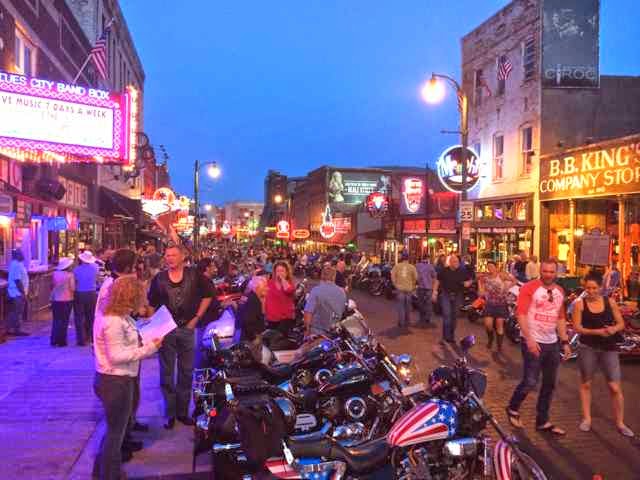
First up is Beale Street, which is about 5 blocks of bars on either side of the street, virtually all of them with music. People can buy a drink at the numerous outside mini-bars and carry it with them down the street, which is helpful to maintaining the party atmosphere.

Memphis Beale Street Bike Night image


Beale Street feels very much like the French Quarter in New Orleans, except the music is a bit grittier and bluesier. Every Wednesday night (which was the night I was there) it's motorcycle night and both sides of the street were lined with magnificent rides. I can't image what the weekend must be like if it was this crazy on Wednesday.
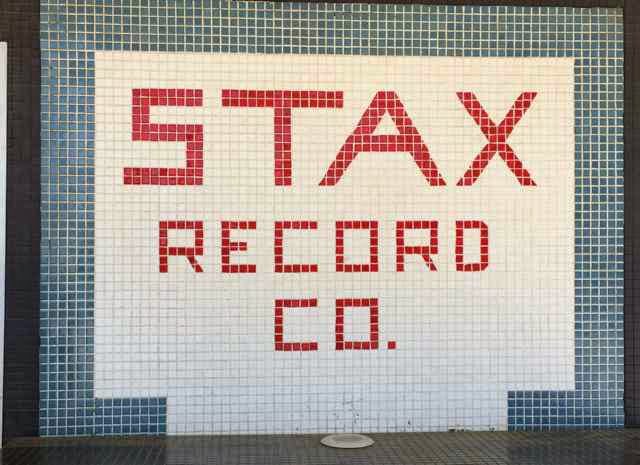


Stax Record Company image
Next up is the Stax Records Museum, which operates at the very same site as the famed record label. On the same location but in a different building is the Stax Academy, which helps underprivileged kids become the next generation of soul musicians. A noble cause if there ever was one. The legendary Stax producer/writer/guitarist Steve Cropper also gives advanced lessons there.


Stax Recording Console image


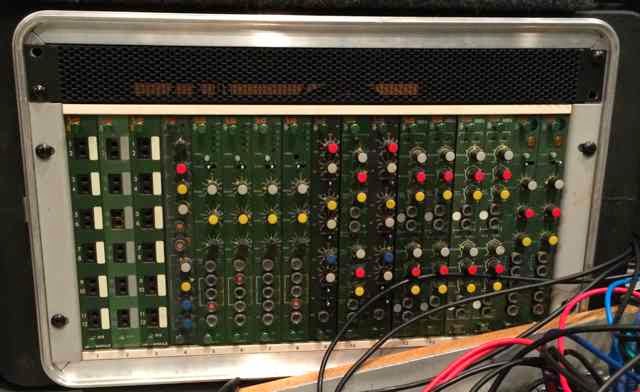
The museum features all the gear that the studio used to make those great Sam & Dave, Otis Redding, and Booker T and the MGs records. Here's the 20 channel Audiotronics console (with Spectrasonics mic amps and EQs) that the studio used.
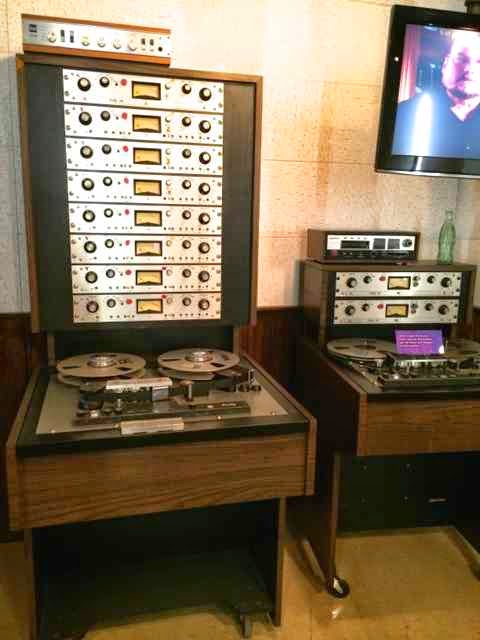


Stax tape machines image


Here's the 8 track and 2 track Scully recorders that captured the Stax magic. This is also the combination that I learned on as well. Once you learn how to make a record on 8 track, anything else is easy!
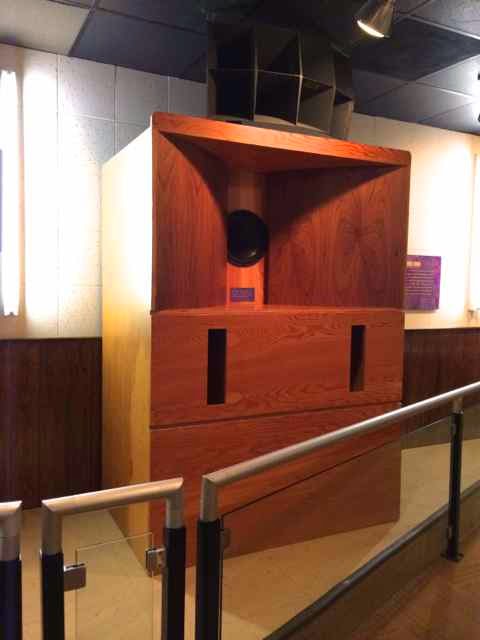


Stax playback monitor speaker image


Stax was built around an old theater and the studio utilized some of the movie playback gear as well. Here's one of the Altec A-5 monitors that they used. This is quite huge and about twice the size of the more typical A-7.


Stax Studios tracking room image


Here's the original tracking room of Stax. It's a pretty good size with a very high ceiling. As you can see, it now has relics of the studio band on display, including Steve Cropper's Telecaster, Duck Dunn's Precision bass, Booker T's Hammond M3 organ, and Al Jackson's Rogers drum kit.


Isaac Hayes gold-plated Cadillac image

There's so much more to the museum as well, from clothing to records to contracts, but my favorite is Isaac Hayes' gold-plated Cadillac. Just off his Hot Buttered Soul hit in 1972, Isaac splurged a bit an bought this Caddie. It came complete with a television and refrigerator - in 1972!

This is just the tip of the iceberg for Memphis and the Stax museum. If you're into music history, this is definitely a place you don't want to miss.

----------------------------------

Sunday, May 11, 2014

Memphis: What A Music Town!

Bobby Owsinski, Adrianna Marie and guitarist LA Jones image
Yours truly, Adrianna Marie and guitarist LA Jones
I spent a few days in Memphis last week and if you're a musician, that's one place you have to put on your bucket list. The town is filled with music history, and the best part is that, unlike many other bastions of musicality, so much of it is preserved for the world to enjoy.

I was actually in town for the Blues Music Awards and to give a clinic at the Visible Music College (thank you Tommy Lozure for your hospitality), mostly at the behest of Best New Artist Nominee Adrianna Marie and her Groovecutters. Adrianna is a terrific singer and interpreter of 40's style blues, and I was lucky enough to work on her album last year.

The Groovecutters on the big screen at the Blues Awards show


  First of all, if you're into the blues, the Blues Music Awards is one show that you must attend at least once. It truly is the blues at it's best. I agree that blues can be boring sometimes unless an artist is really great, but this show was 5 hours of greatness and excitement. 

To me, some of the best performances of the evening came from the solo performers like the great Rory Block, Doug MacLeod and Beth Hart. This was not your typical 12 bar blues but something on a completely other level. Of course, Adrianna and her Groovecutters opened the show with the power that only a horn section can bring, and also not your typical 12 bar.

Big Star drummer Jody Stephens and Bobby Owsinski at Ardent
Big Star drummer Jody Stephens and Bobby O at Ardent

But back to Memphis - I can't believe how much there is to see there. My first stop was at the famous Ardent Studios where general manager Jody Stephens showed me around. Jody is music royalty in that he's the drummer and an original member of Big Star, one of the most influential bands to ever come out of that part of the country.


Ardent Studio A = Magic!


Ardent is a magic place. When I walked into the tracking room of Studio A, it just felt like home. I'm doing my best to have a project to go back to record there. I want some of it to rub off.

The control room of Studio A featured a 60 input Neve VR.


Ardent Studio C

Studio C at Ardent was interesting in that it felt more like a room in LA from the 80s, which actually made sense since it was built around that time. That said, studio still had that vintage Ardent feel. This room was equipped with an SSL Duality.


Ardent Vintage Outboard Gear image
Ardent Vintage Outboard Gear


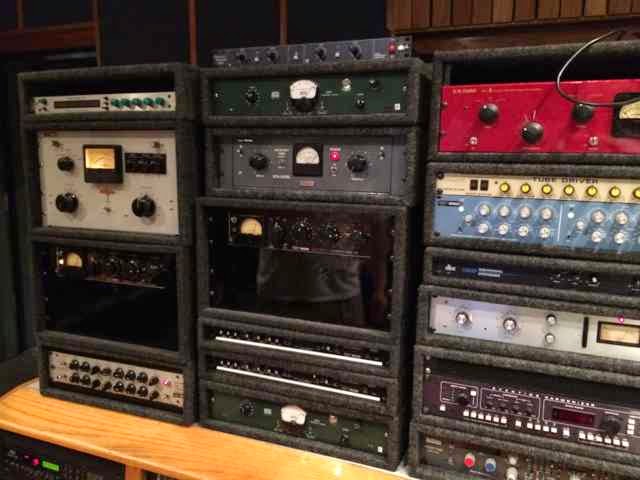
Both rooms had plenty of interesting old outboard gear. It was nice to see real working versions of an Eventide 949, Lexicon Prime Time, ADR scamp rack, Marshall Time Modulator, Fairchild 660 and 670 and lots more.


Scamp Rack at Ardent Studios image
When was the last time you saw a Scamp Rack?


Former Stax mastering engineer Larry Nix and Bobby O
Another treat was getting to hang with Larry Nix, the mastering engineer who did all of the Stax material that we know and love, as well as 78 gold and platinum records, 14 Grammy winners and 2 Oscars (and ZZ Top too). Larry's vintage Neumann V72 lathe is cutting records every day.

Tomorrow, much more Memphis, including the Stax Museum and Beale Street.

----------------------------------

Thursday, May 8, 2014

Michael Jackson's "Billy Jean" Demo

A few weeks back I posted Michael Jackson's amazing home demo of "Beat It." That was based solely around Michael's singing with no instrumental backing at all.

Here's a demo of his breakthrough hit "Billy Jean" that's the complete opposite in that it's thoroughly produced. In fact, it sounds so close to the final record that it seems like all they did was clean it up and give it a great mix.

Does anyone know if any of the tracks on the demo where used in the final mix?


----------------------------------

Wednesday, May 7, 2014

The Amazing Pyroboard Visualizes Audio With Fire

Musicians seem fascinated by fire. On stage, we use lighting as a stand-in for it, but you can bet if the fire laws weren't as strict as they are, a lot of shows would be burning more than candles. Here's an example of music and fire taken to the extreme.

This video features what's known as a Rubens Tube 2D "pyro board" that translates audio waves into flame. The basic device was invented in 1905 by German physicist Heinrich Rubens as a way of demonstrating acoustic standing waves.

The pyro board takes the idea to the next level, with the pressure variations of the sound waves affecting the flow rate of the flammable gas, which then affects the height and color of the flames. Pretty cool, especially when music plays at around 3:30.


----------------------------------

Tuesday, May 6, 2014

The 5 Types Of Studio Time

Music Producer image
Many first-time music producers are unaware that there's many more responsibilities required to complete a project that go beyond the music. One of those responsibilities is often booking studio time, but there's usually a bit more to it than that. Here's an excerpt from my Music Producer's Handbook that describes the 5 types of studio time required on most projects.

"A fairly large project usually has numerous rentals of both long and short term. The trickiest long term rental is always the studio, since if you don’t complete what’s needed on time, then you’ll have to move somewhere else if the studio has booked time after your booking has run out. This can be a royal pain, since it means tearing everything down and setting up again, loosing some time and momentum, and your sound, in the process.

Studio time is broken into 5 categories:
  • Preproduction - This is the time to work material out before hitting the hi-priced studio. It can be in a garage, a bedroom or a rehearsal room and can last from as little as a day to a couple of months (more on preproduction in Chapter 7). It should be said that a long preproduction schedule is usually a function of working with artists or bands that write their own songs and are early in their careers since the songs and arrangements usually require a fair amount of tweaking. Artists and bands later in their careers usually have a great sense of arrangement and have become sophisticated enough musically to keep the preproduction phase to a minimum. There is no preproduction for commercials, movie or television scores since the composer/arranger has it pretty well worked out and the musicians are skilled enough to learn or read it on the spot.
  • Tracking - Sometimes called “basic tracks,” tracking usually consists of recording just the rhythm tracks, although in certain situations it could mean the entire band as well. The rhythm tracks can be comprised of only the drums, only bass and drums, or only drums, bass, guitar and/or keyboards, and can last anywhere from a single day to months, if there’s no preproduction (more on tracking in chapter 9).
  • Overdubs - Overdubs usually consist of recording at least the lead vocals and/or any kind of solos and lead lines that the song requires, but could also mean overdubbing layers of guitars, keyboards, horns, strings, percussion and background vocals. The overdub phase can last anywhere from a day (in very rare cases) to months or even years (again in extremely rare cases). Overdubs may take place in the same studio as tracking, but in these days of smaller budgets, it’s now common to go to a smaller, cheaper facility (or a free one owned by the producer, engineer, or band member). This is also the most difficult portion of the project to gauge the time, since it can vary widely (more on overdubs in chapter 10).
  • Mixing - It used to be that mixing was a pretty easy part of the schedule to determine how much time was required. A day to a day and a half per song was pretty much a standard measurement, especially if you used an A-list mixing engineer. Now with recall and automation on mixing consoles, and mixing “in-the-box” in your DAW, it’s easy to bring back a mix exactly to where you left it. While that seems like it should lead to faster fixes, it seems that more time is spent mixing than ever, a result of trying to get every last tweak possible. It’s still best to figure a couple of days per mix if you’re mixing in a studio with an analog-style console (more on mixing in chapter 12).
  • Mastering - The mastering phase is the easiest to gauge since it’s usually only a half to a full single day for an entire album, regardless of the number of songs. In rare cases (and big budgets), mastering can turn into a multiple day affair or even use different mastering houses, but that’s not usually the norm."
You can read additional excerpts from the Music Producer's Handbook and my other books on the excerpts section of bobbyowsinski.com.
----------------------------------

Monday, May 5, 2014

Introducing The Bobby Owsinski Inner Circle Podcast

Bobby Owsinski Inner Circle podcast image
I'd like to introduce you to my new weekly podcast called Bobby Owsinski's Inner Circle.

The Inner Circle podcast will feature the latest in music industry and production news and analysis, as well as an in-depth interview with a variety of guests from all different parts of the music business.

The first 3 episodes are now live and have some exciting guests and topics, including:
Episode 1: Engineer Dennis Moody, who's the engineer of choice for drum gods like Dave Weckl and Steve Gadd as well as a world-traveling live sound engineer, discusses the differences between mixing live and in the studio. Commentary includes why Apple's Carplay is such a big deal,  and a condition where some people actually can't enjoy music. 
Episode 2: Thom Kozik, COO of Omnia Media, a YouTube multichannel network catering to music, talks about making money from your videos. Commentary includes why streaming may become more lucrative than you think, and how Guitar Center has been financial engineered to where it might be difficult to stay in business. 
Episode 3: Los Angeles session bassist Paul ILL discusses how the mindset of a session musician is different from a gigging musician. Commentary includes a look at the music industry sales numbers from last year and how CDs are still a bigger seller than most people know, and some tips on how to charge for your services.
Some of my upcoming guests include:
  • EveAnna Manley discussing how Manley Labs started and the surprising level of care that goes into each product.
  • Grammy-winning producer and former president of the AIMP Richard Feldman gives a broad overview of today's publishing business.
  • 15 time Grammy-winning engineer Benny Faccone on the differences between Latin and American music.
  • Jingle producer David Campos talks about modern day jingle production.
And many more.

So join me every Thursday for the latest edition my Inner Circle podcast


I hope you enjoy it! If you dig it, please leave a comment on iTunes, and please send me your comments and requests about it as well.
----------------------------------

Sunday, May 4, 2014

New Music Monday: The Mi.Mu Music Glove

Musicians are always looking for new ways to control their instrument, with many over the years being attracted to the simplicity of the way the theremin works. Wouldn't it be great if you could control your music just by a wave or gesture of your hand?

Now that dream might be closer at hand thanks to Grammy-winning artist Imogene Heap and a team of designers from NASA and MIT.

The Mi.Mu Music Glove is equipped with the latest wearable sensor technology that tracks the motion of your hands, senses postures, detects sharp movements like drum hits, and enables customized gestures tailored to your style of music.

The wireless gloves are fitted with lights and vibration motors to provide sensory feedback to the user. Utility software integrates the gloves to the software of your choice.

A Kickstarter campaign for final glove design and production fell short of the 200,000 British pounds (about $337,000) goal, but had more than 600 backers, so many recognize how useful a controller like this can be.

This thing is very cool. I hope they raised enough money (almost $225k) for it to come to fruition.


----------------------------------

Thursday, May 1, 2014

The Who "Behind Blue Eyes" Isolated Band Tracks

Who's Next Alternate Album Cover
Here's another iconic song that can be heard daily on classic radio - The Who's "Behind Blue Eyes" from their album Who's Next. The first video lets you hear the band minus the vocals, except for some of the background vocal leakage.

There are a lot of individual things to listen to, but take note that the basic track of the song has very few production tricks. It's just guitar, bass and drums, with the only thing added is the electric guitar in the bridge.

I've also included the full album version of the song below as well, since that has a lot of things to listen for, especially after hearing the isolated tracks. Here's what to listen for in the isolated track video.
1. Listen for the intensity and dynamics of the acoustic guitar. Pete Townsend doesn't play all at one level; he's varying his playing intensity with the song.

2. On the isolated version, when the bridge kicks in with the drums, bass and electric guitar, the acoustic drops out, which doesn't happen in the final version.

3. The stereo drums that you hear on the bridge sound like just two kit mics, and the third kick or front mic is missing from the mix (engineer Glyn Johns used an interesting 3 mic setup to record the stereo drums). The drums also sound like they're out of phase in this mix.

4. Listen for the electric guitar parts on the outro that don't appear on the final version.


Now let's take a listen to the final version of the song.
1. Notice the panning. The acoustic guitar is on the right side, while the bass shades to the left with the harmony vocals. There are doubled harmony vocals on the right side on some sections, but the left side is favored to keep the mix balanced.

2. Listen to the long delayed reverb on the vocals and guitar, which also leans to the left. The verb has virtually no high end, which is also interesting.

3. The electric guitar enters on the bridge on the left side, while the acoustic stays on the right. The background vocals on the bridge switch to the right side. The drums lean just a bit to the left side, once again to keep the final mix in balance.

What a classic!


If you're interested in song analysis like this, check out my Deconstructed Hits books.
----------------------------------

Wednesday, April 30, 2014

2 Recording Myths Busted

Safe Digital Recording image
When digital recording first came on the scene, many engineers had a difficult time making the switch from analog because the philosophy on how to record the cleanest sound had changed. The meters were different, for one thing, so setting the correct recording level was sometimes a question. Later when digital recording became more sophisticated and refined, the philosophy on how to get the the best sound changed yet again. Here's an excerpt from my PreSonus StudioLive Mixer Handbook that busts a couple of myths about digital recording levels as well as give a short history of how they came to be.

"Over the years, some misconceptions about meter level readings have arisen which have left many confused on just what the correct level should be, so let’s bust a couple of myths.

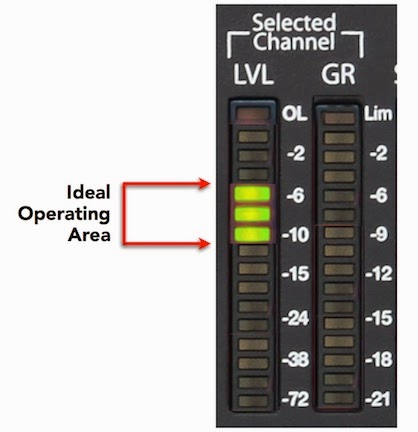
Myth #1: You have to record at close to 0 dB FS for it to sound good. For the most part, you do not have to record with the level close to 0 dB (the highest it will go before the red overload indicator lights) on today’s digital gear. If your signal peaks are between -6 and -10 dB or even lower on the channel meter, it will sound fine (see the graphic on the left). In the early days of digital recording, a meter reading close to 0 dB actually was necessary in order to keep the noise to a minimum because of the 8 and 16 bit resolution that was being used, but modern 24 bit recording no longer has this limitation. 

Myth #2: If I record at a lower level, the signal will be noisy. Again, this is untrue. You can easily record digitally at a lower level without directly introducing any noise into the recorded signal by the recording process. This myth actually comes from the analog tape days, where the magnetic tape medium itself had a level of self-noise in it. If you recorded too low, you’d begin to hear the tape noise, but that doesn’t happen in the digital world.

Now what can happen is that if everything you record is at -30 dB, you’ll have to increase the gain somewhere later when you’re mixing, and that may introduce some noise and you won’t be taking advantage of the digital medium’s dynamic range. Because StudioLive is a digital mixer, you can actually almost get away with doing this, which isn’t possible in the analog world. Still, if you keep the levels in the -10 to -6 dB range, you’ll have the best of all worlds, with lots of level, dynamic range and headroom."

Don't forget that the above applies to recording levels only. It's most likely that these levels will need to be boosted in the mix or at mastering, although it's always a good idea to be conservative with your levels (let the mastering engineer do the boosting). Also, take a look at this post regarding the new loudness measurement standards.

----------------------------------

Tuesday, April 29, 2014

Jay-Z Tape Extortion Opens A Digital Can Of Worms

Jay-Z image
Last week it was all over the news that some Jay-Z master tapes from the early 2000s were at the center of an alleged extortion plot where the holder of the tapes was asking for a significant amount of money to ensure their return. Because Jay-Z is such a major artist, this garnered a lot of national news, but the fact of the matter is that the circumstances surrounding the tapes is something fairly common, and it exposes a lack of musical inventory control that is only going to get worse now that we’re firmly in the age of digital music production.

To recap, engineer Chauncey Mahan, who worked for Jay-Z from 1998 to 2004, allegedly had in his possession the master tapes from some of the rapper’s biggest sellers, including Vol. 3: The Life And Times Of S. Carter, and The Dynasty: Roc La Familia. Engineer Mahan contacted Team Jay-Z and supposedly told them that he had the tapes in storage but couldn’t pay for it any longer and wanted $100,000 to cover his back expenses. Team Jay-Z took that to mean that he was holding the tapes for a $100k ransom. Both parties settled on a fee of $75,000 and when they met up at a storage unit in Northridge, CA, the police were also there to confiscate the tapes, but they made no arrests while doing so.

I have no idea if there are untruths being told or if one of the parties misunderstood the circumstances, but I do know why this might lead to rather murky situation. First of all, back in the days when everything was recorded on digital or analog tape, a project from a major artist could easily run into several hundred reels of 1 inch (digital) or 2 inch (analog) tape. Each tape would store three or four recorded song takes (depending upon the length of the song), and over the course of the six months to a year the project took to complete, every tape was kept and usually none were erased. The resulting number of tapes from several album projects could easily fill up a large storage area that could cost $500 per month or so, especially if it was climate controlled. Multiply that by the ten years that the tapes were stored and you have at least $60,000 in storage costs. While the extra money requested might be for time and labor involved, you can see why that figure might be in the ballpark.

But how does an engineer come into possession of master tapes said to be valued between $10 to 15 million (I doubt that’s the real value but that’s for another post)? The music industry has always been very laissez-faire when it comes to master tapes. Once a project is over, producers move on to the next project and the artist hits the road on tour. The last thing they want to think about is left-over master tapes, especially the ones that have all those takes that weren't used. Often times master tapes are just left in the studio collecting dust until the studio gets tired of them taking up space and begins to call everyone even loosely connected with the project to tell them that they’ll throw the masters in the trash if they’re not removed, and sometimes that’s what actually happens. Many of the master tapes to some of the worlds greatest hits have been relegated to the trash heap because no one cared enough to claim them. Read more on Forbes.
----------------------------------

Monday, April 28, 2014

This Guitarist Has 78 Fingers

The Japanese love robots more than maybe any other culture, and they love music too. Put them both together and you have guitar player with 78 fingers that leads a robot band. You have to admit that this is pretty amazing though. Watch Squarepusher x Z-MACHINES and, on some level, be amazed.


----------------------------------

Sunday, April 27, 2014

New Music Gear Monday: Trident Audio 88 Console

Those of us who have worked in studios during the big console era have a soft spot in our hearts for those massive hunks of iron, but with so much of the audio business now centered around the DAW, consoles have fallen out of favor as the centerpiece of the studio. That's why it's always interesting when a new console is introduced, which brings us to the new Trident Audio Developments 88.

The Trident 88 is a modular split inline console, meaning that it has a monitor section on each module as well as the subgroups (the traditional Trident format). It also looks a lot like the venerable Series 80, which gave many a rock record its sound, with many of the same features (like the EQ layout) of that desk.

Best of all, the 88 is available in 16, 24 or 32 input configurations, but the output busses are limited to 8 (you can use the channel direct outs, of course). A 24 input version goes for about $26,000, which is quite reasonable considering what you're getting.

One of the things that's not available is DAW control though, which might be a deal-breaker for some. That said, this could be a perfect fit for a tracking studio or school as the price is right and the features are rich. Go to Trident Audio to find out more about the 88.

----------------------------------

LinkWithin

Related Posts Plugin for WordPress, Blogger...