Get This Free Cheat Sheet Guaranteed To Help Your Next Mix

Showing posts with label Avid. Show all posts

Thursday, May 5, 2016

Avid Restructures To Please Wall Street

Philippine Call CenterA few months ago Avid proudly put out a press release about how they just hired 250 new employees to staff new facilities in the Philippines, Taiwan and Poland, and how they would save $68 million as a result. Oh, and by the way, that was at the expense of closing down offices and downsizing its staff in the U.S.

Now the latest Avid press release touts how Taipei City is the "new home of hardware design," the new "global support center" in the Philippines will be open 24 hours a day, and the new R&D center in Szczecin Poland includes "veteran staff for engineering, customer care and professional services."

It's also opening a new Boca Raton, Florida office for a "consolidated administrative support group, leveraging a strong work force to improve efficiency and productivity."

Does this sound like a company that really cares about you, the user?

Does it sound like a great idea to can all the people in the U.S. responsible for the development of the hardware and software for the simple reason of finding cheaper ones off-shore?

How about taking the support for its complex products and moving it all to the Philippines?

These moves have nothing to do with the user, of course, since it's all about looking good for Wall Street, which is something that Avid desperately needs. It's stock is near an all-time low, down nearly 65% in the last year alone.

That's the problem with public companies in general. For the most part, the execs get caught up in a game of "pleasing the Street" rather than looking out for its customers. In short, it's stockholders become its customers.

Avid's CFO and executive vice-president John Frederick has announced that he's stepping down after the upcoming May 10th earnings call, which means that the outlook probably won't be too shiny and happy, and the restructuring is a band-aid (and a poor one) at best on the hope that a few analysts will slap a "Buy" recommendation on it.

Those of us who use Avid audio products look at these moves with a great deal of skepticism, and at the same time keep an eye out for the next alternative.

Pro Tools and the other audio-related products are only part of the Avid's product profile, but the company performance gives it's users reason for great concern for the company's, and their future.

(Photo: Maverx via Wikipedia)


Monday, March 7, 2016

Mastering Legend Vlado Meller On My Latest Inner Circle Podcast

Vlado Meller imageYou're in for a real treat this week as my guest on the Inner Circle Podcast is mastering legend Vlado Meller.

Vlado has held staff mastering positions for Columbia (when it was the #1 label in the world), Sony Music, and Universal Music before striking out as an independent.

In that time he's racked up credits with the Beastie Boys, Andrea Bocelli, Johnny Cash, Celine Dion, Duran Duran, Julio Iglesias, Michael Jackson, Lil Wayne, Limp Bizkit, Linkin Park, Kanye West, Paul McCartney, Metallica, George Michael, Oasis, Pink Floyd, Public Enemy, Rage Against The Machine, Red Hot Chili Peppers, Shakira, Barbra Streisand, Jack White, and many, many more.

Vlado has a lot of great stories, but one of the best is how he fled the Russian invasion of his native Czechoslovakia to eventually get a job at the famous CBS Studios in New York City.

In the intro I'll take a look at Avid's latest restructuring, and a very interesting Nielsen study that finds how different radio is from what we're actually listening to.

Remember that you can find the podcast at BobbyOInnerCircle.com, or either on iTunes, Stitcher and now on Mixcloud and Google Play.

New Music Gear Monday: Avid Pro Tools iPad Dock

Avid Pro Tools Dock imageAvid recently introduced a pretty cool accessory for Pro Tools called the Pro Tools | Dock. It's a unique controller that takes an iPad and marries it with controller hardware to give the user the ability to edit and mix at a faster pace.

The Dock is based on the advanced touchscreen workflows on the Master Touch Module of the S6 (Avid's high-end console controller) and basically shows a super-channel view for fast navigation, metering, and on-screen plug-in control . The hardware of the dock includes dedicated automation switches, transport controls, a weighted aluminum jog wheel, and color-coded Soft Key switches.

The Dock’s eight soft knobs can be used to control parameters like EQ, Dynamics, Panning, and Sends on the Attentioned (focused) channel, just like the S6 Master Touch Module. ‘Attentioning’ a track is done just by touching the track tile on the screen and it brings it to the fader.

The Pro Tools | Dock works with EUCON-enabled DAWs and video editing tools, including Pro Tools, Media Composer, Logic Pro X, Cubase, and Premiere Pro. Retail price is $1,199, not including the cost of the iPad. It won't be available until the end of the year though.


Thursday, March 3, 2016

More Restructuring From Avid

Pro Tools Off-Shore Tech SupportIt looks like Avid is at it again, announcing more corporate restructuring, according to Broadcast Tech. The company announced to investors earlier this week that it would be either closing or downsizing "redundant" offices in a move that's expected to save around $68 million.

For instance, rumor has it that all tech support would be moved from the U.S. to a newly opened office in Manila. The company also recently opened offices in Poland and Taiwan as well.

Avid also announced that it secured a "five year $105 million senior secured credit facility" that replaces it's $35 million revolving line of credit.

About the best thing you can say about all this is that it looks like Avid will survive for a few more years, so our Pro Tools subscriptions will be safe.

None of this is designed to play well with its customers however, who grow more disgruntled by the day. And each day all of Pro Tools many competitors look better and better.


Monday, February 8, 2016

Engineer Richard Chychi Discusses The New Dream Theater Album

Richard Chychi imageMy guest on this week's Inner Circle Podcast is engineer Richard Chychi, who was on the podcast about a year ago. This time he comes on specifically to tell us about recording the new Dream Theater album, which was pretty spectacular technically.

The album features the band augmented by a full orchestra and multiple choirs, which lead to some songs having more than 500 tracks across 3 Pro Tools rigs.

The story of putting it all together is fascinating (especially the 700 hours of mixing). I'm no longer going to complain when I get a 100 track session in to mix!

In the intro I'll discuss how AM radio is dying both in the US and in other parts of the world, the latest RIAA metric giving 1500 music streams the equivalent of 1 album, and the layoffs over at Avid.

Remember that you can find the podcast at BobbyOInnerCircle.com, or either on iTunes, Stitcher and now on Mixcloud and Google Play.

Tuesday, February 2, 2016

Avid Has Another Round Of Layoffs

Avid Layoffs imageThings are getting ugly at Avid again as the company pink-slipped as many as 60 employees from its Pro Tools, Venue and other audio teams last week.

According to Pro Tools Expert, the layoffs happened in the places where Avid could least afford - Product Management, Beta and QA, Applications Engineer and Marketing.

Although Avid stock is not at an all-time low, it's pretty close, down to $6.90 when this was written, which is way off from its 52 week high of $18.10. To put it in perspective, Avid stock hit a high in February of 2005 at $66.90.

This is another great example of why a public company doesn't belong in this niche space we call the audio business. The industry is filled with mostly boutique operators who care deeply about their products and customers, some to the point where barely making a living is enough as long as their customers are happy.

A public company like Avid is beholden to its stockholders and not its customers however. The bottom line is more important than its users and dealers, and that's been obvious ever since Avid purchased Digidesign.

Some analysts think that this might be a last ditch effort to set the company up for a profitable quarter, but that's not going to save the company.

There's a lot of disgruntled Pro Tools users out there, and it won't take much for them to switch to another DAW en masse. That time might come sooner than you think.

Monday, January 26, 2015

2015 Winter NAMM Show Trends

NAMM 2015 Attendee image
NAMM Attendee
The latest Winter NAMM show, the semi-annual exhibition of musical instrument manufacturers occurring each January in Anaheim, has ended, and more so than most, this one reflects what’s happening in the music creation business and even the world we live in. 

NAMM (National Association of Music Merchants) is unlike any convention anywhere, from the hustle and bustle of a Black Friday at the local mall, to the cacophony of simultaneous sounds from every kind of musical instrument imaginable, to a bevy of both legit and wanna be rockers bumping into you at every turn. The show is grueling, tedious and fun all at the same time.

Every year I post several editions of cool new gear that I spied at NAMM on my music production blog, but this post is particularly about the trends seen at the convention that show the latest from this side of the music industry and how it meshes with the more publicized production and business side. Here’s what I saw:

Avid Pro Tools First, Pro Tools 12 and Cakewalk Sonar - Avid’s Pro Tools is the king of the digital audio workstation (DAW) app in that it’s used by the majority of audio professionals in music and post. Avid is transitioning to the cloud with Pro Tools 12 and the free entry-level Pro Tools First, where you have the choice of buying the app outright, or paying a monthly fee. Of course, being in the cloud has it’s advantages for Avid, in that it can now charge users to store their projects there, and also to rent any plugins needed for the project. Also, being in the cloud also allows for online collaboration, which many see as the future of music creation.

While Pro Tools is primarily a Mac app, Cakewalk’s Sonar is one of the kings of the PC DAW world, and it too has introduced a monthly and yearly membership model to go along with a straight purchase of the software. Of course, this has been a viable business model for the tech world for some time, so it’s surprising that it took so long to be implemented on this end of the music business.

That said, it may not add up to the profits that these companies anticipate. Most professionals won’t indulge in the membership model because cloud recording just isn’t practical in terms of the number of simultaneous tracks that need to be recorded at any one time because of the upload bandwidth required. And while cloud storage of a project might have it’s advantages, most engineers, producers, artists, managers and record labels feel more comfortable with the data on a local hard drive that can be locked up or taken home for safety, at least at the moment. 

As far as cloud collaboration, there are a host of companies betting that this will be the next big thing, but it almost seems like a solution a problem that isn’t there. At least on the pro level, musicians and producers prefer working together in the same room to allow for the best interaction. That’s not always the case when it comes to guest players or vocalists, so I can see the need in that situation, but there still doesn’t seem to be a huge number of users clamoring for the feature, at least as far as I can see. Let’s see how this shakes out in a year. Read more on Forbes.

Wednesday, January 14, 2015

What Avid's Relisting Means For Pro Tools Users

Pro Tools logo image
Last month everyone's favorite DAW maker Avid was relisted on the NASDAQ stock exchange, a move that came as a surprise to many.

When the company was delisted back in February of 2014, many analysts (including yours truly) felt that this was the first sign of the eventual slow demise of the company, and that it was highly unlikely to ever find its way back onto the exchange. Avid defied expectations by working with auditors to supply the exchange with the information required to resume trading there. The company was officially delisted for not filing the required quarterly reports for over year, which Avid claimed was due to accounting rules changes

Since being relisted, the company's stock has risen from $13.50 to just a shade under $15. It continues to trade under its AVID symbol.

Regardless of the happy event, this is a challenging time for Avid. While having a virtually stranglehold on the professional audio workstation world, that market is somewhat saturated, and with more powerful computers now available, the native versions of the software now works for many cases where an expensive hardware accelerator card was once required, which means less revenue for the company.

Add to that the general frustration of the Pro Tools community that feels somewhat abandoned by the company's recent employee turnover, and many users are now open for an alternative should it arise.

Still, Avid's relisting also means that the company is much stronger than before. Sources of capital are more readily available if needed, the stock is much healthier than it was 12 months ago, and the company's public perception has risen. All that doesn't matter much if it doesn't find a way to assuage its customers who feel burnt by the company, of which there are many. We all like to upgrade to get new features, but the feeling of being forced to do so has rubbed many the wrong way through the years.

The upcoming NAMM show next week can be a pivotal one for the Avid, depending on the new products they show, or even worse, might not have. Could this be the year of serious DAW competition?

Sunday, September 15, 2013

New Music Gear Monday: Avid S6 Control Surface

Avid S6 M10
Avid has taken digital audio workstation controllers to the next level with its introduction of the new S6 family, which could prompt many mixers who are used to mixing with a mouse to reconsider.

The S6 offers a modular approach that can be mixed and matched to your way of working or application, or two preconfigured versions - the smaller M10 with up to 9 modules and 24 faders, and the larger M40 with up to 61 modules and 64 faders. Modules include Master Touch, Master Automation, Fader, Knob, Display and Process.

This looks like one slick system, very modern looking and ergonomic, but the one module that really sticks out to me is the Display Module, which displays 8 channels and the waveforms of each. The S6 communicates with the computer using the EUCON ethernet protocol like the ICON and System 5 before it.

The price for the M10 starts around $22,000 while the M40 begins at $43,500. Check out the video below.


----------------------------------

You should follow me on Twitter for daily news and updates on production and the music business.

Don't forget to check out my Music 3.0 blog for tips and tricks on navigating social media and the new music business.

Monday, April 8, 2013

It's Here - Pro Tools 11

Avid just announced the new Pro Tools 11, and like all new versions, there's a lot of like as well as a bunch of "got ya's." The video below explains everything new in great depth, but here are just a few of the new features.
  • It's newly coded from the ground up with a brand new audio engine, which means you'll have to buy all your plugins again.
  • It's 64 bit, which means that it'll be able to access much more RAM. That means it will handle many, many more tracks, plugins and virtual instruments with ease so it'll be a lot faster.
  • It now has offline bouncing that's up to 150 times faster than the way it does it now. What took them so long? This has been on other DAWs for ages.
  • Much improved metering with more precise scaling and ballistics, including peak and average VU and PPM meters.
  • The inclusion of the Avid Video Engine so that you can play and edit video directly from within PT.
  • Low-latency input buffering, so you can more easily record while using plugins.
It doesn't seem like a lot that's earth-shattering. It's going to cost you though, and in a world of so many other quality DAWs, that could be a deciding factor. The prices are:

Pro Tools 11 Software: $699
Pro Tools 10 to 11 upgrade: $299
Pro Tools 9 to 11 upgrade: $399
Pro Tools HD 10 to 11 upgrade: $599
Pro Tools HD 9 to 11 upgrade: $999


----------------------------------

You should follow me on Twitter for daily news and updates on production and the music business.

Don't forget to check out my Music 3.0 blog for tips and tricks on navigating social media and the new music business.

Sunday, December 30, 2012

10 Of The Biggest Stories For 2013

2013 image from Bobby Owsinski's Big Picture blog
I don't normally cross-post between my Music 3.0 music industry blog and Big Picture production blog, but the topics below apply to both. As 2012 draws to a close, now is the time to take a look at what might be ahead in 2013. Here are 10 story lines to look out for in the year ahead, in no particular order of importance. In some cases we can clearly see what might happen, while in others it's still an open question.

1. A new trend in music. In case you haven't noticed, we in living in the middle of two musical trends with EDM going mainstream and the folk-roots movement led by Mumford and Sons breaking big. Is 2013 going to be more of the same as both trends peak, or will there be something completely new that captures our attention?

2. Streaming music takes over. 2012 was a year for pushing the streaming music ball up the hill and so many people were converted. When Apple announces their plans for streaming in 2013, the ball will begin rolling down the other side of the mountain and downloads will join the ranks of the CD - still in use, but no longer the music distribution mainstay.

3. Guitar Center's decline. The king of the music equipment retailers is in trouble, with falling sales and reportedly a huge balloon payment due. Don't be surprised if you see some changes in the marketplace, with a smaller more nimble GC facing some real competition. All in all, good for the business.

4. The Big 3 provide a boost to DIY. With the Universal Music takeover of EMI now complete, we've moved to a 3 major label world. Although you still need a major to become an international superstar, will this be the year that mold is broken and we see a true DIY breakout?

5. Hi-res music comes to the forefront. Bandwidth and storage are now cheap, and in a world where we're streaming hi-res video with monetary impunity, why should we still be listening to the lowly MP3? With Apple now moving to hi-res with their Mastered for iTunes program, Neil Young's Pono (if it gets off the ground), and sites like HD Tracks, is it possible that the mass market can finally move beyond CD quality?

6. Avid's decline. Talk about a sinking ship, Avid's stock has fallen like a rock (although it's been up a little in recent days), many of their best people have jumped ship, and Pro Tools looks vulnerable for the first time in years. It will still take a lot to get the entrenched pro market to change, but the upcoming NAMM show may hold a few surprises.

7. The tablet takes control. There's no doubt that the tablet computer has taken the world by storm even to the extent that PC sales are way down. While 2012 saw a few new serious audio creation programs come to the platform, will 2013 be the year where we cross the threshold into doing serious projects on it?

8. Diminished trade show importance. With the Internet, we no longer have to go to a trade show to see what's new. With so many of the industry trade shows faltering to the point where some of the biggest manufacturers don't attend, look to see the trend continue toward irrelevance.

9. The increased importance of the Cloud. So much of our every day world now takes place in the cloud that it's almost become transparent to us. Will music creation and storage switch completely to the cloud in order to increase security and eliminate leaks? Will more online collaboration make studios even less relevant than they currently are?

10. Can the album be saved? We now live in a singles world again, and although the album hasn't totally fallen by the wayside, it's becoming less and less important all the time. Every year a new electronic form of the album enters the marketplace, but none have yet to catch on. Will 2013 be the year that a new format wins our hearts and our pocketbooks?

There are many more than these 10 issues, but I thought that these were particularly interesting to watch for, at least in the beginning of the year. As always, it will be fun to look back at this time next year to see how each story developed.

Have a very happy New Year, and may you find it profitable and fulfilling. And once again, thanks for reading!

----------------------------------

You should follow me on Twitter for daily news and updates on production and the music business.

Don't forget to check out my Music 3.0 blog for tips and tricks on navigating social media and the new music business.

Thursday, November 8, 2012

Just How Much Trouble Is Avid In?

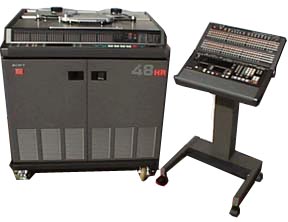
Sony 3348HR digital audio tape recorder image from Bobby Owsinski's Big Picture blog
Sony 3348HR Digital Tape Recorder and Remote
I remember when the commercial studio world revolved around the Sony 3348 48 track digital tape recorder. If you owned a studio that catered to major label clients, this machine was an absolute necessity, and at a cost of around $250k each, they were a major investment that a studio owner had to make to stay in business - for about 6 months. It seemed that as soon as every major studio finished their investment cycle with these machines that their use and value fell like a rock, thanks to the rapid transition in the music world to Digidesign's Pro Tools digital audio workstation as the storage medium of choice.

Today you can find a 3348 for a couple of grand, but most owners would probably even pay you to take the big bulky hulk of metal off their hands. This one-time superb piece of audio technology became a boat anchor in almost no time, and unlike analog gear from that era, has virtually no chance of having new life breathed into it via the vintage market. It sounded great for it's time, but it's quality and function is not even in the ballpark of what we can buy today for a mere fraction of its original cost.

Pro Tools has gone on to completely change several areas of the audio business, from music to broadcast to post, and has become the de facto standard in most professional settings. That said, it's now owned by Avid, a company previously known for it's video editing software (the video equivalent of Pro Tools) than anything else. The problem is, Avid is in trouble.

Avid's trouble started when Apple introduced Final Cut, which was cheaper than anything that Avid had to offer and eventually just as capable. Soon the market was saturated between the two systems, with virtually no growth left, so Avid purchased Digidesign to get a piece of the still growing professional audio market. Eventually that topped out too, so the next move was to go into consumer audio and Avid acquired M-Audio among other similar companies. To many of Avid's stockholders, the company was on a roll as stock prices reached a high of over $28.

But the audio business, consumer and professional combined, is actually quite small compared to other businesses, and once again Avid was undermined by Apple and their Garageband software and less expensive versions of Logic. Suddenly the stock was in trouble and began to drop like a rock. Earlier this year, the company decided that it had enough of the consumer business and sold it off in order to stop the stock price hemorrhage. The existing professional audio and video market is pretty finite though, and competition is tough, which means that Avid's revenue has fallen from a high of $12+ this year to just half of that today as investors continue the rush to sell. They understand the stock price isn't coming back.

Which brings us back to the Sony 3348. You can own the market and almost overnight lose it if something newer, cheaper, and better (or two of the three) comes along. You can also lose it if the company is struggling financially and there's no money left for innovation. I think you can see where this is going - Avid is in trouble.

In recent months long time Avid employees have been jumping ship for other companies in the industry, seeing the writing on the wall. That's never a good sign. And the company didn't even show at the last AES convention in San Francisco a couple of weeks ago. Not a good sign either.

I don't think that Pro Tools would ever go away overnight the way the Sony 3348 did because the installed user base is so high (especially in post and broadcast), but I wouldn't be surprised if we see some changes in the company in the very near future. One thing I do know, there are a number of other companies out there circling like vultures preparing to pick up the pieces of Digidesign, whatever they may be.

Watch this story carefully over the next few months.

----------------------------------

You should follow me on Twitter for daily news and updates on production and the music business.

Don't forget to check out my Music 3.0 blog for tips and tricks on navigating social media and the new music business.

Thursday, August 23, 2012

Sony To Release Sound Forge On Mac Platform

For years thousands of PC users have raved about Sound Forge in terms of its sound and ease of use. In pro circles, Digidesign's Pro Tools has reined supreme on the Mac, but since its purchase by media giant Avid, the outlook for the DAW is beginning to seem a bit shaky, as Avid's stock price plummets and long time employees bail.

Perhaps seeing an opening in the market, Sony has finally decided to port Sound Forge Pro to the Mac platform. Rewritten and rethought, it looks slick, and although I don't think that it will initially get hard-core pro users to switch, just being a viable alternative in waiting to Pro Tools if something dire should happen should be a comfort to many users, and an opportunity waiting to happen for Sony.

Here's a short introductory video about Sound Forge Mac. What do you think?


----------------------------------

You should follow me on Twitter for daily news and updates on production and the music business.

Don't forget to check out my Music 3.0 blog for tips and tricks on navigating social media and the new music business.

Tuesday, November 1, 2011

Pro Tools 10 Clip-Based Gain

As I stated in a post the other day, one of the cool things about the new Pro Tools 10 is that it finally has a feature known as clip-based gain. That beans that the level of each clip can be independently changed without having to resort to automation. PT competitors have had this for years, but Avid/Digidesign is only getting this out to their user base now.

Here's a video that explains just how useful clip-based gain can be.


----------------------------------
Help support this blog. Any purchases made through our Amazon links help support this website with no cost to you.

You should follow me on Twitter for daily news and updates on production and the music business.

Don't forget to check out my Music 3.0 blog for tips and tricks on navigating social media and the new music business.

Thursday, October 27, 2011

An Overview Of Pro Tools 10 Features

It seems like we just got used to Pro Tools 9 (at least I did) when Avid suddenly sprung Pro Tools 10 on us. While it seems like it's mostly for power users, the latest version does have a few features that the average user might find useful.

Here's a video that explains many of those new features. One of the things that it doesn't go over is the one that I think is the most useful, which is clip-based level control, something that other DAWs have had for a while. I'll post another video just on that next week.

One of the features that seems to be getting the most hype is Euphonix-style channel strip. Having spent a lot of time on the Euphonix Series 5 and therefore playing with the real thing, I'm not sure it's worth the press that it seems to be getting. While it's certainly better than some of the stock plugins that come with PT, the channel strip on the S5 was pretty colorless in my opinion. There just didn't seem to be a lot of character there, which is perfect for certain types of music and program, and less so for others.

Regardless, check out the video on PT 10's new features.


----------------------------------
Help support this blog. Any purchases made through our Amazon links help support this website with no cost to you.

You should follow me on Twitter for daily news and updates on production and the music business.

Don't forget to check out my Music 3.0 blog for tips and tricks on navigating social media and the new music business.

Sunday, November 7, 2010

AES 2010 Report Part 1 - The Rise Of Pro Tools 9

Just got back from the AES (Audio Engineering Society) convention in San Francisco, so here's part one of my report. Thanks for everyone who came to my sessions (Social Media For Musicians And Engineers Part 1 and 2) and book signings. Both were a great success.

The general mood of the show was upbeat, although everyone agreed that business is tough out there, whether you're a musician, producer, artist, or manufacturer. It seems like the whole world is working harder for half the money these days. That being said, most are now accepting their new fate and determined to push through it, and that lightened the mood a bit.

The introduction of  Pro Tools 9 at AES was perhaps the the biggest announcement at a gear industry trade show I've seen in recent years. In fact, I can't remember that last time a new product had such a big buzz. If you're in the industry at any level you've probably seen numerous articles on the details of the product by now (if not, look here) so I won't bore you with that stuff yet another time. What I would like to talk about is the implications of PT 9, which are many. Here's why it will affect nearly everyone on the creation end of the music business.

1) PT 9 now plays nice with others. Until recently, Pro Tools has been a closed system. The software was more or less free, but what you really paid for was the hardware, which was a great business model for Digidesign (now Avid). If you didn't own the hardware, the software wouldn't work. Although there were a lot of reasonably low price points to enter into the Pro Tools world, you were stuck with their sometimes inadequate hardware (to be fair, some of it was quite good too), and if you wanted to get into a full-on pro system, it was going to cost you a bundle.

Now that PT 9 will talk to any hardware, not just that from Avid, a whole new world opens up. There are a lot of great DAW applications out there, but Pro Tools is the professional standard. Want to do pro-level work? Better know or own Pro Tools. Now you can stay with any hardware you prefer, and PT 9 will happily talk to it. That means that you can now use your preferred DAW and cheaply have PT 9 around for those times when you want to do transfers or a quick fix to your DAW of choice. There's no reason not to have it anymore.

By opening up the system, Avid has just opened up the rest of the non-PT world as well.

2) PT 9 has built in delay compensation. What the heck does that mean, you might ask? Some plug-ins are processor intensive and cause a slight time delay in the track in which they're used. That means that there can be some tremendous phase issues in a mix as a result.

Delay compensation was standard in the expensive PT HD systems, but not in the inexpensive LE version. That means that if you wanted to mix with all those fantastic third-party plug-ins that are available, you were forced to use one of the big systems. Now that PT 9 has built in delay compensation, anyone can do a major mix on a relatively inexpensive system. You're going to see more inexpensive laptop systems as a result, and more plug-in sales than ever.

Bottom line, Pro Tools 9 means that those engineers, producers and musicians that have refused to use PT now have no reason not to own it since it opens up so many work possibilities. On the Avid side, it means they will rule the DAW world for some time to come.

I'm not sure what the long term business model is for Avid's opening up Pro Tools system to the outside world, but I have some ideas. More on this on an upcoming post.

Tomorrow - Part 2 of my AES report.
----------------------------------
Follow me on Twitter for daily news and updates on production and the music business.

Don't forget to check out my Music 3.0 blog for tips and tricks on navigating the music business.

Wednesday, April 14, 2010

NAB 2010 - A Yawner Of A Show

Most trade shows, even the ones held during the most dire economic circumstances like we've recently lived through, usually have something interesting or unique to offer, even if it's only the vibe. Not so for this year's NAB (National Association of Broadcasters), which was about as limp a show as I can remember.

Why do I say it was limp? Let me count the ways.

1) Traffic was down. Granted, I was there on a Tuesday (the 2nd day), but the attendance seemed significantly off from previous years.  Sure there were people in the aisles, but they weren't filled like always. But a sure signed was that a lot of the overpriced food vendors weren't even open, and the ones that were closed by 5PM. The economy has finally caught up with the broadcast industry.

2) Exhibitors were down too. This used to be a pretty big audio show, with an entire hall dedicated mostly to it. This show, the pro audio exhibitors were significantly less although the ones that cater specifically to radio or television where there as always. In fact, audio and radio were relegated to a small portion of hall C, instead of the huge North hall as before.

3) The vide wasn't too exciting. It was just dull. No excitement anywhere. Nobody talking about gear, deals, even parties. I heard a lot about where people were going to eat that night, but that's about it.

4) No new product big announcements. There was 3D, more 3D, and even more after that. That and the fact that incandescent lights are pretty much going away in favor of LED's, which just follows the trend from last year. And let's face it, when the biggest announcement is Avid buying Euphonix, you know the show is pretty lame. And why did Avid buy Euphonix anyway? Very curious and a topic for a future post.

So what did I see? Not much but here goes:

A) 3D. If I hear or see one more thing about 3D I'm going to puke. Some of it looked cool, but much of it had so much parallax in it that it could, in fact, make you throw up. Still a parlor trick, and it will continue to be so until you can view it without the stupid glasses. And by the way, if it's supposed to make the picture look more real, it's failing miserably.

On the left we so an unbelievable complex 3D camera setup.

B) What happened to Sony? This is a company that has really lost its way. We've known this for a long time in both the record and consumer electronics businesses, but now it's even true for broadcast television equipment, a market they once owned. Everything just seems a step behind. Panasonic and Canon have hipper cameras at all price ranges, and Sony's 3D stuff really seemed like a me-too product line (lamer than most). I think one thing kind of tells the whole story - every camera manufacturer used LED lighting in their demo scenes. Sony still used old-fashioned, hot, tungsten lighting. Sometimes, it's the little things that tell the story.

C) What exactly is Avid? It's a bathroom cleanser; it's a hair conditioner; it's a chewing gum; no, it's a shoe polish. They make editing gear, they make speakers, they make DJ equipment, they make recording software, they make keyboards, they make recording and sound reinforcement consoles, they make....., they make........., they make...... Since all of the companies that they absorbed are now called Avid instead of their original brand names, Avid just stands for confusion.

On the left, the screen that started the beginning of a confusing Avid demo.


D) The Vocal Booth. This is the coolest thing I saw. I don't know how I've overlooked these guys all these years. This is the perfect add-on to just about any home studio. Want a well-isolated, acoustically treated vocal or overdub room? These guys have it. For about $10k you have have something that really works, complete with air conditioning (which is the hard part). Check them out at vocalbooth.com


E) Hard Drive Boxes. Hudzee had a great idea for this DAW world with plastic boxes designed especially for hard drives. Remember tape boxes? It's the same thing, just for drives. Makes it easy for storage and identifying what you have.

Check them out at hudzee.com.

There you have it. At least there were a couple of things that weren't 3D.
----------------------


Don't forget to check out my Music 3.0 blog for tips and tricks on navigating the music business.

Follow me on Twitter for daily news and updates on production and the music business.

Tuesday, December 29, 2009

6 Predictions For The Musical Instrument/Pro Audio Business For 2010


Here's the fun part of the year coming to a close, when we can do some crystal ball gazing, take a couple of seances, dream a couple of dreams and make some semi-educated guesses regarding the happenings of the coming year. Sprinkle in a little inside knowledge here and a rumor or two there and you have the 6 predictions for the MI/pro audio business for 2010.

1) Pro Tools goes native and abandons their processor cards. Let's face it, computers are getting faster every day and are already plenty fast enough to handle just about anything a DAW can throw at them, so why must a user pay big money to buy a processor card? Avid agrees as the Pro Tools hardware approaches it's natural end-of-life, but what will that mean for them over the long haul? Such a decision could open up a can of worms for Avid (Digidesign) though, as it also opens the door for the next new DAW kid on the block. Remember how the Sony 3348 was a must-have for every commercial studio and within 6 months was a boat anchor? Could happen here too, but not this year.

2) Two well-known manufacturers will be no more. It's been pretty amazing that there has been so few manufacturer fatalities during the last year considering the state of the economy. That won't continue however, as a number of very well-known companies currently stand on the brink and it won't take much to push them over. Look for at least two of them to be bought, merged or closed.

3) A well-known retailer will contract. The year was already savage, but the Holiday season was particularly unkind to a major retailer, who will be forced to drop any planned expansion and begin to close under-performing stores.

4) Retailers delete duplicate items. Show me just about any musical instrument or recording item out there and I'll show you at least a dozen manufacturers that make one. While excess choice was always a bit of a burden for a retailer, now it's a downright millstone around their cash register's neck. Look for retailers to cut back on the number of items they carry, and look for many boutique manufacturers to suffer and die as a result.

5) A new class of hardware will be introduced. Thinking outside the box is not a trait that the current MI/Pro Audio business possesses to any great degree, but one company has managed to plow some fertile ground with a new look to an old process. Look for it's debut in the new year.

6) The 5th Beatle gets a new job. This last point only indirectly affects the MI/Pro Audio business but it's worth pointing out. It used to be that the silent member of a band was their manager, producer or engineer, but the new 5th Beatle is their webmaster. With social media playing such a large roll in just about any size act's marketing and promotion, the person with the most online smarts might be even more important than a rhythm guitar player who doesn't sing (as long as he's not the songwriter). The new 5th Beatle is one less person around a band that would buy the gear that the industry sells (except for the computer and accessories, of course).

Can't wait until the end of next year to see how many of these came true, but I bet my batting average will be pretty good.


Saturday, October 10, 2009

Avid And Mackie Play Nice


Recently Mackie released a new product called the Onyx-i Firewire Recording Mixer that was able to communicate with just about all DAWs, including Digidesign's (now Avid) Pro Tools. The problem for Mackie was that it appeared to reverse engineer the Pro Tools protocol rather than do the usual expensive technology license agreement with Avid, a skirting of the license that Avid had come down hard on in the past.

This lead to all sorts of speculation that Avid would soon be turning their expensive corporate attorneys loose on Mackie and we'd see one hell of a court fight as a result. Lo and behold, word on the floor at the Audio Engineering Society (AES) convention now going on in New York City is that Avid has forgone litigation in favor of an arrangement to facilitate Mackie and that an official announcement is forthcoming.

This is certainly surprising and could only mean a couple of things (putting on my speculators hat for a second). First, even though Avid's stock price of around $15 is actually doing a better of late, it's way off it's near $50 a share of 2005. Some analysts speculate that the reason why Avid absorbed the Digidesign name was to prepare itself for a sale, so the last thing Avid wants right now is more litigation, even if their the one doing it.

Secondly, this could be the beginning of a new open-source strategy for Pro Tools. Since Pro Tools has pretty much hit a saturation point in terms of both high end sales, they may believe that in order to secure the somewhat more volatile low end of the market that it's best to let other manufacturer's hardware talk to PT, giving the user one less reason to even try anything else.

Whatever the reason, I think it's probably a lot better for the industry if the Pro Tools protocol becomes more open. No matter what you think of the platform, it's still the industry standard, and until someone comes along with something a whole lot better, it looks like it will stay that way for a while.

Thursday, November 6, 2008

Goodbye Digidesign?


The word on the street is that Digidesign is going to be folded into Avid over the next few quarters.  Protools or any of the Digi products won't go away, just the Digidesign name.

Why would Avid do this to the now iconic company?  Stock price, of course.  Avid's stock was in the dumper long before our current economic woes.  By folding Digi into Avid and cutting the labor costs by having just one R&D department, one sales department, one accounting department, etc., Avid immediately makes a positive, if short term impression on their bottom line.

It will be interesting to see how this plays out for Protools users though.  What will happen to service?  What will happen to product development?  Will new products be primarily focused towards video?  Will they forget about those of us making music?

I remember when Sony's 3348 digital tape machine absolutely ruled the studio world.  If you didn't have one of these $150k machines, your studio had no chance of servicing serious music clients.  Then it seemed like overnight they were gone - relegated to the scrap heap of unwanted gear too expensive for the dumpster, but no longer needed on a session. Actually it was a period of six months when the 3348 world faded into the new Protools world, but it seemed a lot quicker at the time.  

I always thought that this could happen to Protools - used everywhere until it was gone in a blink of an eye.  Although I don't this scenario happening soon as I see no viable alternative on the horizon, folding Digi into Avid just might be the crack in the door that lets a competitor or new technology through.

LinkWithin

Related Posts Plugin for WordPress, Blogger...