Get This Free Cheat Sheet Guaranteed To Help Your Next Mix

Showing posts with label DAW. Show all posts

Tuesday, February 2, 2016

Avid Has Another Round Of Layoffs

Avid Layoffs imageThings are getting ugly at Avid again as the company pink-slipped as many as 60 employees from its Pro Tools, Venue and other audio teams last week.

According to Pro Tools Expert, the layoffs happened in the places where Avid could least afford - Product Management, Beta and QA, Applications Engineer and Marketing.

Although Avid stock is not at an all-time low, it's pretty close, down to $6.90 when this was written, which is way off from its 52 week high of $18.10. To put it in perspective, Avid stock hit a high in February of 2005 at $66.90.

This is another great example of why a public company doesn't belong in this niche space we call the audio business. The industry is filled with mostly boutique operators who care deeply about their products and customers, some to the point where barely making a living is enough as long as their customers are happy.

A public company like Avid is beholden to its stockholders and not its customers however. The bottom line is more important than its users and dealers, and that's been obvious ever since Avid purchased Digidesign.

Some analysts think that this might be a last ditch effort to set the company up for a profitable quarter, but that's not going to save the company.

There's a lot of disgruntled Pro Tools users out there, and it won't take much for them to switch to another DAW en masse. That time might come sooner than you think.

Monday, June 8, 2015

New Music Gear Monday: Editor Keys Backlit PC Keyboards

Editor Keys backlit dedicated DAW keyboard image
We all have our own home studios these days, which means that we all work in the box to some degree.

Music and a dimly lit room go together but it's not always the best thing for your eyes, especially when you're trying to type DAW commands in as fast as you can.

Editor Keys has now introduced a line of dedicated backlit keyboards designed to get you typing those commands up to 40% faster than before.

Since 2005 the company has been a leader in dedicated DAW and video editing keyboards, but these new backlit models are just the thing we all could use at least some time during the course of a project.

Editors Keys actually did a Kickstarter campaign to fund the project (which raised its funding last year) and I've included the video that the explains the keyboard and project below.

The dedicated backlit Pro Tools keyboard is available for around $120, while other versions are available for Cubase, Ableton Live, Presonus Studio One, Reason, and Sonar at slightly higher prices. There's also a version for Avid Media Composer, Adobe Premier and Photoshop, and Sony Vegas Pro.


Tuesday, February 10, 2015

Don't Buy 3 TB Hard Drives

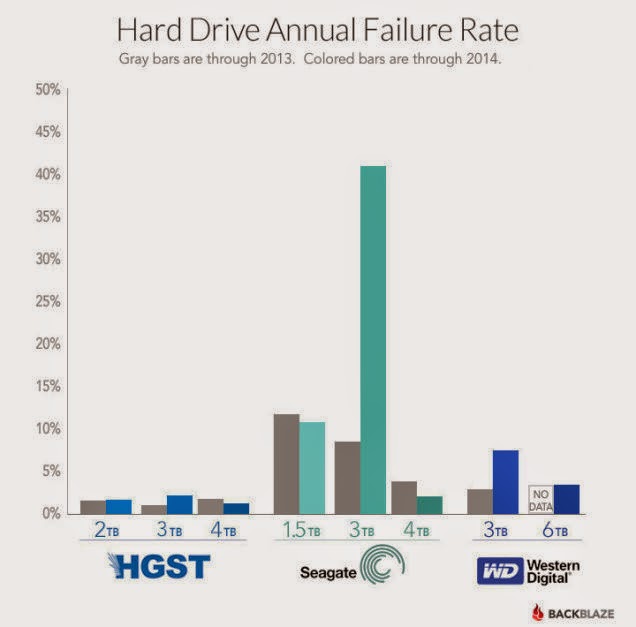
Hard Drive Annual Failure Rate imageFor music and audio professionals, we live and die by our DAW and that means everything attached to it as well.

Recently the backup company Backblaze evaluated their more than 41,000 drives and found that 3 Terabyte hard drives had a fairly high failure rate as compared to any other size.

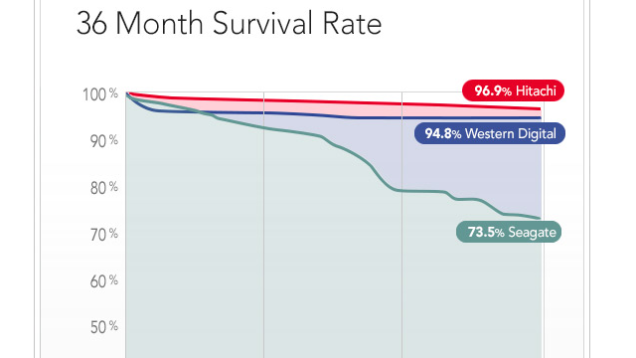
There's also some evidence that regular old consumer drives are at least as reliable and maybe even more so than the higher priced enterprise drives. Also that Hitachi drives were the most reliable, followed by Western Digital with the least reliable being the Seagate.

Hard Drive Annual Survival Rate imageWhat's should you buy? The company recommends 4 TB drives (like this one) for both value and reliability.

2 TB drives are a real bargain now as well. Be sure to buy 2 (one for backup).


Wednesday, January 14, 2015

What Avid's Relisting Means For Pro Tools Users

Pro Tools logo image
Last month everyone's favorite DAW maker Avid was relisted on the NASDAQ stock exchange, a move that came as a surprise to many.

When the company was delisted back in February of 2014, many analysts (including yours truly) felt that this was the first sign of the eventual slow demise of the company, and that it was highly unlikely to ever find its way back onto the exchange. Avid defied expectations by working with auditors to supply the exchange with the information required to resume trading there. The company was officially delisted for not filing the required quarterly reports for over year, which Avid claimed was due to accounting rules changes

Since being relisted, the company's stock has risen from $13.50 to just a shade under $15. It continues to trade under its AVID symbol.

Regardless of the happy event, this is a challenging time for Avid. While having a virtually stranglehold on the professional audio workstation world, that market is somewhat saturated, and with more powerful computers now available, the native versions of the software now works for many cases where an expensive hardware accelerator card was once required, which means less revenue for the company.

Add to that the general frustration of the Pro Tools community that feels somewhat abandoned by the company's recent employee turnover, and many users are now open for an alternative should it arise.

Still, Avid's relisting also means that the company is much stronger than before. Sources of capital are more readily available if needed, the stock is much healthier than it was 12 months ago, and the company's public perception has risen. All that doesn't matter much if it doesn't find a way to assuage its customers who feel burnt by the company, of which there are many. We all like to upgrade to get new features, but the feeling of being forced to do so has rubbed many the wrong way through the years.

The upcoming NAMM show next week can be a pivotal one for the Avid, depending on the new products they show, or even worse, might not have. Could this be the year of serious DAW competition?

Monday, August 11, 2014

9 Music Products The Industry Got Right

Ampeg SVT image
The Ampeg SVT
A visit to a friend's very capable commercial studio the other day got me thinking about some of the musical and audio items that have remained essentially intact since they were introduced. In some cases improvements have been attempted, but the original design is still the best. In other cases there has been continual improvements, but the original idea still hasn't changed all that much. Here are 9 products in no particular order that the music and pro audio manufacturers got right from the start.

1. The Shure SM57/58 - Nearly 50 years down the road and the SM 58 is still the standard stage mic, and the SM 57 can be found in every recording studio big and small. What's the difference between them? They both have the same capsule but the 58 has a filter to decrease the proximity effect a little.

2. The Ampeg SVT amplifier - Has there ever been a better bass amp been built? There's still nothing like that 8x10" cabinet for being able to dial in almost any bass sound you want, and the monster head will easily rock any venue.

3. The Marshall 1960 cabinet - There's something about the original birch Marshall 4x12" cabinet that's never been beat. It makes any amp, big or small, sound bigger and larger than life.

4. The Fender Strat - Former Rolling Stone guitarist Mick Taylor once expressed to me that he felt the Strat was the world's most perfectly designed guitar, and he couldn't have been more right. The shape, the contour, the sound, the vibrato tailpiece - the only thing it isn't is a Les Paul.

5. The Fender Precision Bass - You might see high-profile bass players play fancy boutique basses on stage, but when it comes to recording there's always a trusty Precision around. If you want a can't-miss big full sound, this is still the one for the job.

K&M boom arm image
K&M Boom Arm
6. The K&M boom stand - Atlas made the original boom arm accessory in the early 60's but the tripod Konig & Meyer boom has been the studio standard for more than 50 years. It hasn't changed much in that time, but it hasn't needed to.

7. Powered monitors - Once upon a time you struggled to find the right amp to match your speakers. It was a nerve-wracking search very much akin to a surfer finding the perfect wave. Monitors with built-in power amps that are ideally match to the speaker took away all that confusion, while making them cheaper, more compact, and sound better.

8. The Digital Audio Workstation - For a long time the only thing that engineer's knew was tape, and as a result became quite used to its limitations, even during the transition from analog to digital. Having a remote sitting right next to the console was just part of the natural studio environment. Today most DAWs offer way more advantages to tape  and we're all much better off for it. The modern DAW is what's made the home recording studio possible, and even the least expensive app has 100 times more power than what The Beatles had available to them (although talent is another story).

Radial JDI Direct Box image
Radial JDI Direct Box
9. The Dean Jensen Direct Box Design - It's hard to believe there was a time before direct boxes, but after some industrious techs began to custom-build them in the 70's, transformer designer Dean Jensen provided a free design using one of his transformers that's been copied over and over ever since. If it's a passive direct box that you're buying, Dean Jensen is its father.

What else have I missed?
----------------------------------

Monday, December 9, 2013

Is The World Ready For A New Codec?

Opus Codec image
Anyone trying to export a song from their DAW knows that there are quite a number of audio data compression formats available today, even though only two of them are normally used in the vast majority of cases. Of course I'm talking about MP3 and AAC when it comes to downloads, although we're seeing an upswing in the use of FLAC files these days. Then when it comes to streaming, Ogg Vorbis is often used (especially by Spotify). This just goes to show that there's quite a bit of diversity in the online music files that we listen to, even if we don't realize it.

That said, a new codec (compressor-decompressor) with better features than what's normally found might be desirable, and that's where the Opus Interactive Audio Codec comes in.

Opus was designed for high-quality audio right from the start, supporting bit rates as high as 510kbs, sampling rates to 48kHz, with the number of channels as high as 255, among other technical features. It can handle a wide range of audio applications, including Voice over IP, videoconferencing, in-game chat, and even remote live music performances, and it can scale from low bit-rate narrowband speech to very high quality stereo music.

It's also totally open, royalty-free, and is standardized by the Internet Engineering Task Force (IETF), incorporating technology from Skype's SILK codec and Xiph.Org's CELT codec.

Getting support for a new standard can be difficult and time consuming, so any new codec, not just Opus, has an uphill battle to begin with. Then again, all is takes is adoption by one service and the rest may follow. Watch the next year to see how Opus does. We may all soon have it as part of the output preferences of our DAWs. Go here to see more info about Opus.
----------------------------------

You should follow me on Twitter and Facebook for daily news and updates on production and the music business.

Don't forget to check out my Music 3.0 blog for tips and tricks on navigating social media and the new music business.

Sunday, July 21, 2013

New Music Gear Monday: Apple Logic Pro X

Apple very quietly released the latest version of Logic last week, called Logic Pro X, to pretty widespread acclaim. There's a lot to like in this new version, including a new streamlined look, a new collection of virtual instruments (including the incredible virtual Drummer, with sounds from Bob Clearmountain), built-in pitch correction and remote control from an iPad.

Best of all, Logic Pro X is only $199, which might take a real bite out of Pro Tools sales, since the leap to PT 11 has many users on the fence.

Here's a great overview of X from my friend Dot Bustelo on Lynda.com. If you're interested, you can also check out my recording, mixing and mastering courses on Lynda and get a free 7 day subscription as well.


----------------------------------

You should follow me on Twitter for daily news and updates on production and the music business.

Don't forget to check out my Music 3.0 blog for tips and tricks on navigating social media and the new music business.

Monday, April 8, 2013

It's Here - Pro Tools 11

Avid just announced the new Pro Tools 11, and like all new versions, there's a lot of like as well as a bunch of "got ya's." The video below explains everything new in great depth, but here are just a few of the new features.
  • It's newly coded from the ground up with a brand new audio engine, which means you'll have to buy all your plugins again.
  • It's 64 bit, which means that it'll be able to access much more RAM. That means it will handle many, many more tracks, plugins and virtual instruments with ease so it'll be a lot faster.
  • It now has offline bouncing that's up to 150 times faster than the way it does it now. What took them so long? This has been on other DAWs for ages.
  • Much improved metering with more precise scaling and ballistics, including peak and average VU and PPM meters.
  • The inclusion of the Avid Video Engine so that you can play and edit video directly from within PT.
  • Low-latency input buffering, so you can more easily record while using plugins.
It doesn't seem like a lot that's earth-shattering. It's going to cost you though, and in a world of so many other quality DAWs, that could be a deciding factor. The prices are:

Pro Tools 11 Software: $699
Pro Tools 10 to 11 upgrade: $299
Pro Tools 9 to 11 upgrade: $399
Pro Tools HD 10 to 11 upgrade: $599
Pro Tools HD 9 to 11 upgrade: $999


----------------------------------

You should follow me on Twitter for daily news and updates on production and the music business.

Don't forget to check out my Music 3.0 blog for tips and tricks on navigating social media and the new music business.

Monday, March 4, 2013

Top 10 DAWs For Songwriting

PreSonus Studio One screen image from Bobby Owsinski's Big Picture production blog
Songwriting is such a personal affair. Everyone does it differently and everyone has an idea on the best way to do it. These days, most people write with their favorite DAW to help them either flesh out the rhythm of the tune or simply remember any ideas. For some, that's a heartache in itself as sometimes there's more time spent on the technical aspect of the DAW than on the actual writing.

That said, here are the top 10 DAWs for songwriting as stated by songwriting.net.

1. PreSonus Studio One

2. Propellerhead Reason

3. FL Studio

4. Acoustica Mixcraft

5. Apple Logic

6. Sony Acid Pro

7. Steinberg CuBase

8. Avid Pro Tools

9. Cakewalk Sonar

10. Ableton Live

I'm not sure that I agree with everything on this list, especially the order, but then again, to each his own when it comes to DAW choices. I sometimes think that the easiest thing is a simple handheld recorder by Zoom, Tascam or even a recording app on an iPhone to capture the ideas. You can always flesh them out later on the DAW. Then again, if you're writing around beats and loops, then the songs starts in the DAW in the first place.

What's your choice?

----------------------------------

You should follow me on Twitter for daily news and updates on production and the music business.

Don't forget to check out my Music 3.0 blog for tips and tricks on navigating social media and the new music business.

Sunday, September 23, 2012

New Music Gear Monday: The Apogee Quartet

I've decided to rename "New Musical Instrument Monday" to "New Music Gear Monday" since so much of what's cool and new has to do with audio as much as musical instruments.

This week we'll look at the new Apogee Quartet, a 4 input, 8 output audio interface for your DAW. Apogee's always been known for making great sounding gear, so it's exciting when they introduce something new. While I'm sure it does indeed sound terrific (I haven't tried it out yet), what I really like about it is that it also acts as a "control center," with an extra large knob that can be used for controlling your monitor volume. Anyone who owns a home studio knows that not having this ability is one of the more irritating things about working on a DAW.

The Quartet uses USB to interface with the computer, works at a resolution of 192kHz/24 bit, and has 4 mic preamps (which should be plenty for most home studio applications if you're not tracking a band). It looks like the list price is around $1300 or so. Plus, the design is very Apple-like, so it should fit in very well on your desktop, if the visual look of your workspace is an issue. Check out the video.


----------------------------------

You should follow me on Twitter for daily news and updates on production and the music business.

Don't forget to check out my Music 3.0 blog for tips and tricks on navigating social media and the new music business.

Sunday, September 16, 2012

New Musical Instrument Monday: Auria iPad DAW

Auria iPad DAW app image from Bobby Owsinski's Big Picture blog
For those of you who love your iPad and want to do more actual audio work on it, here's an amazing digital audio workstation app by WaveMachine Labs called Auria. It's easy to take a mere iPad app lightly when it comes to some heavy duty audio lifting, but Auria can play back up to 48 mono or stereo channels at up to 96kHz/24 bit, and can record up to 24 tracks at the same time, as well as having a feature list that can rival many widely used DAWs.

The Auria DAW has both a full channel strip and master strip package designed by the clever guys at PSP Audioware (thanks, Antoni, for turning me on to this gem). It's excellent in both look and function, and sounds great, just like all PSP plugins. I only wish that they were available as a plugin for Pro Tools as well.

But the Auria is not only a full-on mixer, it's an editor too, just like your favorite computer-based DAW. It's a little clunkier to do with your finger and a touch screen, but you can always use an Apple wireless mouse for more precision if needed.

The Auria iPad DAW is available from the App Store for only $49. There's a variety of approved interfaces that work with it (some a little easier than others), but just about anything will work as long as it works with Core Audio and doesn't require a driver.

Check out the video.


----------------------------------

You should follow me on Twitter for daily news and updates on production and the music business.

Don't forget to check out my Music 3.0 blog for tips and tricks on navigating social media and the new music business.

Tuesday, September 11, 2012

5 Best Audio Editing Apps?

Adobe Audition Timeline from Bobby Owsinski's Big Picture production blog
Adobe Audition Timeline
Lifehacker recently ran a survey trying to find the 5 best audio editing tools, and it turned up some interesting and surprising choices. Granted, Lifehacker is not a site with a core audience of audio professionals, but it's still interesting to see exactly what computer literate people consider when it comes to their audio editor of choice. So here we go:

1. Audacity (56% of the votes) - I can see why this was chosen since it's a fairly powerful audio app and the price is right (free). Plus, it's cross platform.

2. Adobe Audition (14%) - I think that a lot of people use this because it's included as part of the Adobe Creative Suite.

3. Avid Pro Tools (10%) - The big daddy in the pro world, Pro Tools has dominated music, film and broadcast for the last decade. If you're going to be a real-world pro, use anything else at your own risk.

4. Reaper (10%) - Here's a DAW that's coming on strong. The price is only $60, and so many people rave about it that I can see it taking over as the top dog if Pro Tools should ever falter.

5. Ableton Live (10%) - If you're making or working with electronic music, then Ableton Live is the center of your universe. If electronic music isn't on your radar screen, then probably neither is Live.

There was also honorable mention for Goldwave, which I wasn't even aware of, and Soundforge, which as noted in a previous blog, is coming to the Mac soon after a long run as a PC-only app.

So now it's your turn. Think the survey got it right? Oh, and if you decide to purchase any of the above workstations, help support this blog by starting from this link.
----------------------------------

You should follow me on Twitter for daily news and updates on production and the music business.

Don't forget to check out my Music 3.0 blog for tips and tricks on navigating social media and the new music business.

Thursday, May 31, 2012

Music Software Popularity Index


Music Software Internet Popularity image from Bobby Owsinski's Big Picture production blog
Here's an interesting chart on the left from Digital Music Doctor that shows the popularity of DAW applications. As you can see, Pro Tools is still in the lead, but FL Studio is coming on strong, followed by Ableton Live. Last years challengers Cubase and Sonar have dropped back some.

Digital Music Doctor doesn't measure the installed base of users or even sales of software packages, they measure Internet search results, so don't misconstrue what the chart is trying to say. It's the popularity of a software package based on search activity on Google, Bing, Yahoo and AOL. The idea is that the number of searches directly correlates to the DAW's real popularity, which may or may not be the case.

As I said before, I'm no shill for Pro Tools but I can tell you that if you really want to work professionally in just about any area of the entertainment business, knowing how to use it is a necessity because that's what the majority of pros use. From music production to film and television post to voice-over work to anything else you can think of, it's a Pro Tools world for the most part. That's not to say that any of the other fine DAWs don't have their place. They're great learning and production tools, every one of them. But if you're looking for a job that has to do with audio, you'll need some Pro Tools operational skill no matter which way you cut it.

This comes from a person who started with Digital Performer version 1.0, then switched to Nuendo 1.0 (which I loved), only to go kicking and screaming into the Pro Tools world after it became just too painful transferring projects back and forth to those other platforms. I've never looked back and my projects never suffered from the change. So just a word of warning when looking at software popularity charts; they don't always tell the whole story.

----------------------------------

You should follow me on Twitter for daily news and updates on production and the music business.

Don't forget to check out my Music 3.0 blog for tips and tricks on navigating social media and the new music business.

Thursday, February 9, 2012

Logic, Reason And Live DAW Comparison

I'm always interested in the progression of DAWs, especially ones that I don't use regularly myself. Here's a great video on the differences between Apple Logic Pro, Propeller Head Reason, and Abelton Live. I learned a lot from this movie and unless you're currently a user of all of them, you will too.


----------------------------------
Help support this blog. Any purchases made through our Amazon links help support this website with no cost to you.


You should follow me on Twitter for daily news and updates on production and the music business.


Don't forget to check out my Music 3.0 blog for tips and tricks on navigating social media and the new music business.

Tuesday, November 1, 2011

Pro Tools 10 Clip-Based Gain

As I stated in a post the other day, one of the cool things about the new Pro Tools 10 is that it finally has a feature known as clip-based gain. That beans that the level of each clip can be independently changed without having to resort to automation. PT competitors have had this for years, but Avid/Digidesign is only getting this out to their user base now.

Here's a video that explains just how useful clip-based gain can be.


----------------------------------
Help support this blog. Any purchases made through our Amazon links help support this website with no cost to you.

You should follow me on Twitter for daily news and updates on production and the music business.

Don't forget to check out my Music 3.0 blog for tips and tricks on navigating social media and the new music business.

Tuesday, June 14, 2011

The New King Of Music Production Software?

There's an interesting new chart (seen on the left) making its way around the Internet from Digital Music Doctor that shows the popularity of both Sonar and Cubase exceeding Pro Tools for the first time during the first quarter of 2011. Both Sonar and Cubase are great pieces of software and have quite a large installed base that I'm sure is growing, but there's a flaw in this DAW hysteria.

Digital Music Doctor doesn't measure the installed base of users or even sales of software packages, they measure Internet search results. This is like saying that Rebecca Black should be on the top of the sales charts based on her Internet popularity, when we know that those numbers have nothing to do with actual sales (which are dismal despite nearly 200 million YouTube views).

I'm no shill for Pro Tools but I can tell you that if you really want to work professionally in just about any area of the entertainment business, knowing how to use it is a necessity because that's what the majority of pros use. From music production to film and television post to voice-over work to anything else you can think of, it's a Pro Tools world for the most part. That's not to say that any of the other fine DAWs don't have their place. They're great learning and production tools, every one of them. But if you're looking for a job that has to do with audio, you'll need some Pro Tools operational skill no matter which way you cut it.

This comes from a person who started with Digital Performer version 1.0, then switched to Nuendo 1.0 (which I loved), only to go kicking and screaming into the Pro Tools world after it became just too painful transferring projects back and forth to those other platforms. I've never looked back and my projects never suffered from the change. So just a word of warning when looking at software popularity charts; they don't always tell the whole story.
----------------------------------
Help support this blog. Any purchases made through our Amazon links help support this website with no cost to you.

You should follow me on Twitter for daily news and updates on production and the music business.

Don't forget to check out my Music 3.0 blog for tips and tricks on navigating social media and the new music business.

LinkWithin

Related Posts Plugin for WordPress, Blogger...