Get This Free Cheat Sheet Guaranteed To Help Your Next Mix

Showing posts with label Pro Tools. Show all posts

Thursday, May 5, 2016

Avid Restructures To Please Wall Street

Philippine Call CenterA few months ago Avid proudly put out a press release about how they just hired 250 new employees to staff new facilities in the Philippines, Taiwan and Poland, and how they would save $68 million as a result. Oh, and by the way, that was at the expense of closing down offices and downsizing its staff in the U.S.

Now the latest Avid press release touts how Taipei City is the "new home of hardware design," the new "global support center" in the Philippines will be open 24 hours a day, and the new R&D center in Szczecin Poland includes "veteran staff for engineering, customer care and professional services."

It's also opening a new Boca Raton, Florida office for a "consolidated administrative support group, leveraging a strong work force to improve efficiency and productivity."

Does this sound like a company that really cares about you, the user?

Does it sound like a great idea to can all the people in the U.S. responsible for the development of the hardware and software for the simple reason of finding cheaper ones off-shore?

How about taking the support for its complex products and moving it all to the Philippines?

These moves have nothing to do with the user, of course, since it's all about looking good for Wall Street, which is something that Avid desperately needs. It's stock is near an all-time low, down nearly 65% in the last year alone.

That's the problem with public companies in general. For the most part, the execs get caught up in a game of "pleasing the Street" rather than looking out for its customers. In short, it's stockholders become its customers.

Avid's CFO and executive vice-president John Frederick has announced that he's stepping down after the upcoming May 10th earnings call, which means that the outlook probably won't be too shiny and happy, and the restructuring is a band-aid (and a poor one) at best on the hope that a few analysts will slap a "Buy" recommendation on it.

Those of us who use Avid audio products look at these moves with a great deal of skepticism, and at the same time keep an eye out for the next alternative.

Pro Tools and the other audio-related products are only part of the Avid's product profile, but the company performance gives it's users reason for great concern for the company's, and their future.

(Photo: Maverx via Wikipedia)


Thursday, March 3, 2016

More Restructuring From Avid

Pro Tools Off-Shore Tech SupportIt looks like Avid is at it again, announcing more corporate restructuring, according to Broadcast Tech. The company announced to investors earlier this week that it would be either closing or downsizing "redundant" offices in a move that's expected to save around $68 million.

For instance, rumor has it that all tech support would be moved from the U.S. to a newly opened office in Manila. The company also recently opened offices in Poland and Taiwan as well.

Avid also announced that it secured a "five year $105 million senior secured credit facility" that replaces it's $35 million revolving line of credit.

About the best thing you can say about all this is that it looks like Avid will survive for a few more years, so our Pro Tools subscriptions will be safe.

None of this is designed to play well with its customers however, who grow more disgruntled by the day. And each day all of Pro Tools many competitors look better and better.


Monday, February 22, 2016

New Music Gear Monday: DNA Music Labs Hotkey Matrix

DNA Music Labs Hotkey Matrix imageIf you're a Pro Tools user, you know that it's an incredibly flexible piece of software, but its massive feature set can sometimes be daunting. Even if you're an experienced user, there are the times when you know what feature you want, but just can't find it in the menu or don't know the command. Now Pro Tools operation just got a little easier with DNA Music Labs Hotkey Matrix, a dedicated command key control surface.

Hotkey Matrix features 144 color-coded keys designed, arranged and mapped to a comprehensive set of Pro Tools commands. What's cool is that all of PT's commands are accessed from just a single dedicated key, so you don't have to use the mouse to search through menus or use modifier keys for keyboard commands.

It's pretty much plug and play, as it works directly with the native features of PT and the operating system, so you don't need to install any new software to make it run. It's also commercial-grade hardware where the keys are rated for over 50 million presses, so it can stand up to everyday use.

The shortcuts are laid out in groups that cover editing, selecting, nudging, windows and layout, zooming, file menu functions, track and playlist, and MIDI.

The DNA Music Labs Hotkey Matrix works on Mac OS and Windows 7 and is priced at $280. There's a version for Pro Tools Native and Pro Tools HD. The unit only works on PT 10 and above however.

Here's a video that explains it in more detail.


Tuesday, February 9, 2016

7 Rarely Used Pro Tools Features

7 Rarely Used Pro Tools FeaturesFor those of you who use Pro Tools, you'll enjoy this video by Paul Maunder. It's all about 7 rarely used PT features that could save you a lot of time during your next session. If you use another DAW, you might be able to find a similar function as well.

The rarely used features are:

1. Plug-in Settings Auto Increment
2. Restore Last Selection
3. Consolidate Clip 1kHz Tone
4. Rectified & Power Waveform Views
5. Metadata Inspector
6. Slip/Grid Mode
7. Cursor Location Indicator

Very cool. Thanks, Paul!


Tuesday, February 2, 2016

Avid Has Another Round Of Layoffs

Avid Layoffs imageThings are getting ugly at Avid again as the company pink-slipped as many as 60 employees from its Pro Tools, Venue and other audio teams last week.

According to Pro Tools Expert, the layoffs happened in the places where Avid could least afford - Product Management, Beta and QA, Applications Engineer and Marketing.

Although Avid stock is not at an all-time low, it's pretty close, down to $6.90 when this was written, which is way off from its 52 week high of $18.10. To put it in perspective, Avid stock hit a high in February of 2005 at $66.90.

This is another great example of why a public company doesn't belong in this niche space we call the audio business. The industry is filled with mostly boutique operators who care deeply about their products and customers, some to the point where barely making a living is enough as long as their customers are happy.

A public company like Avid is beholden to its stockholders and not its customers however. The bottom line is more important than its users and dealers, and that's been obvious ever since Avid purchased Digidesign.

Some analysts think that this might be a last ditch effort to set the company up for a profitable quarter, but that's not going to save the company.

There's a lot of disgruntled Pro Tools users out there, and it won't take much for them to switch to another DAW en masse. That time might come sooner than you think.

Tuesday, October 13, 2015

Pro Tools Clip Snapping Shortcuts

Clip Snapping Shortcuts image
If you use Pro Tools as your DAW of choice, then you should be reading Pro Tools Expert, an excellent site for PT tips, tricks and instruction (there's also Logic Pro Expert, Ableton Live Expert, Reason Expert and Studio One Expert as well). It's one site that I check almost every day.

Here's a great video from the site on some clip snapping shortcuts for Pro Tools that even those experienced in the program will enjoy. I learned a few things myself.


Monday, August 31, 2015

L.A. Session Guitarist Gary Solt On My Latest Inner Circle Podcast

Gary Solt image
If you're ever been in the studio with a large orchestra, you know that it's an experience you'll not soon forget.

This week's guest Gary Solt has been the favorite guitar player for orchestra dates for dozens of movies and television shows, and he'll tell us what it's like to play with an orchestra both in the studio and live.

On the intro I'll take a look at the interesting answers coming from a Billboard survey of music industry execs, and the latest Logic Pro X update and what that might mean for Pro Tools users.

Remember that you can find the podcast at BobbyOInnerCircle.com, or either on iTunes or Stitcher.

Monday, April 20, 2015

New Music Gear Monday: Slate Raven Z Controller

Slate Digital Z3 image
The Slate Pro Audio Raven has made quite a name for itself in a short time thanks to its revolutionary touchscreen technology control of Pro Tools. The latest version, the Z3, takes the concept to the next level.

The Raven Z3 differs from previous versions in that it has 3 multi-touch screens instead of 1. The main control surface is the standard 46" multi-touch panel (the same as found on the Raven MTX), with two additional 27" screens (as found on the MTI) on the wings mounted in a custom console.

Thanks to the new Raven 2.5 software, Raven can now control most popular DAW packages, including Pro Tools, Logic, and soon Cubase, Ableton, Digital Performer, Studio One, and all PC formats.

What this means is that the 3 screen Raven Z3 can look at up to 3 different workstations at once, but have them all digitally connected. This could allow several operations to happen at the same time, a real time-saver for a high-end project where time is of the essence.

For instance, the left screen could be dedicated to Ableton for composition, then digitally connected to the Pro Tools mix window on the main screen and edit window on the right. Another possibility is for 3 man post mixing where each screen runs a separate DAW, yet keeping them all synched.

What's more, each screen can be switch to control any of the machines via a KVM switcher.

The Slate Raven Z3 is priced at just under $28,000, which seems pretty reasonable, except that you have to remember that the actual computers and workstations are not included in that price, as the Raven is only a DAW controller.


Tuesday, March 17, 2015

My 5 Favorite Effects Plugins

Since everyone seems to enjoy reading about the gear I like to use, here's yet another post on the subject. This time it's on my 5 favorite effects plugins. If you missed it, you can can read about my favorite compressors, equalizers, microphones, preamps and most used plugins.

1. Soundtoys MicroShift - The MicroShift emulates the sound of the famous Eventide Harmonizer, and anyone who's used one of the various hardware versions knows that there's nothing else that sounds like it. The same goes for the Micropitch (except for the Eventide's own Ultra-Channel). If you want to widen out a guitar track, make a keyboard more interesting, or smooth out a pitchy vocal, this is the plug to do it.

2. Pro Tools Dual Delay - There are lots of other great stereo delays on the market and they all well, but I find myself always coming back to this basic Pro Tools native plug. It's simple and easy to use, doesn't eat processor power, and has plenty of features for the majority of situations you'll face.


3. Lexicon PCM Reverb Bundle - Once again, there are a lot of great sounding reverbs on the market, but there's something about the Lexicon bundle (which includes a hall, plate, chamber, and room) that just seems to meld a track together so well. Just like the famed Lex hardware units that were the standard in studios for decades, Lexicon reverb plugins are hard to beat. (Honorable mention to the Pro Tools native D-Verb, which always seems to work when you need some extra ambience without having to sacrifice computer processing).


4. Universal Audio EMT 250 - I'm a big Universal Audio proponent and one of the best things they've done is a great emulation of the world's first digital reverb - the EMT 250. The 250's limitations were actually its strong points, with a limited bandwidth that means it always sits well in a track. Hard to beat for drum ambience.

5. Universal Audio MXR Flanger/Doubler - For modulation, it's hard to find a more versatile plugin. It does deep flanging and excellent doubling (although the Boss CE-1 admittedly has a sweeter chorus), which works really great when it comes to subtly widening a keyboard or just plain making it more interesting. I find new uses for it all the time.

There you have it. You'll see at least a couple of these on every mix that I do.

If you want to learn some really great mixing tricks using some of the above plugins, check out my 101 Mixing Tricks coaching program.
----------------------------------

Monday, January 26, 2015

2015 Winter NAMM Show Trends

NAMM 2015 Attendee image
NAMM Attendee
The latest Winter NAMM show, the semi-annual exhibition of musical instrument manufacturers occurring each January in Anaheim, has ended, and more so than most, this one reflects what’s happening in the music creation business and even the world we live in. 

NAMM (National Association of Music Merchants) is unlike any convention anywhere, from the hustle and bustle of a Black Friday at the local mall, to the cacophony of simultaneous sounds from every kind of musical instrument imaginable, to a bevy of both legit and wanna be rockers bumping into you at every turn. The show is grueling, tedious and fun all at the same time.

Every year I post several editions of cool new gear that I spied at NAMM on my music production blog, but this post is particularly about the trends seen at the convention that show the latest from this side of the music industry and how it meshes with the more publicized production and business side. Here’s what I saw:

Avid Pro Tools First, Pro Tools 12 and Cakewalk Sonar - Avid’s Pro Tools is the king of the digital audio workstation (DAW) app in that it’s used by the majority of audio professionals in music and post. Avid is transitioning to the cloud with Pro Tools 12 and the free entry-level Pro Tools First, where you have the choice of buying the app outright, or paying a monthly fee. Of course, being in the cloud has it’s advantages for Avid, in that it can now charge users to store their projects there, and also to rent any plugins needed for the project. Also, being in the cloud also allows for online collaboration, which many see as the future of music creation.

While Pro Tools is primarily a Mac app, Cakewalk’s Sonar is one of the kings of the PC DAW world, and it too has introduced a monthly and yearly membership model to go along with a straight purchase of the software. Of course, this has been a viable business model for the tech world for some time, so it’s surprising that it took so long to be implemented on this end of the music business.

That said, it may not add up to the profits that these companies anticipate. Most professionals won’t indulge in the membership model because cloud recording just isn’t practical in terms of the number of simultaneous tracks that need to be recorded at any one time because of the upload bandwidth required. And while cloud storage of a project might have it’s advantages, most engineers, producers, artists, managers and record labels feel more comfortable with the data on a local hard drive that can be locked up or taken home for safety, at least at the moment. 

As far as cloud collaboration, there are a host of companies betting that this will be the next big thing, but it almost seems like a solution a problem that isn’t there. At least on the pro level, musicians and producers prefer working together in the same room to allow for the best interaction. That’s not always the case when it comes to guest players or vocalists, so I can see the need in that situation, but there still doesn’t seem to be a huge number of users clamoring for the feature, at least as far as I can see. Let’s see how this shakes out in a year. Read more on Forbes.

Wednesday, January 14, 2015

What Avid's Relisting Means For Pro Tools Users

Pro Tools logo image
Last month everyone's favorite DAW maker Avid was relisted on the NASDAQ stock exchange, a move that came as a surprise to many.

When the company was delisted back in February of 2014, many analysts (including yours truly) felt that this was the first sign of the eventual slow demise of the company, and that it was highly unlikely to ever find its way back onto the exchange. Avid defied expectations by working with auditors to supply the exchange with the information required to resume trading there. The company was officially delisted for not filing the required quarterly reports for over year, which Avid claimed was due to accounting rules changes

Since being relisted, the company's stock has risen from $13.50 to just a shade under $15. It continues to trade under its AVID symbol.

Regardless of the happy event, this is a challenging time for Avid. While having a virtually stranglehold on the professional audio workstation world, that market is somewhat saturated, and with more powerful computers now available, the native versions of the software now works for many cases where an expensive hardware accelerator card was once required, which means less revenue for the company.

Add to that the general frustration of the Pro Tools community that feels somewhat abandoned by the company's recent employee turnover, and many users are now open for an alternative should it arise.

Still, Avid's relisting also means that the company is much stronger than before. Sources of capital are more readily available if needed, the stock is much healthier than it was 12 months ago, and the company's public perception has risen. All that doesn't matter much if it doesn't find a way to assuage its customers who feel burnt by the company, of which there are many. We all like to upgrade to get new features, but the feeling of being forced to do so has rubbed many the wrong way through the years.

The upcoming NAMM show next week can be a pivotal one for the Avid, depending on the new products they show, or even worse, might not have. Could this be the year of serious DAW competition?

Wednesday, September 24, 2014

Desqueak A Guitar Using iZotope RX4

iZotope RX4 is one of the great tools for postproduction, now a standard for every engineer doing ADR, foley or sound design just about everywhere. It's also very effective in a musical capacity as well, as you'll soon see.

This video by Russ at Pro Tools Expert (which is a great site you should really know about if you use Pro Tools) shows how you can use RX4 to clean up the squeaks from an acoustic guitar track. This is something that drives mixers crazy, but RX4 does a great job of attenuating them so they virtually disappear from the mix. RX4 also works great on electric guitar as well, and there's a video on how to do that as well.

----------------------------------

Wednesday, June 25, 2014

My Top 10 Most Used Plugins

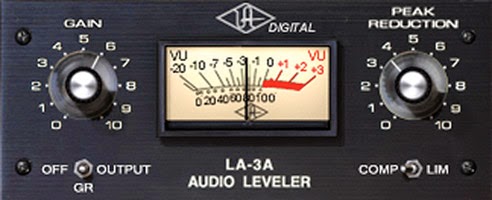
Universal Audio Teletronix LA-3A plugin image
It seems like a lot of you enjoy reading what kind of gear I like to use, as evidenced by the views for my top 10 mics, mic preamps, EQs and compressors. I'm going to continue the series with my "Top 10 Most Used Plugins."

Keep in mind that I use a lot of other plugs by other manufacturers, but these are the ones that I find are used somewhere on almost every mix that I do. Also, I'm a Pro Tools user, so some plugs are PT-centric.

1. Pro Tools 7 Band EQ: I love this plugin because it sounds pretty good, doesn't eat up any system resources, and has hi and low pass filters. Sometimes I'll just use it for the filters only (like on effects), but I always find a lot of these sprinkled across a mix in many other places.

2. Universal Audio 1176LN: My go-to compressor in most cases. UA has a lot of different variations in their Classic Limiter bundle, but this is the one that works best for me. I find it can just about work on anything if you adjust the attack and release times, but I'll almost always use it on bass for sure, toms, and probably vocals (although the UA LA-2A works great there as well).

3. PSP Vintage Warmer: Everything I use this on just sounds better, especially the mix buss. I rarely use much of it, but it makes a big difference on the glue of a final mix.

4. Lexicon PCM Native Hall: I love all the Lexicon reverbs, but I find I use the PCM Hall almost all the time, mostly for things that need depth like strings and pads. The Lexicon PCM Plate is a close second, but the Pro Tools D-Verb can be surprisingly good in many places as well.

5. Universal Audio Teletronix LA-3A: Back in the hardware days I always used these on electric or acoustic guitars, since I've never found anything better on those instruments. It's no different with the plugin. It's also good on keys.

6. Soundtoys MicroShift: I looked around for a long time for a plugin with that old Harmonizer sound. The MicroShift is the first plug that I found that really does it (although you can also now get the same sound from the Eventide Ultrachannel). It's dead easy to use and provides that extra presence or smoothing like nothing else.

7. Universal Audio Precision Limiter: There are other great limiters (like the Waves L series and the Slate Digital FG-X), but this is my favorite for the stereo buss to just take care of those nasty peaks that result in overs. I don't use much of it (a dB or 2), and it's very transparent already, so you don't hear it while it does the job.

8. TT Dynamic Range Meter: This is an excellent plugin that tells you when you're squashing the mix too much. It provides precision output metering, plus that great dynamic range meter, and its FREE. Let's keep the hypercompression out of music. Use this meter.

9. Pro Tools Long Delay: There are other great delay plugs (Soundtoys Echoboy and the PSP 42 and 85 come to mind), but this is the one I reach for all the time. It's not as versatile as many plugins, but it's fast to set up, and once again, takes up virtually no system resources (which can be important on a large mix). I alter it with a previously mentioned PT 7 Band EQ ahead of it to get the sound I need and keep it out of the way of the vocal.

10. Sample Magic Magic AB: This is one of my new favorites. It provides an instant AB against any audio file. You can load up to 9 sources to AB against, and easily match the level between them all for a tight comparison. Plus you can even loop a section if you want. It's great for making sure your mix is really in the ballpark.

Like I said before, there are a lot of other great plugins that I use by a variety of companies, and there are many that I haven't tried yet, but these are the ones that I use on every single mix that I do.

What are your favorites?
----------------------------------

Sunday, March 2, 2014

Major Changes Around The Corner For Music As Avid Delists

Avid a-la-mode image
It came as no surprise last week when Avid Technology received a notification letter from NASDAQ that the company would be delisted and trading of its stock would be suspended. For many of us in the creative end of the entertainment business who have watched the company try to battle through its troubles during the last few years, the question was more of “when” than “if” this scenario would happen. The writing had been on the wall for some time.

If you’re not aware, Avid Technology is the maker of video editing tools that are used at all levels and stages of the creative process in both television and movies. In 1995 Avid acquired Digidesign, the maker of Pro Tools, which is the standard audio editing hardware and software, giving the company leadership in both the audio and video editing sectors. In fact, Pro Tools is the standard digital audio workstation used in the creation of nearly every major motion picture and television show, as well as most of the music you hear today. While there are other very capable software audio packages available, Pro Tools is truly a universal standard when it comes to any audio job on a professional level.

But leadership comes at a price, as does being publicly traded. Over the years Avid has tried to wring every dollar out of its various technologies with what some would characterize as ruthless upgrade plans, and every time their substantial customer based would wince with pain but eventually give in. After all, if the rest of the professional world was doing it, you were forced to as well.

Of course what eventually happened was that the market became saturated both on the audio and video side, and you can only force someone to upgrade every year or 18 months or so, which isn’t exactly a great recipe for sustained growth. The company tried to expand by acquiring a number of companies with markets at the neophyte or even consumer level in an effort to increase its user base. Of course, as is often the case, Avid integrated those companies into their infrastructure, which unfortunately wasn’t capable of speaking to those markets, and the investments brought little of the expected return. As a result, the company began to hemorrhage cash and the stock went from a one time high of around $67 down to less than $5 when it was finally delisted. Read more on Forbes.
----------------------------------

You should follow me on Twitter and Facebook for daily news and updates on production and the music business.

Don't forget to check out my Music 3.0 blog for tips and tricks on navigating social media and the new music business.

Monday, April 8, 2013

It's Here - Pro Tools 11

Avid just announced the new Pro Tools 11, and like all new versions, there's a lot of like as well as a bunch of "got ya's." The video below explains everything new in great depth, but here are just a few of the new features.
  • It's newly coded from the ground up with a brand new audio engine, which means you'll have to buy all your plugins again.
  • It's 64 bit, which means that it'll be able to access much more RAM. That means it will handle many, many more tracks, plugins and virtual instruments with ease so it'll be a lot faster.
  • It now has offline bouncing that's up to 150 times faster than the way it does it now. What took them so long? This has been on other DAWs for ages.
  • Much improved metering with more precise scaling and ballistics, including peak and average VU and PPM meters.
  • The inclusion of the Avid Video Engine so that you can play and edit video directly from within PT.
  • Low-latency input buffering, so you can more easily record while using plugins.
It doesn't seem like a lot that's earth-shattering. It's going to cost you though, and in a world of so many other quality DAWs, that could be a deciding factor. The prices are:

Pro Tools 11 Software: $699
Pro Tools 10 to 11 upgrade: $299
Pro Tools 9 to 11 upgrade: $399
Pro Tools HD 10 to 11 upgrade: $599
Pro Tools HD 9 to 11 upgrade: $999


----------------------------------

You should follow me on Twitter for daily news and updates on production and the music business.

Don't forget to check out my Music 3.0 blog for tips and tricks on navigating social media and the new music business.

Monday, March 4, 2013

Top 10 DAWs For Songwriting

PreSonus Studio One screen image from Bobby Owsinski's Big Picture production blog
Songwriting is such a personal affair. Everyone does it differently and everyone has an idea on the best way to do it. These days, most people write with their favorite DAW to help them either flesh out the rhythm of the tune or simply remember any ideas. For some, that's a heartache in itself as sometimes there's more time spent on the technical aspect of the DAW than on the actual writing.

That said, here are the top 10 DAWs for songwriting as stated by songwriting.net.

1. PreSonus Studio One

2. Propellerhead Reason

3. FL Studio

4. Acoustica Mixcraft

5. Apple Logic

6. Sony Acid Pro

7. Steinberg CuBase

8. Avid Pro Tools

9. Cakewalk Sonar

10. Ableton Live

I'm not sure that I agree with everything on this list, especially the order, but then again, to each his own when it comes to DAW choices. I sometimes think that the easiest thing is a simple handheld recorder by Zoom, Tascam or even a recording app on an iPhone to capture the ideas. You can always flesh them out later on the DAW. Then again, if you're writing around beats and loops, then the songs starts in the DAW in the first place.

What's your choice?

----------------------------------

You should follow me on Twitter for daily news and updates on production and the music business.

Don't forget to check out my Music 3.0 blog for tips and tricks on navigating social media and the new music business.

Monday, December 31, 2012

Predictions From Last Year

Tablet Audio from Bobby Owsinski's Big Picture blog Last year at this time I made 7 predictions about things that would happen in 2012. Let's take a look at how I did. My current comments in italics.

1. Tablets take off for music production. For such a relatively new class of products, tablets like the iPad have quickly become a must-have device. While we've had some great music software available for it in 2011 (Garageband is insanely good for only $5), 2012 brings us the serious I/O and accessories needed to take advantage of it's portability. Hit this one on the head. Tablets took off in a big way with both some serious I/O and software entering the market late in the year. 

2. Plugins hit the wall. Yes, plugins sound great these days but that's the problem. Where do you go from here? When all the great analog hardware is successfully digitally duplicated by multiple companies (and even surpassed in some cases), it's harder and harder to come up with something new. Add to that the fact that the market is saturated, and you'll see some software companies falling on hard times in 2012. While there seems to be some plugin fatigue due to a lot of duplication (just how many compressors, flangers, chorus and delays can you make?), plugins still haven't hit the wall. This prediction may have been a year too early.

3. Pro Tools weathers the storm. While it may seem like this is the time when the Pro Tools hold on the audio industry is finally broken, let's not get too hasty. It's still the standard of the music and post business, and the pros (especially the big facilities) can't afford to make any changes now even if they wanted to (and they don't). If the pros use Pro Tools, than those aspiring to be pros must use it as well. We very well may see a new contender to the throne in 2012, but don't expect any big industry changes. Pro Tools does indeed look more vulnerable than ever, but there's been little erosion of their user base in 2012. I suspect that what will happen is that something new will sneak up on us in a way that before you know, everyone will be using it without much fanfare (Reaper perhaps?), but that's not happening as of yet. Scored on this one.

4. Studios make a comeback. Finally gear owners everywhere are beginning to realize that just owning the gear isn't the key to great sounding music (although it can be if you know how to use it, so keep buying those books, please) and the benefits of recording in a real studio. Look for the trend to continue in 2012 with even some new facilities coming online. Most of the larger studios are relatively busy, but they're not turning away business either. While it seemed like there was a major comeback underway there for a minute or two, it hasn't materialized as I thought it would. A miss.

5. SSD's are everywhere. I predicted this last year, but it was a bit premature. In 2012 you'll see the beginning of the end of the spinning mechanical hard drive and the inclusion of solid state memory in just about every newly designed piece of music gear. Add to that the fact that hard drives have actually gone up in price thanks to the recent floods in Thailand while SSDs (solid state drives) have continued to fall, and you'll find that you might have bought your last ever mechanical hard drive. Missed on this one too. SSDs may be the way of the future, but even the hard drive shortage didn't bring down the prices enough for everyone to forget about spinning magnetic drives.

6. Apple gets into the television business. This isn't directly about music production, but it does apply in a round about way. It's been rumored for a while that Apple will be introducing their own branded television soon, and that seems inevitable at this point. The bigger rumor is the fact that the user interface is every bit as groundbreaking as just about every other Apple hardware or software product. As a result, the digital living room will finally come pass in 2012. Virtually every other product that the company has released has affected music production, from their desktops to the Macbook Pro to the iPod to the iPhone (have you heard some of the music recorded on it?) and iPad. I predict that elements of the user interface of the iTelevision (or whatever it's called) will find it's way into the gear that we use to produce music, making things simpler and easier in the process. And this will happen in 2012. I think I missed this by a hair. The Apple TV was reportedly scheduled to make its debut late in the year but was pulled back to work on some interface and licensing issues. The rumors now are that we'll see it at MacWorld in late January. How will that affect the audio business? We'll still have to see.

7. EDM breaks out in a big way. Electronic Dance Music is the biggest trend that the mainstream music world still doesn't know about, but not for long. 2012 will be the year that it finally breaks out. Here's another one that I hit on the head. EDM definitely broke out big time in 2012.

Okay, so I only hit 3 out of 7, but that doesn't mean that the other 4 won't come to pass. In fact, you may see them all as a mainstay by the end of 2013. Have a happy new year everyone!
----------------------------------

You should follow me on Twitter for daily news and updates on production and the music business.

Don't forget to check out my Music 3.0 blog for tips and tricks on navigating social media and the new music business.

Thursday, November 8, 2012

Just How Much Trouble Is Avid In?

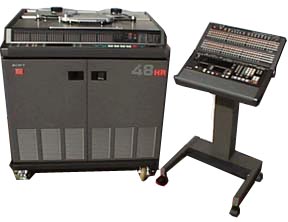
Sony 3348HR digital audio tape recorder image from Bobby Owsinski's Big Picture blog
Sony 3348HR Digital Tape Recorder and Remote
I remember when the commercial studio world revolved around the Sony 3348 48 track digital tape recorder. If you owned a studio that catered to major label clients, this machine was an absolute necessity, and at a cost of around $250k each, they were a major investment that a studio owner had to make to stay in business - for about 6 months. It seemed that as soon as every major studio finished their investment cycle with these machines that their use and value fell like a rock, thanks to the rapid transition in the music world to Digidesign's Pro Tools digital audio workstation as the storage medium of choice.

Today you can find a 3348 for a couple of grand, but most owners would probably even pay you to take the big bulky hulk of metal off their hands. This one-time superb piece of audio technology became a boat anchor in almost no time, and unlike analog gear from that era, has virtually no chance of having new life breathed into it via the vintage market. It sounded great for it's time, but it's quality and function is not even in the ballpark of what we can buy today for a mere fraction of its original cost.

Pro Tools has gone on to completely change several areas of the audio business, from music to broadcast to post, and has become the de facto standard in most professional settings. That said, it's now owned by Avid, a company previously known for it's video editing software (the video equivalent of Pro Tools) than anything else. The problem is, Avid is in trouble.

Avid's trouble started when Apple introduced Final Cut, which was cheaper than anything that Avid had to offer and eventually just as capable. Soon the market was saturated between the two systems, with virtually no growth left, so Avid purchased Digidesign to get a piece of the still growing professional audio market. Eventually that topped out too, so the next move was to go into consumer audio and Avid acquired M-Audio among other similar companies. To many of Avid's stockholders, the company was on a roll as stock prices reached a high of over $28.

But the audio business, consumer and professional combined, is actually quite small compared to other businesses, and once again Avid was undermined by Apple and their Garageband software and less expensive versions of Logic. Suddenly the stock was in trouble and began to drop like a rock. Earlier this year, the company decided that it had enough of the consumer business and sold it off in order to stop the stock price hemorrhage. The existing professional audio and video market is pretty finite though, and competition is tough, which means that Avid's revenue has fallen from a high of $12+ this year to just half of that today as investors continue the rush to sell. They understand the stock price isn't coming back.

Which brings us back to the Sony 3348. You can own the market and almost overnight lose it if something newer, cheaper, and better (or two of the three) comes along. You can also lose it if the company is struggling financially and there's no money left for innovation. I think you can see where this is going - Avid is in trouble.

In recent months long time Avid employees have been jumping ship for other companies in the industry, seeing the writing on the wall. That's never a good sign. And the company didn't even show at the last AES convention in San Francisco a couple of weeks ago. Not a good sign either.

I don't think that Pro Tools would ever go away overnight the way the Sony 3348 did because the installed user base is so high (especially in post and broadcast), but I wouldn't be surprised if we see some changes in the company in the very near future. One thing I do know, there are a number of other companies out there circling like vultures preparing to pick up the pieces of Digidesign, whatever they may be.

Watch this story carefully over the next few months.

----------------------------------

You should follow me on Twitter for daily news and updates on production and the music business.

Don't forget to check out my Music 3.0 blog for tips and tricks on navigating social media and the new music business.

Tuesday, September 11, 2012

5 Best Audio Editing Apps?

Adobe Audition Timeline from Bobby Owsinski's Big Picture production blog
Adobe Audition Timeline
Lifehacker recently ran a survey trying to find the 5 best audio editing tools, and it turned up some interesting and surprising choices. Granted, Lifehacker is not a site with a core audience of audio professionals, but it's still interesting to see exactly what computer literate people consider when it comes to their audio editor of choice. So here we go:

1. Audacity (56% of the votes) - I can see why this was chosen since it's a fairly powerful audio app and the price is right (free). Plus, it's cross platform.

2. Adobe Audition (14%) - I think that a lot of people use this because it's included as part of the Adobe Creative Suite.

3. Avid Pro Tools (10%) - The big daddy in the pro world, Pro Tools has dominated music, film and broadcast for the last decade. If you're going to be a real-world pro, use anything else at your own risk.

4. Reaper (10%) - Here's a DAW that's coming on strong. The price is only $60, and so many people rave about it that I can see it taking over as the top dog if Pro Tools should ever falter.

5. Ableton Live (10%) - If you're making or working with electronic music, then Ableton Live is the center of your universe. If electronic music isn't on your radar screen, then probably neither is Live.

There was also honorable mention for Goldwave, which I wasn't even aware of, and Soundforge, which as noted in a previous blog, is coming to the Mac soon after a long run as a PC-only app.

So now it's your turn. Think the survey got it right? Oh, and if you decide to purchase any of the above workstations, help support this blog by starting from this link.
----------------------------------

You should follow me on Twitter for daily news and updates on production and the music business.

Don't forget to check out my Music 3.0 blog for tips and tricks on navigating social media and the new music business.

Thursday, August 23, 2012

Sony To Release Sound Forge On Mac Platform

For years thousands of PC users have raved about Sound Forge in terms of its sound and ease of use. In pro circles, Digidesign's Pro Tools has reined supreme on the Mac, but since its purchase by media giant Avid, the outlook for the DAW is beginning to seem a bit shaky, as Avid's stock price plummets and long time employees bail.

Perhaps seeing an opening in the market, Sony has finally decided to port Sound Forge Pro to the Mac platform. Rewritten and rethought, it looks slick, and although I don't think that it will initially get hard-core pro users to switch, just being a viable alternative in waiting to Pro Tools if something dire should happen should be a comfort to many users, and an opportunity waiting to happen for Sony.

Here's a short introductory video about Sound Forge Mac. What do you think?


----------------------------------

You should follow me on Twitter for daily news and updates on production and the music business.

Don't forget to check out my Music 3.0 blog for tips and tricks on navigating social media and the new music business.

LinkWithin

Related Posts Plugin for WordPress, Blogger...