Get This Free Cheat Sheet Guaranteed To Help Your Next Mix

Friday, February 20, 2015

Eric Garland Talks Guitar Center Finances On My Latest Inner Circle Podcast

About a year ago bass player and analyst Eric Garland started a firestorm after he posted on his blog that Guitar Center's finances were a mess.

A few weeks ago he fanned the flames again after he declared that the end of the giant retailer might be closer than you think.

I'm pleased to have Eric on the podcast to discuss just how he came to those conclusions and to give us a quick lesson in financial engineering.

During the podcast intro I'll also discuss the 4 recommendations from the US Copyright Board regarding finally bringing copyright into the 21st century, as well as the new MQA audio file format.

Remember that you can find the podcast either at BobbyOInnerCircle.com, or on iTunes or Stitcher


Don't forget to check out my Music 3.0 blog for tips and tricks on navigating social media and the new music business.

The Beatles "Something" Isolated Bass

After The Beatles became hit makers Paul McCartney played more and more keyboards on basic tracks and did all his bass tracks as overdubs. Paul liked this process because he felt it helped him forge a better bass line that fit better with the other layers of the song. Some say that's why his lines were so melodic, and nowhere is this more in evidence than in George Harrison's classic "Something" from the classic Abbey Road album.

Here's the isolated bass track and some things to listen for.

1. You can hear the influence of Motown's James Jamerson in the way connects the notes between sections, weaving a line that gets from one part to another in a sometimes unusual manner.

2. The part is busy by today's standards with some sections that make you think, "How'd he think of that?"

3. The part isn't played perfectly as there are some occasional brief timing issues, usually being a little late on a note.

4. The very last note of the song is a flam.


Don't forget to check out my Music 3.0 blog for tips and tricks on navigating social media and the new music business.

Thursday, February 19, 2015

Moog Takes Us Back To The Future

Moog Modular Keith Emerson model image
Moog Modular Keith Emerson model
As I stated in my NAMM report, Moog Music has brought back some of its classic modular synths from what many claim to be the "golden age" of electronic music back in the 1970s. These include the System 55, 35 and 15, and a special Keith Emerson replica version that will go for a whopping $150,000.

These things aren't for the faint of heart since you really have to know about the inner workings of synthesis in order to make them sing, since there's no presets to rely on. Of course, that's exactly why we love them so much as well. Each sound is completely nuanced based upon the programming, not an algorithm.

Here's a very cool movie about modular synthesis featuring a variety of synthesizer heavyweights including Malcolm Cecil, Dick Hyman and Suzanne Ciani, who really pioneered the use of the instruments back when they were first new.

You can find out more about Moog Modulars here.


Don't forget to check out my Music 3.0 blog for tips and tricks on navigating social media and the new music business.

Wednesday, February 18, 2015

The 3 Eras Of Record Production

Although the position of record producer seems like a modern aspect of the record business, the job has been around from the beginning of recorded music. Through the years, the profession has become more refined in terms of responsibilities, but the job has become more complex as well. To illustrate the evolution of the music producer, here's an excerpt from my Music Producer's Handbook that breaks the profession into three distinct eras which we’ll call “the early record label era,” “the mature music era,” and “the independent era.”

"The Early Label Era
Although recorded music goes as far back as 1857, it wasn’t actually turned into a business until around 1900. Because of the primitive nature of the recording equipment, the recordist acted as more of an archivist than a producer in that he (it was almost always a man) was just trying to capture the music onto a medium suitable for reproduction. The composers, arrangers and band leaders of the day had final say in regards to the direction and style of the music, just as many do today.

Several pioneers of the era including Ralph Peer and Lester Melrose (more on them in a bit) began to record less accessible and popular forms of music in an effort to target specific audiences with the music they were recording. The “producers” of this period were part talent scout, part entrepreneur, and part technician, sometimes going on location and holding massive auditions until they found the music that they thought to be unique. They were also some of the people who eventually gave the music industry and record label executives a bad name by stealing copyrights, not paying royalties and stereotyping groups of people with terms like “hill billy” and “race” music.

The Mature Music Era
As the music industry matured, record labels began to employ men (once again, they were almost always men) specifically to discover talent, then shepherd that talent through the recording process. These were know as “Artist and Repertoire” men or “A&R” men that were in fact, the first vestige of the producer that we know today. Unlike the A&R men of today who are mostly talent scouts and product managers, A&R people of that era were usually well schooled in music, being talented composers and arrangers themselves, and were in charge of everything from signing an artist to finding songs to overseeing the recording, just as today’s producers do.

But producers began to have more control over production as magnetic tape became the production media of choice. Now it was easy for multiple takes, and as two, three and four track machines became available, the ability to separate instruments brought a whole new palate of possibilities. First the first time, the producers role became as technically creative as it was musical.

Still, producers off the era were little more than label employees, sometimes not even receiving a bonus despite being directly responsible for the success of the labels artists and their sometimes massive amounts of label income (such as the case between EMI with George Martin and The Beatles).

The Independent Era
As the technical possibilities continued to soar, so did a quiet rebellion on the business side of production. Even though independent record producers existed going back to the 50’s with Sam Phillips (of Elvis, Johnny Cash and Jerry Lee Lewis fame), Phil Spector, Creed Taylor and Joe Meek, they all had their own record labels and it was lot easier to be in control as a producer if you were the label owner too.

The true revolution began when George Martin left music giant EMI to go independent in 1969. Until then, producers were little more than salaried staff with no participation in the profits they had such a big part in developing. After having to fight for a small bonus after The Beatles literally made EMI a billion dollars, Sir George decided to use his considerable leverage to obtain a piece of the action by leaving his EMI staff position and going independent. Soon many other successful producers followed, being able to cash in on large advances as well as a piece of their best-selling artist’s pie.

Sir George Martin and The Beatles image

Figure 1.1 Sir George Martin in a Session With The Beatles

But fortunes turned, as they so frequently do. After a while, record labels began to see producer independence as a bargain by being able to wipe out the overhead of a salaried position by turning the tables to where hiring the producer became the artist’s expense instead of the label’s. This meant that the label could afford the best production talent in the world and in the end it wouldn’t cost them a dime as long as the record sold.


As time went on, the producer took more creative control, becoming everything from a coach to a guidance counselor to a psychiatrist to a svengali. Some producers like Holland-Dozier-Holland at Motown and Stock-Aitken-Waterman used a factory approach, where the artists were interchangeable and subordinate to the song. Some, like Phil Spector and Brian Wilson, had a grandiose vision for their material that only they could imagine until it was finished. Some like Ted Templeman, Tony Brown and Dan Huff, Moby and Dr. Dre changed the direction of a style of music. And some like Quincy Jones, saved the music industry from itself and started the longest run of prosperity it would ever see."


Don't forget to check out my Music 3.0 blog for tips and tricks on navigating social media and the new music business.

Tuesday, February 17, 2015

How Ultrasonics May Change The Way We Control Things

Knowles MEMS ultrasonic digital microphone image
Knowles has been making specialty audio gear since 1947 and you use many of their products every day without even knowing it. Their tiny microphone and speaker products are found in a variety of cell phones, game controllers, television, computers and headsets, and their condenser mic capsules have long been a place where specialty mic designers have started from.

The company has a new audio product that could actually change the way that we use touch screens. The size of the tip of a pen, it can sense when ultrasonic frequencies are being disturbed, which would allow a user to control a device screen via a hand or finger gesture up to 12 inches away.

The ultrasonic MEMS (micro-electro-mechanical-system) microphone is a true digital microphone with a frequency response up to 80kHz. It's specifically built for low power applications like in a mobile device, but I can see it being used in other applications as well.

For instance, although Slate Digital's Raven controller is an incredibly innovative product, I question the long term use of the touchscreen. It seems like constant arm reaching would result in some sort of repetitive stress disorder like tennis elbow or even something we've not experienced yet. A screen with MEMS would allow you to sit back in your chair and control the screen without a long arm reach.

Of course, being able to control your tablet or phone without touching it would speed up operations, which would be important when mixing a show or setting up a monitor mix.

To be sure this technology has been tried before but hasn't caught on mostly because your finger had to be within 2 inches of the screen, which defeats the purpose of the idea. MEMS could solve all that.

We sometimes forget about the audio out of our natural hearing bandwidth, but Knowles MEMS technology reminds us that ultrasonics can be useful too.


Don't forget to check out my Music 3.0 blog for tips and tricks on navigating social media and the new music business.

Monday, February 16, 2015

New Music Gear Monday: Grace Design Felix Blender Pedal

Grace Design Felix pedal image
Here's a very cool device that even though it seems to be more live oriented, I can see being used in the studio as well. It's something new from Grace Design called Felix, and it's an acoustic instrument preamp/blender pedal.

Felix is specifically designed for blending the sounds of an acoustic instrument together so it has an input for the built-in pickup of the instrument, plus another for a mic featuring one of those great Grace preamps. It also has an extra 1/4 input so that you can switch from two different guitars if you want.

The top panel is pretty complete in that it has an independent EQ section for each channel that features hi and low pass shelving filters, a parametric EQ, and a very cool notch filter that can be a Godsend for certain acoustic instruments.

There's also 10dB of boost for soloing, a mix control, and an amp output control that also sends to a built-in headphone amplifier.

Then there are the footswitches. The first is an A/B switch so that you can switch between channels, a boost switch, and a mute/tune switch that mutes all the outputs except for a dedicated tuner out.

The outputs of Felix are pretty impressive. Four 1/4 inch jacks include tuner out, dedicated amp output, an effects insert and effects output. It also has two direct outs on XLR's, one for each channel, which can be separate or #2 output can supply a blended output.

Additional controls include 48V, phase reverse, mid-range frequency, and notch filter frequency selection on the side panel.

While Felix looks more like a live device, I can see it in the studio as well, since it has some features that would make it easier to get a great sound before it even hits your preamp. If a player already has the variables of his sound dialed in, you can see how the recording would be up and running in a flash.

The Grace Design Felix isn't cheap at $995, but considering the consistently high quality of Grace products, it seems to be worth every penny. The unit should be available in April.

Don't forget to check out my Music 3.0 blog for tips and tricks on navigating social media and the new music business.

Saturday, February 14, 2015

Hollywood Sound Designer Scott Martin Gershin On My Latest Inner Circle Podcast

Scott Martin Gershin image
This week on my Inner Circle Podcast I'm pleased to have my good friend sound designer Scott Martin Gershin. Scott has worked on some of the biggest Hollywood blockbuster films including Pacific Rim, Gladiator, Star Trek, Hellboy and about a hundred others. He's also worked on a number of television shows and video games (including Final Fantasy and Resident Evil), so he's seen it all when it comes to working at the highest levels in a town that only wants the best.

Scott will give you some inside info on field recording (especially getting realistic gunshot sounds) as well as his thoughts on going to the mix stage with 2,000 tracks of audio across 6 Pro Tools rigs!

On the intro I'll talk about why opening acts for big concert acts lose money as well as a number of tools under $100 that will help boost your productivity.

Remember that you can find the podcast either at BobbyOInnerCircle.com, or on iTunes or Stitcher

Friday, February 13, 2015

Jimi Hendrix "Third Stone From The Sun" Isolated Guitar

Here's a real treat. It's an isolated guitar part from the Jimi Hendrix Experience's "Third Stone From The Sun" from the first Are You Experienced album. Here's what to listen for:

1. The guitar begins in stereo with the drier side to the left and the effect to the right. At 2:31 it pans out across the stereo spectrum back and forth, and does so for the remainder of the song.

2. Listen to the subtle delayed reverb, which you can hear better during the panning after 2:31, and a lot after 6:00 when the level is increased.

3. I love the fact that Jimi changes pickups frequently to change the sound in different sections of the song.

Thursday, February 12, 2015

Get Ready For A New Audio Format

Screen Shot 2015-02-05 at 10.55.40 PM
One might say that we need another audio format like we need a hole in the head, but here's a new one that actually makes some sense. The good people at high-end Meridian Audio have come up with an interesting way to pack a lossless encode into an MP3 container.

The new format is called MQA (Master Quality Authenticated) and is backwards compatible with any player that can play a standard MP3 file. If the player has an MQA decoder, the listener can enjoy full lossless hi-resolution audio as well.

There's another part to this that's interesting. The actual music file that is being downloaded or streamed can first be authenticated by the owner (the artist or record label). If you're using Meridian's new MQA decoder hardware a little green LED will light to tell you that you're listening to an authenticated version.

It's still not clear exactly how this new format works, although the lossless part seems to unfold as either a FLAC or ALAC file so at least there's no proprietary format secretly wrapped in. Remember that Meridian was responsible for the lossless MLP format used in DVD-Audio discs, although that doesn't seem to be part of this format as far as I can tell.

Meridian feels that this format will take the music and audio world by storm, but only a few companies have officially signed on so far. Hi-res download site 7Digital and streaming service TIDAL might be the most significant, since the benefits for streaming are obvious in being able to deliver hi-res audio with less bandwidth.

The major labels also appear to enthusiastic, as the beauty is that a label won't have to issue two separate releases - one an MP3 and another hi-res so it will keep the inventory down.

So what do you think? Are we ready for a new format? Is this something that you'll think will help the music business or just another wave of the hi-res flag hoping that someone will salute?

You can find out more about MQA on Meridian's dedicated website.

Wednesday, February 11, 2015

Drum Tuning For Engineers

Criss-cross drum tuning image
There's no doubt that getting a drum sound is the number one priority for any recording that has a drummer. Sometimes you luck out and the drums sound great by just putting the mics up, but other times they require some care in order to make them sound the way you want.

The first best thing that can be done is to change the heads, but the drum still has to be tuned, and many times the drummer isn't that much better than the engineer when it comes to making those babies sing.

Here's an excerpt from my Recording Engineer's Handbook 3rd edition that describes the best method for tuning the drums.

"Unless you’re already a drummer, you probably aren’t aware of the proper way to tune a drum. The process is actually quite simple, but does take some time and experimentation. The idea is to make sure that all of the tension rods that hold the head on have the same tension at each lug. What you want is for the pitch to sound the same at each lug as you tap near it. Here’s how it’s done:
  1. Hit the head an inch in front of each lug of the drum. Is the sound the same at each lug? 
  2. Using a drum key, adjust the tension so that the sound is the same at each lug. Is the sound the same at each lug now?
  3. When the pitch (the tension) is the same at each lug, then when hit the drum in the center. It should have a nice even decay.  
  4. Using the same technique, tune the the bottom head to the same pitch as the top head. What does the drum sound like now when you hit it in the center? Is the tone even? Is the decay even? Are there any overtones?
TIP: For faster and more even tuning, adjust the lugs in a criss-cross pattern as shown on the left.


Tuning Between the Top and Bottom Head
 There are three ways to tune drums that use a top and bottom head: 
  • The top and bottom heads are tuned to the same pitch. This provides the purest tone and longest sustain.
  • The bottom head is tuned lower than the top. This provides a deep sound with a lot of sustain as well as a pitch drop or "growl." 
  • The bottom is tuned higher (tighter) than the top. This also produces a pitch drop  sound, although it’s a bit shallower and has a shorter sustain. 

When the drum is first tuned, both heads are tuned to the same pitch. After the correct pitch for the top head is selected, tune the bottom head anywhere from a third to a fifth away from the top head if that’s the sound you’re looking for."

Tuesday, February 10, 2015

Don't Buy 3 TB Hard Drives

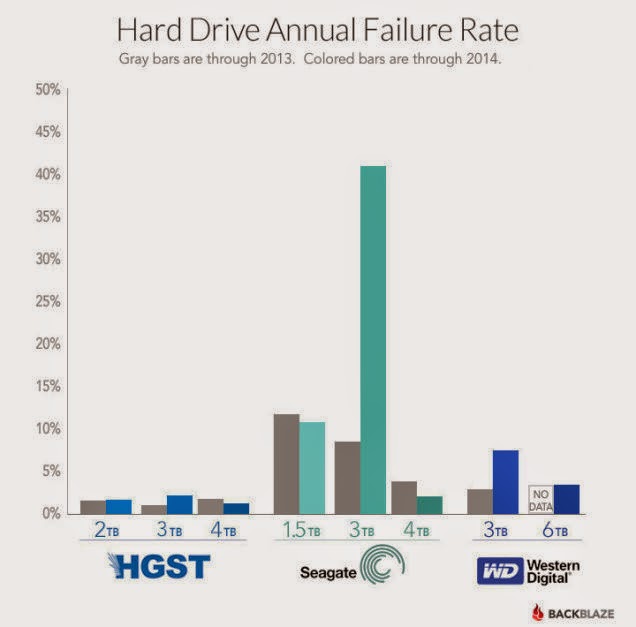
Hard Drive Annual Failure Rate imageFor music and audio professionals, we live and die by our DAW and that means everything attached to it as well.

Recently the backup company Backblaze evaluated their more than 41,000 drives and found that 3 Terabyte hard drives had a fairly high failure rate as compared to any other size.

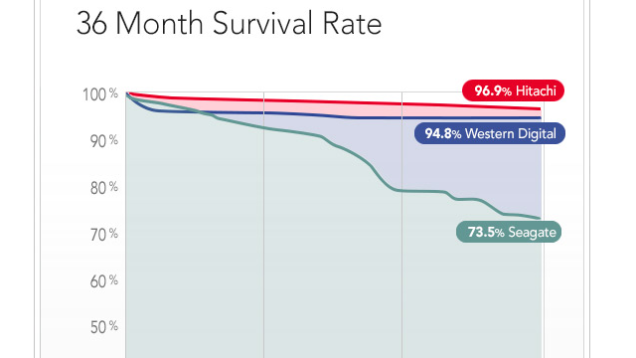
There's also some evidence that regular old consumer drives are at least as reliable and maybe even more so than the higher priced enterprise drives. Also that Hitachi drives were the most reliable, followed by Western Digital with the least reliable being the Seagate.

Hard Drive Annual Survival Rate imageWhat's should you buy? The company recommends 4 TB drives (like this one) for both value and reliability.

2 TB drives are a real bargain now as well. Be sure to buy 2 (one for backup).


Monday, February 9, 2015

New Music Gear Monday: Devialet Phantom Monitor Speaker

Devialet Phantom image
Usually when I post a piece of gear on New Music Monday it's because it's something new that I spotted that I think might be useful to at least some of my readers. I rarely get to try the piece myself. Then again, it isn't a review that I'm posting - it's more of a heads-up than anything else.

Today's product I have played with a little and it's a mindblower. It's the Devialet Phantom monitor speaker, and it just might be the leap in speaker technology that we've all been waiting for.

The Devialet Phantom a rather small egg-shaped active three way monitor that features dual woofers that fire out the sides. It includes Devialet's own amplifiers that have what they call ADH technology (which from what I can gather is a hybrid analog and digital power supply that uses the the analog portion as a sort of bias for the digital side). The French company has been awarded 77 patents and has racked up 37 sound and design awards for the amplifier since it was released in 2010.

The Phantom is aimed at the audiophile market and their specs are a function of that so I won't quote them here. The only thing that counts anyway is the sound. So how did they sound?

I have never heard such low end from such a small speaker. Unbelievable. I was just in two of the best mastering houses in Hollywood and the subwoofers they used to reproduce that bass were both huge and expensive. As far as the mid and hi-frequency range, I was hearing things that I didn't hear during the microscope of mastering. In fact, I was hearing all sorts of flaws with my mixes that made me want to immediately go back and tweak. These things are surgical, but I bet you can get a great mix with them.

What was hard to believe was that all this sound was coming out of something that was only 10 inches x 10 inches x 13 inches, in a hotel room with no special acoustic treatment! Many speakers today can get you some low end, but few can get you the sub-bass that the Phantoms reproduced, especially considering their size.

The other thing that was interesting is that they were being connected wirelessly! You can connect to them digitally via lightpipe if you want, but what I was heard was through a hot spot convertor that Devialet calls "Dialog." Don't forget, the speakers are meant for consumers so they're capable of being spread out in different rooms like a Sonos system and can be sent audio via a free app. As far as I could tell, no degradation.

One of the downfall of audiophile-style speakers in a recording or mixing environment is the reliability factor. The things tend to blow up on the first big kick hit or dropped microphone that happens. Manual De La Fuente (Devialet's general manager) assured me that the DSP inside the Phantom would prevent that from happening, as it senses signal conditions and instantly adapts before any mechanical or thermal problems arise.

Once again, I'm generally skeptical of audiophile anything, but what I heard was certainly worthy of checking out further. I'd love to get these into my studio for a try. That said, both Sting and producer Rick Rubin are said to have given them a thumbs up as well, so at least there are some other pros that initially feel as I do.

The Devialet Phantom won't be available until April in the US. The best part is that they're priced very reasonably for a high-end speaker at $1,990 each for the Phantom and $2,390 each for the more powerful Silver Phantom. Check out more about it on the Devielet website.

Here's what the Phantom looks like inside.

LinkWithin

Related Posts Plugin for WordPress, Blogger...