Get This Free Cheat Sheet Guaranteed To Help Your Next Mix

Showing posts with label Universal Audio. Show all posts

Tuesday, April 5, 2016

Kevin Killen On Mixing With Limited Processing

Kevin KillenKevin Killen is a great engineer with a host of big time credits (U2, Elvis Costello and Peter Gabriel, for instance) and he's been much in demand as a mixer for a long time. When I wrote the first edition of The Mixing Engineer's Handbook, Kevin was one of the mixers I most wanted to interview, and that interview is one of the best in the book.

Here's a great video where Kevin explains how he mixes in the box, and how he applies his processing mostly to subgroups rather individual tracks, as well as the way he adds effects.


Thursday, November 12, 2015

A Session With An Original Universal Audio 610 Console

UA 610 Console Session image
Engineers and producers have a long love affair with tube consoles, and well they should. You just can't beat some of that original hardware when it comes to a big, fat sound. It's something that seemed so instant back in the day, but we have to constantly work to get today.

Here's a cool video that shows a session using Neil Young's vintage UA 610 console. It features a bunch of talented musicians who just happen to work at Universal Audio, and is run by Neil Young's engineer John Nowland.


Wednesday, September 9, 2015

Using the 1176 - The Bones Howe Setting

1176 Bones Howe setting image
The Universal Audio 1176 limiter is a perennial favorite compressor limiter, but there are some standard settings that work especially well.

Here’s one used by the famous Los Angeles engineer Bones Howe, who engineered so many great hits of the 60s and 70s by Elvis, Frank Sinatra, Mama’s and Papas, Johnny Rivers and many more.

This is one of the bonus tricks from my 101 Mixing Tricks coaching program. Get 4 more killer tricks at 101MixingTricks.com.


Thursday, September 3, 2015

A Tour Of Universal Audio

UA Factory Tour image
I'm a big fan and user of Universal Audio gear and plugins, so I was fascinated by this video tour of the UA facility. It was shot by Vintage Audio and narrated by CEO Bill Putnum Jr, the son of the legendary engineer and inventor Bill Putnum. Check it out.


Monday, August 10, 2015

New Music Gear Monday: UAD AKG BX-20 Reverb Plugin

Universal Audio AKG BX 20 plugin image
It may be hard to believe but in the days before hardware digital reverbs and plugins there were few inexpensive ways to generate ambience during a mix. Not many studios had the room or the expertise to build a live chamber and plate reverbs were expensive, leaving the lowly spring reverb as the only low cost alternative.

That being said, there was a very well made high-end version of the spring reverb that found its way into many studios - the AKG BX 20.

Many an engineer loved the BX 20 sound, but there weren't many originally made and there are even fewer around today. That's all been changed with the introduction of Universal Audio's plugin version of the famous reverb. UA emulated what they felt was the best currently working example of unit, one owned by producer Jon Brion.

While the plugin has all the parameter controls of the original unit, UA also included a few "digital-only" features like decay, volume and pan, link, dry/wet blend, predelay and low cut filter, none of which are found on the hardware version.

The UAD BX 20 spring reverb plugin works on UAD-2 hardware and Apollo interfaces and is endorsed by AKG Acoustics, the original maker of the hardware unit from the 60s. The price is $199. Check out the video below to hear what it sounds like and go to the UA site for more info.


Tuesday, March 17, 2015

My 5 Favorite Effects Plugins

Since everyone seems to enjoy reading about the gear I like to use, here's yet another post on the subject. This time it's on my 5 favorite effects plugins. If you missed it, you can can read about my favorite compressors, equalizers, microphones, preamps and most used plugins.

1. Soundtoys MicroShift - The MicroShift emulates the sound of the famous Eventide Harmonizer, and anyone who's used one of the various hardware versions knows that there's nothing else that sounds like it. The same goes for the Micropitch (except for the Eventide's own Ultra-Channel). If you want to widen out a guitar track, make a keyboard more interesting, or smooth out a pitchy vocal, this is the plug to do it.

2. Pro Tools Dual Delay - There are lots of other great stereo delays on the market and they all well, but I find myself always coming back to this basic Pro Tools native plug. It's simple and easy to use, doesn't eat processor power, and has plenty of features for the majority of situations you'll face.


3. Lexicon PCM Reverb Bundle - Once again, there are a lot of great sounding reverbs on the market, but there's something about the Lexicon bundle (which includes a hall, plate, chamber, and room) that just seems to meld a track together so well. Just like the famed Lex hardware units that were the standard in studios for decades, Lexicon reverb plugins are hard to beat. (Honorable mention to the Pro Tools native D-Verb, which always seems to work when you need some extra ambience without having to sacrifice computer processing).


4. Universal Audio EMT 250 - I'm a big Universal Audio proponent and one of the best things they've done is a great emulation of the world's first digital reverb - the EMT 250. The 250's limitations were actually its strong points, with a limited bandwidth that means it always sits well in a track. Hard to beat for drum ambience.

5. Universal Audio MXR Flanger/Doubler - For modulation, it's hard to find a more versatile plugin. It does deep flanging and excellent doubling (although the Boss CE-1 admittedly has a sweeter chorus), which works really great when it comes to subtly widening a keyboard or just plain making it more interesting. I find new uses for it all the time.

There you have it. You'll see at least a couple of these on every mix that I do.

If you want to learn some really great mixing tricks using some of the above plugins, check out my 101 Mixing Tricks coaching program.
----------------------------------

Sunday, September 21, 2014

New Music Gear Monday: UAD AMS RMX16 Plugin

There is so much new gear coming out for the upcoming AES show that it's an exciting time. One of the things I'm most excited about is the new AMS RMX16 plugin for the Universal Audio UAD platform. The original hardware box had a very distinctive sound that, along with the SSL 4k buss compressor, is really the sound of the 80s in many ways.

The algorithms in the RMX16 plug are exactly the same as the hardware unit, and includes those wonderful Ambience and Non-linear programs that we all used so much way back then. There are also a number of features that are unique to the plugin that weren't on the original hardware unit like dry/wet mix, wet solo, and much easier editing.

The plugin costs $349, and of course, you need a UAD-2 DSP card or Apollo interface. Check out the video below that features Mark Crabtree, the original designer of the RMX16.


----------------------------------

Sunday, July 20, 2014

New Music Gear Monday: UAD Valley People Dyna-mite Plugin

There are already so many cool compressors and limiter plugins available that you'd think there was none left to either invent or emulate. You might change your mind after hearing the new Universal Audio/Softube emulation of the Valley People Dyna-mite limiter/gate though.

The Dyna-mite was an interesting hardware device released by the short lived Valley People Inc in the 80s, which was the brainchild of the great audio designer Paul Buff. It was perhaps the least expensive pro unit available at the time, mostly because it was supplied in a plastic box instead of a 19 inch rack mount. It did have a couple of very unique functions and sounds though, and Softube and Universal Audio have managed to emulate them all.

First of all, the limiter is about as kick-ass on percussion as you can get. If you want an aggressive sound that really smacks, this plugin can really give it to you. Most unusual is the fact that the plug (like the hardware device) also has a de-ess and gate/expander function, and like the limiter, they react differently than most of the other plugs that you're probably using.

If you want a plugin with some real character and you already have the UAD hardware to support it, make sure you try the Dyna-mite. It's $199, but I think it's worth every penny. Find out more on the UAD Dyna-mite site.


----------------------------------

Wednesday, June 25, 2014

My Top 10 Most Used Plugins

Universal Audio Teletronix LA-3A plugin image
It seems like a lot of you enjoy reading what kind of gear I like to use, as evidenced by the views for my top 10 mics, mic preamps, EQs and compressors. I'm going to continue the series with my "Top 10 Most Used Plugins."

Keep in mind that I use a lot of other plugs by other manufacturers, but these are the ones that I find are used somewhere on almost every mix that I do. Also, I'm a Pro Tools user, so some plugs are PT-centric.

1. Pro Tools 7 Band EQ: I love this plugin because it sounds pretty good, doesn't eat up any system resources, and has hi and low pass filters. Sometimes I'll just use it for the filters only (like on effects), but I always find a lot of these sprinkled across a mix in many other places.

2. Universal Audio 1176LN: My go-to compressor in most cases. UA has a lot of different variations in their Classic Limiter bundle, but this is the one that works best for me. I find it can just about work on anything if you adjust the attack and release times, but I'll almost always use it on bass for sure, toms, and probably vocals (although the UA LA-2A works great there as well).

3. PSP Vintage Warmer: Everything I use this on just sounds better, especially the mix buss. I rarely use much of it, but it makes a big difference on the glue of a final mix.

4. Lexicon PCM Native Hall: I love all the Lexicon reverbs, but I find I use the PCM Hall almost all the time, mostly for things that need depth like strings and pads. The Lexicon PCM Plate is a close second, but the Pro Tools D-Verb can be surprisingly good in many places as well.

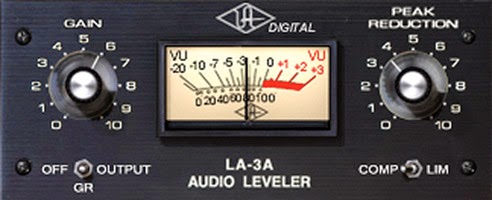
5. Universal Audio Teletronix LA-3A: Back in the hardware days I always used these on electric or acoustic guitars, since I've never found anything better on those instruments. It's no different with the plugin. It's also good on keys.

6. Soundtoys MicroShift: I looked around for a long time for a plugin with that old Harmonizer sound. The MicroShift is the first plug that I found that really does it (although you can also now get the same sound from the Eventide Ultrachannel). It's dead easy to use and provides that extra presence or smoothing like nothing else.

7. Universal Audio Precision Limiter: There are other great limiters (like the Waves L series and the Slate Digital FG-X), but this is my favorite for the stereo buss to just take care of those nasty peaks that result in overs. I don't use much of it (a dB or 2), and it's very transparent already, so you don't hear it while it does the job.

8. TT Dynamic Range Meter: This is an excellent plugin that tells you when you're squashing the mix too much. It provides precision output metering, plus that great dynamic range meter, and its FREE. Let's keep the hypercompression out of music. Use this meter.

9. Pro Tools Long Delay: There are other great delay plugs (Soundtoys Echoboy and the PSP 42 and 85 come to mind), but this is the one I reach for all the time. It's not as versatile as many plugins, but it's fast to set up, and once again, takes up virtually no system resources (which can be important on a large mix). I alter it with a previously mentioned PT 7 Band EQ ahead of it to get the sound I need and keep it out of the way of the vocal.

10. Sample Magic Magic AB: This is one of my new favorites. It provides an instant AB against any audio file. You can load up to 9 sources to AB against, and easily match the level between them all for a tight comparison. Plus you can even loop a section if you want. It's great for making sure your mix is really in the ballpark.

Like I said before, there are a lot of other great plugins that I use by a variety of companies, and there are many that I haven't tried yet, but these are the ones that I use on every single mix that I do.

What are your favorites?
----------------------------------

Monday, January 27, 2014

Bobby O's NAMM 2014 Gear Awards

This year I thought I'd change things up a bit and give out some awards out for products I liked at the Winter NAMM show. These are products that really stood out to me either as something I would personally want to use or something that's innovative. In this inaugural year of the Bobby O NAMM Awards, we have 8 winners.

Equator D8 image
Coolest Monitor Speaker Award
Equator Audio D8 - I'm already an everyday user of the Equator D5s, which are built around 5 inch dual concentric drivers. I love their sound but always wished for more bottom end. The D8's appear to have solved that problem, and sounded tremendous on the floor (the booth was at the back of the hall somewhat away from the noise so you could actually hear them a bit). They also had a potentially very useful feature for some in that the DSP could switch to the curve of an Auratone or NS-10 if desired (not that I every would, personally). Their curve was also tweaked by golden ears engineer Francis Buckley and mastering engineer Chris Bellman, so they have some of their mojo, which really made them stand out.

I actually thought I was going to give this award to the Presonus Scepter 8's, which I heard at the Presonus factory studio back in June. I loved them at the time, but they weren't set up for a serious demo at NAMM so there was no way to even remotely compare them with the D8's. Still, I'd like to hear both products side by side to see which I'd like better.

Midas M32 at NAMM 2014 image
Scariest Audio Product Award
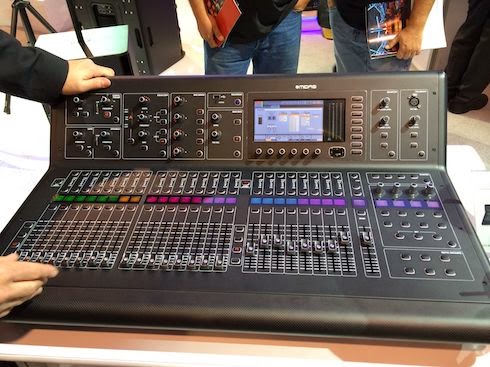
Midas M32 Console - Midas consoles are legendary for their great audio in the live sound world, and were purchased by Behringer a few years ago. Now after undergoing a makeover in manufacturing techniques, the new M32 has arrived.

What's scary is the tremendous bang for the buck here. I mean it! I did a double take when I looked at the $4,999 price tag for a real Midas (same analog electronics, I was assured) for 40 inputs, 32 Midas mic preamps, and 25 mix buses, plus a built in stereo recorder. It's a fully digital console complete with 192kHz convertors, and it looked to be really easy to use. I had it figured out to the point where I think I could use it after only a couple of minutes, or about what it would take on an analog desk. All I can say is "Wow."

Universal Audio Apollo Twin image
Best Home Studio Product
Universal Audio Apollo Twin - The UA Apollo has been a runaway preference as a multichannel computer I/O interface since its debut, but the problem was that it was too much for many home studio owners who only need two channels. UA heard the call of that market segment and came out with the Apollo Twin, a scaled down two channel Apollo, in response.

The Apollo Twin can handle sampling rates of up to 192kHz, has two UA quality mic amps built in, and has all the same functionality as its larger Apollo brothers. Best of all, it sells for $699 for the solo core and $899 for the dual core thant can handle more of the built-in plugins in a mix. The only downside for those with legacy computers is that it's only available via a Thunderbolt connection, which should be no problem if you own a newer computer.

The Beamz at NAMM 2014 image
Coolest Controller Award 
The Beamz - This is a pretty cool controller that kind of works like a theramin but triggers loops instead. It can be connected via USB or MIDI to control either a DAW or sequencer, but it also comes with a library of instrument sounds that work together so that anyone can make music in just minutes by waving their hands. There are three packages that start from $199, including one for DJs and one dedicated to education and health care.

Tascam DR 60D at NAMM 2014 image
Coolest Camera Audio Accessory
Tascam DR 60D - If you want to add some professional audio recording to your DLSR camera, the DR 60D is just the thing. It's a 4 track recorder with a built-in mixer that's designed to closely integrate with the digital cameras of today. There's also multiple record modes, including a dual "safety" mode with lower levels so you never had to worry about those sudden overloads that sometimes happen. One of the best features is a dedicated camera output so that you also print a high-quality reference track as well. Best of all, it's a very affordable $349

Fishman Fluence Pickup at NAMM 2014 image
Coolest Guitar Idea
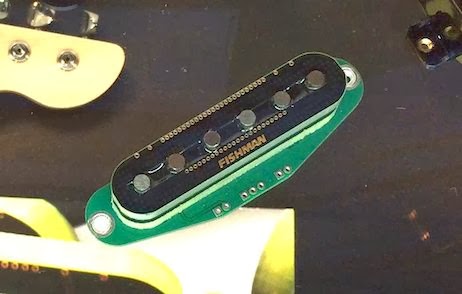
Fishman Fluence Pickups - Since the beginning of the electric guitar, guitar pickups have been made pretty much the same way, with coils of wire wound around a bobbin with magnets in the middle. The Fishman Fluence changes that by having smaller winds mounted on separate layered circuit boards, which means that multiple sounds can be easily chosen externally without having to change pickups. The Fluence pickups are made in single coil or humbucker forms so that they look like the real thing and fit easily fit into the slots of a Strat or Les Paul (or guitar with humbuckers).

Line 6 Amplifi at NAMM 2014 image
Coolest Recreational Guitar Product
Line 6 Amplifi - Here's a great idea if you just want to have some fun playing guitar at home. It's a full modeling guitar amp with a couple of big twists. First of all, it's fully Bluetooth so you can send the songs from your iPad or phone to it for playback. Here's where it gets cool. There are actually two playback systems in the amp; one stereo for the song playback, and another for the guitar. But even better is the fact that the amp will determine which song is playing, go to the cloud to look at a database of sounds, and dial in the right guitar sound for you to play along with that particular song! The 75 watt Amplifi is only $399 while the 150 watt version is $499.

Manley Core Channel Strip image
Coolest Outboard Piece
Manley Core Reference Channel Strip - Manley always been known for great sounding outboard gear and the new Core channel strip is no exception. It starts with a Class A mic input into a 3 band equalizer with a sweepable midrange, into an ELOP compressor (the same one as the VoxBox), completed by a fast-attack FET limiter. Add to this a brand new switching power supply (one that actually works well for audio) and you have a very cool package perfect for any studio. At $2250, the price is right for so much power in two rack spaces.

These are the products that knocked me out. Tomorrow, some that made me scratch my head.
----------------------------------

You should follow me on Twitter and Facebook for daily news and updates on production and the music business.

Don't forget to check out my Music 3.0 blog for tips and tricks on navigating social media and the new music business.

Wednesday, January 15, 2014

My Top 10 Mic Preamps

Mic preamps are an essential part of recording and many of us tailor our tracking and overdubs around what's available. I've been asked a lot lately what my favorite mic preamps are, so I thought that todays post was a good time to do that.

John Hardy M-1 image
Hardy M-1
1. Hardy M-1 - My all-time favorite, you can't beat the clarity and transparency with just a hint of color. When I think of the Hardy, the word "power" comes to mind in that everything recorded with it sounds powerful.

2. API 212/3/12/512 - In my mind, API is the sound of rock. It can be gritty and aggressive sounding in a good way. A big favorite on drums and guitars.

3. GML 8302/04 - When I want clean, deep and round, this is the one I'd reach for. I was lucky enough to do several albums on a GML console. The sounds were almost instantly great without working too hard.

4. Shadow Hills GAMA - A very versatile amp with lots of different sounds, it can almost be a combination of the above 3.

5. Great River MP-2NV - To me the MP-2NV is like a better sounding Neve 1073. When you want that sound, this is a good way to go.

AMEK Angela 2 image
AMEK Angela 2
6. AMEK Angela/2500 - Very underrated audio gear in general, AMEK preamps sound like a more modern English console (which they are), but better than the typical SSL. Big and round with a touch of aggressiveness. The EQs were great too.


Universal Audio 8110 image
Universal Audio 8110
7. Universal Audio 8110 - It's a shame this one isn't made any more. It's 8 channels of versatility in that you could make it sound a number of different ways, but it always sounds great.


Presonus M80 image
Presonus M80
8. Presonus M80 - Here's another one that's no longer made. The M80 is 8 channels of very high quality sound that's more on the level of the previous preamps than you'd normally expect. Presonus says there are parts in it that they can't get anymore. What a shame.


9. Trident A-Range - The "Trident" sound to me is sort of like a British version of the API. Very rock and roll and aggressive. Other Trident consoles like the TSM and Series 80 had good sounding preamps with the same general sound, but the A-Range is the best of the bunch. I've had the pleasure of working on several of them over the years.

10. Golden Age Project Pre-73 - Talk about bang for the buck, the Pre-73 gives you a reasonable facsimile of a Neve 1073 for a lot less money (about $350). I bought one as a gift for an assistant and was so impressed that I bought one for myself.

There are plenty of others that I've tried and liked, and lots more that I haven't tried yet. I'm still of the mind that there are other factors that are more important when getting sounds (like the player, the instrument and mic placement), but having a great preamp can certainly make your job easier.

What are your favorite mic preamps?
----------------------------------

You should follow me on Twitter and Facebook for daily news and updates on production and the music business.

Don't forget to check out my Music 3.0 blog for tips and tricks on navigating social media and the new music business.

Monday, May 20, 2013

My Top 10 Compressors

Universal Audio 1176s image
I was recently intrigued by a really good article on Beatport's Attack blog called "Top 20 Best Compressors Of All Time." Since the bog is primarily dedicated to electronic music, you can probably dismiss some of its seemingly dubious entries to the way they're used creating that type of music. The article did get me thinking about the top 10 compressors that I like though, so I thought I'd do my own version.

Although the other list was primarily hardware compressors, this list is a combination, since most of us live in a DAW world these days. Okay, here we go.

1. Universal Audio 1176: I don't care which version you use, the 1176 is about as close to a desert island compressor as you'll get due to its versatility. I like to use it on kick, snare, guitars, bass, vocals - just about anything. It can be aggressive sounding, but nothing pulls an instrument out of a mix in the same way.

2. Teletronix/Universal Audio LA-2A: Once again, I don't care which version of the hardware or software you use, the LA-2A has a sound and feel all its own. It can work pretty well on most instruments, but stands out for vocals, and is dead easy to use. I never use too much, as I like the sound of 2 to 3 dB in most situations.

3. Universal Audio LA-3: Perhaps the ultimate electric guitar compressor, I've used it successfully on piano and keyboards as well. Nothing works quite the same with electric guitars in a mix.

4. Fairchild 660/670: When it comes to buss compression, the Fairchild 670 stands is king of the hill for many kinds of music (especially retro or acoustic). It just adds a glue and warmth that you have trouble getting any other way. Just a little bit (a couple of dB) works a lot better than a whole lot. The 660 is the mono version of the more widely known 670, and was the sound you heard on many of The Beatle records (Ringo's drums, for instance).

5. SSL Buss Compressor: This is the sound that made so many pop and rock records in the 80s and 90s, and it still works great in those genres. I once worked in a studio that had the buss compressor on their 9k labeled as "The Good Button." Why? Because no matter how your mix sounded, once the SSL buss compressor was engaged, it sounded better.

6. Waves L1: You can't beat a classic and the Waves L1 is probably the first software limiter that worked so well that it was abused. If used correctly, few limiters are as capable of controlling the peaks of a mix. If used badly, it can suck the life out of a mix faster than you can say "hypercompression."

7. Empirical Labs EL8 Distressor: Few modern compressors have caught on so widely as the Distressor, and that's because there are few that are as versatile. I like to track with it on vocals to keep the peaks under control, but there are few compressors that are as effective on room mics, especially when it's set to "Nuke."

8. dbx 160: I just love the 160s; any of them. For a punchy drum sound, you can't beat the hardware 160X's (or even the A model). In software, the UAD 160 sounds great. My favorite for aggressive kick and snare, but it will pull a piano or acoustic guitar up front as well.

9. Neve 33609: This is another case of a buss compressor that really works well, especially if you only need a little to tighten up the bottom. It's not always my first choice, but it usually works in a situation when the previously mentioned ones don't.

10. FMR Audio RNC: The Really Nice Compress (RNC) is a great little hardware unit that provides tremendous bang for buck. I don't feel that it necessarily excels at any one thing, but it does work well in most situations. For a home studio with not a lot of money to burn, the stereo RNC (and it's companion RNL -Really Nice Limiter) is a must-have.

Honorable Mention. Pro Tools Native Digirack Compressor/Limiter: I personally think this is one of the most versatile compressors that you can find. It can sound transparent and it can sound aggressive, and since it doesn't take up much in the way of systems resources, you can use a lot of them in a big mix. Don't overlook it.

Once again, these are my personal opinions because these are what I always use. There's lots of other great ones out there (especially in software), but I've come to rely on these units because I know what they'll do in most situations.

Which are your favorites?

By the way, check this out for a good lesson on compressor setup.

----------------------------------

You should follow me on Twitter for daily news and updates on production and the music business.

Don't forget to check out my Music 3.0 blog for tips and tricks on navigating social media and the new music business.

Sunday, May 12, 2013

New Music Gear Monday: UAD Ocean Way Studios Plugin

We live in a world of plugins to the degree that even old school pros with a ton (literally) of available analog gear use what's in their DAW as a matter of course in their every day work. While most plugins now attempt to be some emulation of an old piece of gear or a new variation of an old concept, every once in a while something new comes along with some truly out-of-the-box thinking. Which brings us to one of the most unique and useful plugins to come along in a long time - the Universal Audio Ocean Way Studios plugin.

The Ocean Way Studios plugin works on any of the UAD hardware platforms and takes room simulation to the next step by modeling the sound of two of the studio's famous Bill Putnum-designed tracking rooms (Putnam was the original owner of both United Studios - now Ocean Way - and Universal Audio when it manufactured hardware starting back in the 1960s. Bill Putnam jr. runs Universal Audio today). You're able to choose from a number of Ocean Way owner Allen Sides' great vintage mic emulations and place them any distance in the room, as well as mix and EQ multiple combination of mics.

After using the plugin on a project that I'm currently mixing I can say that there's really not anything exactly like the Ocean Way Studios plugin on the market. I can see how this could be a great addition to a home studio owner who only has a small room to record in, but wants it to realistically sound like a larger one - and with the Ocean Way sound to boot.

Check out the video below for more details.


----------------------------------

You should follow me on Twitter for daily news and updates on production and the music business.

Don't forget to check out my Music 3.0 blog for tips and tricks on navigating social media and the new music business.

Sunday, April 21, 2013

New Music Gear Monday: Universal Audio Apollo 16

The original Universal Audio Apollo took the world by storm last year, providing a great sounding computer interface coupled with an array of their great plugins built into the unit. Now comes its big brother, as they've now introduced the new Apollo 16.

The Apollo 16 features 16 x 16 analog I/O that can be cascaded with additional units in a large DAW system. It also features low latency sub-2ms monitoring during recording, even while using plugins, as well as 4 stereo cue mixes and a dedicated monitor section.

Check out the video for a full description.


----------------------------------

You should follow me on Twitter for daily news and updates on production and the music business.

Don't forget to check out my Music 3.0 blog for tips and tricks on navigating social media and the new music business.

Sunday, January 22, 2012

A Look At NAMM 2012 - Part 1

Another Winter NAMM show has been left behind, and once again it's time to reflect on what we've seen and heard. This year one of the things that really stood out was the enthusiasm of the exhibitors and crowd, both of which seem to indicate that the economic doldrums that we've suffered through recently may finally be in the past and better days are ahead. Most companies that I spoke with indicated that they had a solid 2011and 2012 was getting off to a better than expected start. Let's hope that continues.

Today I'll concentrate on audio gear, Tuesday on music gear, and Wednesday on oddities. Let's get down to it.

Universal Audio Apollo image from Bobby Owsinski's Big Picture production blog
 Maybe the most talked-about item at the show for those involved in audio was the Universal Audio Apollo, a multi-channel interface that also happens to come filled with all that great UA plugin DSP, as well as a rare Thunderbolt option.


Sonodyne SM200Ak NAMM 2012 image from Bobby Owsinski's Big Picture production blog
Transaudio Group introduced the Sonodyne SM200Ak, a larger version of their already excellent  50 and 100 speakers. I've been using the 50's for about a month and I've got to say that it's one of the finest small desktop speaker that I've heard. Can't wait to hear the 200's for real.


SE Munro Egg image from Bobby Owsinski's Big Picture production blog

Speaking of speakers, SE Munro showed studio designer Andy Munro's Egg 150 monitors. I've read a lot about the concept behind the speakers and I'm anxious to hear them for real. Unfortunately, NAMM is not the place.


Emotiva monitors image from Bobby Owsinski's Big Picture production blogHere's a company that I'm not familiar with at all, but their Airmotiv 6 monitors sounded terrific on the show floor. With so many speaker companies already in the game, it makes you wonder why another company would try to take a piece of a saturated market as well, but it seems like they may really have something here.


Isoacoustics speaker stands image from Bobby Owsinski's Big Picture production blogSpeaking of speakers, you can't really hear them well unless you have some great stands, and the isoacoustics stands claim to be the best there is. I don't know about that yet, but they sure seem like they're the most adjustable.


Line 6 Stagescape M20d image from Bobby Owsinski's Big Picture production blogLine 6 entered into the sound reinforcement business with an entire new line of products, including the Stagescape M20d, a mixer that has a new user interface that's almost entirely graphic. Could this be the future of consoles?

The Stagescape L3T and L3M powered speaker system and sub have a tremendous amount of features that aren't readily apparent, but they sure sounded good with music played through them. It should be interesting to see what happens with these products in the future.


Dangerous Music monitor controller image from Bobby Owsinski's Big Picture production blogThe always hi-quality Dangerous Music showed this cool monitor box. Sorry, but I lost the info on it. Wish I had one right now.


Masterlink Live image from Bobby Owsinski's Big Picture production blogI had expected this to be a huge iPad show, expecting a ton of interfaces, peripherals and apps. There were a few, but not what I expected. The Alto Masterlink Live is a 16 channel mixer with an iPad dock. I understand that Mackie also introduced a similar product, but I never spotted it at the show.


Marshall iPad mics image from Bobby Owsinski's Big Picture production blog
Marshall showed a number of mics they claimed were designed for the iPad, and there were a number of devices that used the iPad as a controller, like this Pimitec personal monitor system.

Pivitec iPad personal monitor image from Bobby Owsinski's Big Picture production blog


cheap headphones image from Bobby Owsinski's Big Picture production blog

This was also a headphone show. It seems like the Dr. Beats phones that have become so popular exposed a huge market that hasn't been serviced and every manufacturer now wants a piece, although it's probably now too late. Just like most mics come from one Chinese factory (737, which also had a booth at the show), I wouldn't be surprised if all the headphones came from the same place as well.

Chinese Shure mic knockoffs from Bobby Owsinski's Big Picture production blog


 There were no shortage of blatant knock-off products at the show by Chinese manufacturers. Here's a box that looks like it comes from Shure, but they're all imitations.


Studio Mics?? image from Bobby Owsinski's Big Picture production blog
And of course, so many companies believe that if they copy the look of a famous vintage microphone, that automatically makes them a "studio microphone."

One of the funniest conversations that I listened in on was with a used-car-style salesman from a new mic company relentlessly telling producer-engineer legend Ken Scott about how cheap his mics were and how much money Ken could make because the margin was so high. Ken, being the gentleman that he is, just allowed him to rant.

Tomorrow we'll look at some music instruments from NAMM.


----------------------------------
Help support this blog. Any purchases made through our Amazon links help support this website with no cost to you.

You should follow me on Twitter for daily news and updates on production and the music business.

Don't forget to check out my Music 3.0 blog for tips and tricks on navigating social media and the new music business.

Thursday, March 18, 2010

6 Questions For PR Maven Marsha Vdovin

Marsha Vdovin is the founder of MVPR, a full service PR agency that does media relations for music and technology companies like Universal Audio and Cycling 74. She's one of the few people in the business that everyone adores because she's not only so good at what she does, but she's a kind and gentle soul with a heart of gold.

What sets Marsha apart from others that do what she does is that she's really an artist at heart. When you check out Marsha's website, be sure to check out her photography as well (that's one of her pictures on the left). It will knock your socks off, especially the art and the food.

Marsha was kind enough to answer the "6 Questions."

1) How did you break into the business?
I went to art school in the early '80s and started doing PR for my classmates and a professor who was a performance artist. That led to more paying gigs doing Pr for experimental theater. A friend from school started a music software company (Blank Software) and asked me to help him so we started the company in his house. I was employee number one so I did every job and ran the office, eventually he hired more people and then I focused on sales and marketing.

2) What makes you unique?
I think I'm unique because I'm really interested in what makes people tick. I'm really interested in getting to know them as people and seeing how their mind works. I'm not interested in hype. I only work with great companies whose products speak for themselves.

3) Who was your biggest influence?
My biggest influence has been my former art professor who believed in me and encouraged me to trust my instincts and be creative. The great thing about art school is that it teaches you to be resourceful.

4) What's the best thing about your job?
The best thing about my job is the people that I meet and get to know.

5) When and where were you the happiest?
The happiest I've ever been is travelling in the summertime.

6) What's the best piece of advice you ever received?
The best piece of advice that I ever received was from Paul Lego, former CFO at Digidesign. He said that as a consultant it is important to always be genuine and always be yourself.

LinkWithin

Related Posts Plugin for WordPress, Blogger...