Get This Free Cheat Sheet Guaranteed To Help Your Next Mix

Friday, January 16, 2015

Engineer Wyn Davis On My Latest Inner Circle Podcast

Wyn Davis image
This week my Inner Circle Podcast features engineer Wyn Davis, who's worked with so many legacy rock artists, from Dio to Foreigner to Bad Company to Great White and many more.

Wyn also owns Total Access Recording, a great studio that I've had the pleasure of working in, and we'll talk about his thoughts on how a commercial studio can survive in these days where everyone has a home studio.

We'll also talk about how he gets those great guitar sounds that we just love so much on the records he does.

On the show intro, I'll talk about just exactly what the product is in our new music business, as well as the most popular keys and chords used in hit songs today.

Remember that you can find the podcast either on 
iTunes or at BobbyOInnerCircle.com, and now also on Stitcher

Thursday, January 15, 2015

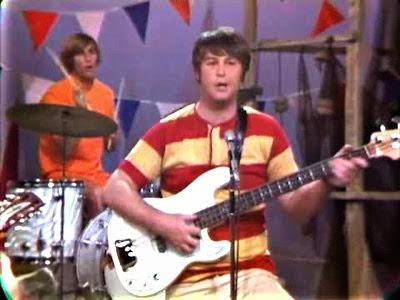
The Beach Boys "California Girls" Isolated Vocals

The Beach Boys image
Here's an absolute classic. It's the isolated vocals from The Beach Boy's all-time great hit "California Girls." The band was already big long before this song, but this 1965 song put them in a new stratosphere.

The song was written by Brian Wilson (who also produced) and lead singer Mike Love. The basic track took 44 takes by the studio band known as The Wrecking Crew (which included Leon Russel on piano here), recorded at Hollywood's famed United Western Recorders. The vocals were recorded about a month later in New York City at the equally famous CBS Columbia Square studios.

An interesting side note, this was the first song that Bruce Johnston sang on, having just replaced Brian Wilson in the road band. You can hear him on the falsetto parts on the outro. Here's what to listen for:

1. Mike Love's lead vocals are doubled and panned left and right. You don't hear the double so much on the final mix because they're fairly close (especially given the era this was recorded in).

2. There are two sets of harmonies that are spread slightly left and right. Although some parts are doubled in places, for the most part there are mostly different counterpoint parts that mesh together perfectly.

3. This is one of the best examples of the BBs trademark, which is the low bass vocal part. It's something that you rarely hear during background vocals of any era.

4. The harmonies aren't perfect. When you think of The Beach Boys, you think of impeccable vocals, but in this case, there are little inconsistencies throughout. There's a few wrong notes, a few minor sour ones, and some ragged releases, especially towards the end.

5. Listen through to the end, where you'll hear what took place after the fade of the final mix.


Wednesday, January 14, 2015

What Avid's Relisting Means For Pro Tools Users

Pro Tools logo image
Last month everyone's favorite DAW maker Avid was relisted on the NASDAQ stock exchange, a move that came as a surprise to many.

When the company was delisted back in February of 2014, many analysts (including yours truly) felt that this was the first sign of the eventual slow demise of the company, and that it was highly unlikely to ever find its way back onto the exchange. Avid defied expectations by working with auditors to supply the exchange with the information required to resume trading there. The company was officially delisted for not filing the required quarterly reports for over year, which Avid claimed was due to accounting rules changes

Since being relisted, the company's stock has risen from $13.50 to just a shade under $15. It continues to trade under its AVID symbol.

Regardless of the happy event, this is a challenging time for Avid. While having a virtually stranglehold on the professional audio workstation world, that market is somewhat saturated, and with more powerful computers now available, the native versions of the software now works for many cases where an expensive hardware accelerator card was once required, which means less revenue for the company.

Add to that the general frustration of the Pro Tools community that feels somewhat abandoned by the company's recent employee turnover, and many users are now open for an alternative should it arise.

Still, Avid's relisting also means that the company is much stronger than before. Sources of capital are more readily available if needed, the stock is much healthier than it was 12 months ago, and the company's public perception has risen. All that doesn't matter much if it doesn't find a way to assuage its customers who feel burnt by the company, of which there are many. We all like to upgrade to get new features, but the feeling of being forced to do so has rubbed many the wrong way through the years.

The upcoming NAMM show next week can be a pivotal one for the Avid, depending on the new products they show, or even worse, might not have. Could this be the year of serious DAW competition?

Tuesday, January 13, 2015

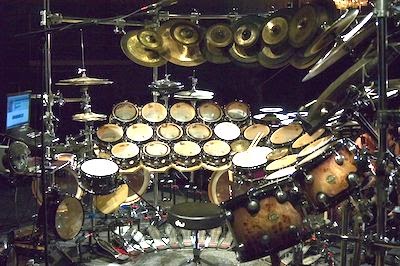
A Look At Drum EQ Points

massive drum kit image
Musicians and songwriters often have trouble with EQing drums so they fit in a track. A lot of that comes from over-EQings already good sounding samples, or having to deal with poorly recorded drums to begin with, but even so, the basic technique isn't that difficult if you know the basics.

Here's an excerpt from my Audio Mixing Bootcamp book that shows some basic EQ points for each drum and cymbal. Although these points may change slightly depending upon the drum kit, drummer, tuning, arrangement and song, they're pretty much in the ballpark. Just remember that you usually don't need a lot of EQ to make a difference on a well-recorded kit.

"The drums present an interesting dilemma - does the song demand that the drum kit works as a whole, or should the snare or kick stand out? Once again, it depends upon the song, but we can take a look at both approaches.

The kick and snare are extremely important in modern music because the kick is the heartbeat and the snare drives the song. By simply getting the sound and balance of these two drums right, it’s possible to change a song from dull to exciting.

There are certain frequencies on different drums that you should be aware of.
Kick - Girth at 50Hz and below, bottom at 80 to 100Hz, hollowness at 200 to 400Hz, point at 3k to 5kHz 
Snare - Fatness at 120 to 240Hz, point at 900Hz to 2kHz, crispness at 5kHz, snap at 10kHz 
Hat - Clang at 200Hz, sparkle at 8k to 10kHz 
Rack Toms -  Fullness at 240 to 500Hz, attack at 5k to 7kHz 
Floor Tom - Fullness at 80Hz, attack at 5kHz 
Cymbals - Clang at 200Hz, sparkle at 8k to 10kHz
These frequencies are not cut and dried for each drum kit, since the size of the drum or cymbal and the material they’re made of contributes greatly to the tone. Remember to sweep the frequencies around each of the above to find the correct frequency for that particular drum or cymbal.

Beware that boosting from 40 to 60Hz too much may make the kick sound big on your speakers, but it might not be heard when played back on smaller speakers. Also remember that the ideal spot for a 22 inch kick drum (which is the most commonly used) is around 80Hz."

To read additional excerpts from The Audio Mixing Bootcamp book and my other books, go to the excerpts section of bobbyowsinski.com. You also might want to check out my Audio Mixing Bootcamp video series on Lynda.com.

Monday, January 12, 2015

Do All Country Songs Sound Alike?

Professional songwriters often write to what's currently popular in order to better their chances of having a hit, which is why some songs sound so homogenized sometimes. This isn't new since it's been going on for decades, but it's never been quite as blatant as in this very interesting mashup put together by country music critic Grady Smith.

In it you'll hear six big country hits and how interchangeable they are with each other, even down to the keys of the songs. These are the songs:

"Sure Be Cool If You Did" by Blake Shelton
"Close Your Eyes" by Parmalee
"This Is How We Roll" by Florida Georgia Line
"Ready Set Roll" by Chase Rice
"Chillin' It" by Cole Swindell
"Drunk On You" by Luke Bryan

There's such a thing as influence and imitation, but these examples seem to go above and beyond. Thanks to reader Rand Bowman for the heads up on this.

Sunday, January 11, 2015

New Music Gear Monday: Resident Audio T4 Thunderbolt Interface

With Thunderbolt a standard feature on every new Mac computer, we've been patiently waiting for a new generation of audio interfaces to take advantage of this latest technology. The Resident Audio T4 Thunderbolt IO is one of the first to let you do that, utilizing it to its full potential by requiring no external power as it receives its power directly via the Thunderbolt buss.

There are actually a number of reasons why Thunderbolt is great for audio, and buss powering is one of them. While most USB busses max out at 5 volts and 2.5 watts, Thunderbolt provides up to 10 watts and 18 volts. What this means is that the attached device can operate with greater headroom, which is exactly what the T4 does. The unit has 4 combo inputs of mic/line preamps that take full advantage of the power the buss provides, complete with phantom power, as well as high-powered analog to digital convertors.

The T4 also features a monitor control that allows blending between the input source and the tracks from your computer for easy overdubbing, 4 separate outputs, a headphone output, and MIDI in and out jacks.

The Resident Audio T4 Thunderbolt Interface retails for $499, and it includes a Thunderbolt cable, which is cool because most Tbolt devices don't, and a typical cable costs around $30.  Find out more at residentaudio.com.

Friday, January 9, 2015

Master Mixer Andrew Scheps On My Latest Inner Circle Podcast

Andrew Scheps image
I'm very pleased to have the one and only Andrew Scheps on my latest Inner Circle podcast. Andrew has a long list of great mixing credits, from the Red Hot Chili Peppers to Adele to Metallica to Justin Timberlake and many more, and is one of uber-producer Rick Rubin's go-to mixers.

You can hear us talk about everything from mixing in the box, to parallel compression, to his approach to recording, to Andrew's very cool presentation on hi-res audio.

On the show intro, I'll talk about the study to find out who is actually buying all the vinyl that's being sold, and the super quick way to a onstage monitor mix or studio cue mix.

Remember that you can find the podcast either on iTunes or at BobbyOInnerCircle.com, and now also on Stitcher.

Thursday, January 8, 2015

Fleetwood Mac "Go Your Own Way" Isolated Vocals

It's Friday again and that means it's time for another isolated track. Today we'll listen to the isolated vocals from Fleetwood Mac's big hit "You Can Go Your Own Way, (this is a Spotify link)" the first single from the band's huge 1977 Rumours album. Here are some things to listen for (the track starts at 0:07).

1. Check out all the the breaths on the track. You can hear lead singer Lindsey Buckingham take a big breath of air before most vocal phrases, and the whole band before each harmony chorus. We'd probably delete these today in our DAW world.

2. There's a nice medium length delayed reverb on the vocals. There's more there than what you think is there when you listen with the instrumental track.

3. The lead vocal is at the top of the harmony stack, which is somewhat unusual.

4. The harmonies begin to get sloppy with the releases towards the end of the song at 3:30. You can hear all vocalists ending the phrases at different times, which doesn't happen earlier on.


Wednesday, January 7, 2015

The Speaker That's So Loud It Can Kill You

LEAF imageThis is perhaps a dream of some guitarists that I know, but there's actually a speaker that's so loud that it can kill you. Really.

It's actually a test chamber called the Large European Acoustic Facility (LEAF) and was built by the European Space Agency for a single purpose - to make sure that satellites can withstand the effects of the massive noise made by a rocket during liftoff.

The chamber is 54 feet high, 36 feet long and 30 feet deep (you only see part of one horn on the left, but you can see most of it on image on the right), and consists of 4 different horns with cutoff frequencies of 25Hz, 35Hz, 80Hz and 160Hz. The frequency response extends out to 10kHz.

The system uses 100% nitrogen gas to activate it so that micro-climates aren't created and cause rain to form inside the chamber. As a safety precaution, it can only be activated once all the doors are closed, and both doors and walls are steel-reinforced.

The overall SPL can reach 155dB, which would instantly perforate your eardrums, then cause your lungs to vibrate so violently that they'd rupture, and you'd probably have a heart attack as well, so don't try this at home!

Tuesday, January 6, 2015

The Ins And Outs Of Road Cases

I recently received a few questions about road cases so I thought this is a good time to bring back something that I posted about few years ago. It's an excerpt from The Touring Musician's Handbook that provides a good look at the differences between popular road cases.

"For many musicians, buying road cases for their gear is sort of a right of passage. As soon as you stencil your name on the cases, it suddenly means that your stock as a musician has risen and you’ve made the jump to becoming your own brand.
While some players choose not to case up their gear in order to save money in the beginning of their touring career, they soon see the shortsightedness the first time a favorite instrument is damaged from a fall off of a ramp or loading dock. Road cases are not only worth it, but almost mandatory in that your gear always has to work, and the only way to assure that happens is to keep it protected from the frequent and many knocks of the road.
The ATA Standard
Although many cases may look similar, the sturdiest (and consequently most expensive) ones are what’s known as ATA cases. This is a design based on an airplane parts packaging specification (known as ATA 300 Category 1), developed by airline packaging engineers and certified by the Airline Transport Association. ATA 300 compliant cases are designed to withstand the rigors of being shipped a minimum of 100 times, and specifies that the case will have recessed handles that will not break during transit. The standard also details the level of quality of every piece of construction material that goes into the case, including locks, hinges, and fastening systems, and also states that all rivets and screws must be non-corrosive and all edges must be rounded and have certain level of construction quality. Because of this ATA standard, the typical road case has also come to be known by the name “flight case,” since it’s made principally to survive multiple flights.
Tip: If the road case is too heavy for a single person to carry it, it needs casters.
Types Of Road Cases
Road cases come in a lot of different styles and a lot of different materials. As a result, all road cases are not created equal. Some are great for keeping the weather off your gear, while others are built to withstand the constant battle of the road. Let’s take a look at the different types.
Fiber Cases - Fiber cases are the typical drum cases that most drummers have used some time during their life (see Figure 7.2). They’re made out of fiberglass reinforced polyester and are very strong and rugged. While they work great for the club musician or weekend warrior because they keep the scuffs and incidental scratches off of the instrument, they’re deficient for road work in several ways; there’s little or no shock mounting for the instrument, the case is closed with a nylon strap that can be cut or lost, and their irregular shape make them difficult to pack efficiently. This means they usually get tossed on the top of the evenly packed square cases in the truck where they bounce around a lot as a result. Guess what that does for the instrument? They’re also prone to caving should something very heavy be placed upon them.

Aluminum - Aluminum cases have a major advantage in being extremely light weight, and usually have a fair amount of shock absorption (see Figure 7.3) inside. That being said, they’re very easy to pierce, and should generally not be used for shipping purposes as a result. It’s possible to have an ATA standard aluminum case, but you have to use so much aluminum that you lose the weight advantage that aluminum has over other types of cases.

Carpet Cases - These are simple plywood cases with an outer fuzzy carpet material (see Figure 7.4). This type of construction once again offers little in the way of impact relief and protection. They’re heavy because the internal frame may be constructed of steel, and even though the carpet finish makes them very tough, there’s not much in the way of shock mounting. Carpet cases are great for things like cables and mic stands, but not for anything expensive that must be protected.

Molded Plastic - Some cases are made out of molded plastic (see Figure 7.5) which might be good for keeping the rain off an instrument but not much help under the repeated impacts of being loaded onto a truck. Their weakness frequently is in the latches, which can break or come loose over time, and you don’t see plastic cases in very large sizes. Once again, molded plastic cases may come in an odd enough shape that it won’t easily pack in the truck. There are ATA molded cases made, which are also mil spec for military electronic gear, but they’re really expensive and generally custom made.

Sandwiched Material - The strongest and most common road cases are the ones with sandwiched material and reinforced edges and corners (see Figure 7.6), and these can be made of different materials for different types of transit. Most sandwich-type road cases are constructed in three main layers:
  • an outer layer of a plastic-based laminate called ABS
  • a middle layer of 3/16 to ½ inch cabinet-grade plywood such as birch, poplar or maple
  • an internal shock-absorbing foam layer that corresponds to the exact shape of the instrument or piece of gear.
  • The edges of the case are reinforced with aluminum extrusion, and have steel or zinc corner pieces and recessed handles and fasteners. 
Protective Foam
There are generally two types of protective foam used in road cases. Polyurethane foam is very soft and provides a gentle cushion for any delicate item. It’s usually available in ½ inch to 10 inch thickness in ½ inch increments. The problem is that it’s so soft that it can be crushed by a heavy item, in which case a polyethylene foam is used instead. Polyethylene foam is very dense and not very flexible, and the texture is almost like plastic. Frequently it’s used under a heavy item where polyurethane would simply not last due to the constant compression. Usually you want at least a half-inch of foam between your instrument and the outer layer of the case, although most people prefer one inch for added protection.

One thing that’s mostly overlooked with road cases is that the internal foam layer can have some negative chemical interactions with the finish of your instrument that can cause it to become dull and discolored over time. Nitrocellulose lacquer (like those used on vintage guitars), varnish and shellac are much more susceptible to this than the modern polyurethane and polyester type finishes. The way to prevent any interaction from occurring is to make sure that your road cases have a cloth lining over the foam (see Figure 7.7). Some companies use a velvet-like material layer mostly for cosmetics, but it will also protect your instrument from any finish damage from the foam. If buying a custom case, a cloth covering only adds a small amount to the overall cost of the case.

Remember, if you buy good quality cases, they can last for your entire career on the road, so go for the best and don’t cheap out. 

Tip: When buying road cases, try to buy either cases already in stock at your local music store or pro audio dealer, or have them made locally. The cost of shipping them can sometimes be almost as much as the case itself. Almost every city now has a company that makes road cases, so finding one that’s local should be easy.
The good thing about ATA type road cases is that they can be repaired. Just about anything can be replaced and the case will come back as good as new. In fact, there are companies that specialize in repairing road cases like Mobil Flight Case Repair, although just about any road case manufacturer can do it."


Monday, January 5, 2015

Yogi Horton's Funk Drumming And History Lesson

This is one of the best instructional videos I've ever seen. Not only is it a lesson in funk drumming, it's a history lesson as well. It features the late great funk drummer Yogi Horton, who played on more than 100 albums for artists like Luther Vandross, Ashford and Simpson, Dianna Ross, Aretha Franklin and many more. Even non-drummers will like it.

Sunday, January 4, 2015

New Music Gear Monday: Audio-Technica SonicPro In-ear Headphones

In-ear headphones have become more and more a part of our lives, from the everyday use with our phones to listening to a monitor mix on stage. While there are some pretty good models available, most owe their sound to precision materials and manufacturing rather than sonic innovation. The new Audio-Technica SonicPro series tries an old loudspeaker idea for the first time in an in-ear monitor, and that's why they're worth checking out.

The AT SonicPro series features 5 models that were built for a high-quality audio experience by employing a push-pull driver system to increase the detail in the mid and high frequencies. The two 13mm drivers face one another but are wired out of phase to lower the distortion and increase the output sensitivity. As an example of the extended frequency response, the most expensive of the models, the ATH-CKR10, has a frequency response that goes out to an impressive 40,000Hz.

The ATH-CKR10 has a US retail of $389.95 (click for better price), the CKR9 is $269.95, and the CKR7 is $134.95. Two lower priced models, the CKR5iS and the CKR3iS are meant for smartphone use and feature integrated volume control and microphone, and are designed to nestle in your ear without entering your ear canal. They're priced at $64.95 and $39.95. All SonicPro models come with 4 sizes of silicone eartips and a two foot cable. You can check them out on the Audio-Technica site.

The video below gives a look at how the push-pull drivers work.

LinkWithin

Related Posts Plugin for WordPress, Blogger...